錄取卡內基美隆建築本科的作品集:她把橘子、身體、植物與記憶都搭成了空間(2026 年 10 月官方查核)录取卡内基美隆建筑本科的作品集:她把橘子、身体、植物与记忆都搭成了空间(2026 年 10 月官方查核)A Carnegie Mellon architecture portfolio: how one admitted student built oranges, the body, plants and memory into space (checked October 2026)
用微信掃描這張 QR code 即可分享。用微信扫描这张 QR code 即可分享。Scan this QR code with WeChat to share.
掃描或下載這張 QR code。扫描或下载这张 QR code。Scan or download this QR code.
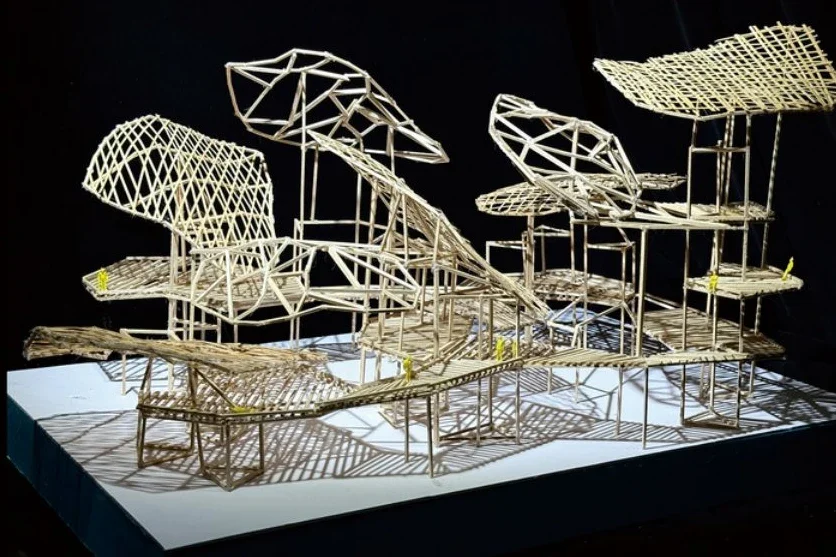
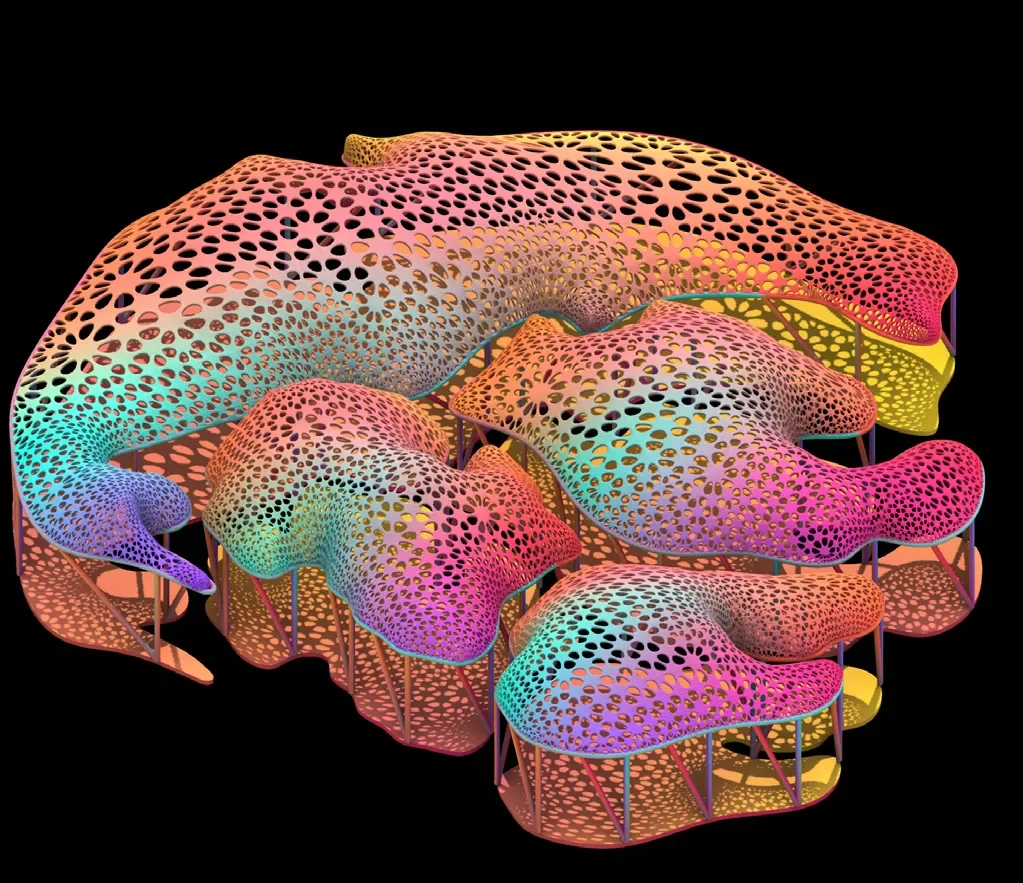
有些作品集看起來很完整,卻讓人覺得它主要停留在螢幕裡:圖很順、效果也不錯,就是少了一種「這個學生真的動手試過」的痕跡。這份錄取卡內基美隆大學(Carnegie Mellon University,CMU)建築學院本科的作品集不一樣——你能看到木、線、纖維、壓克力、樹脂、黏土、植物、金屬絲被一點點組織起來。它不只是展示結果,而是展示一個學生如何和材料反覆溝通。
這點很 CMU。CMU 建築學院在本科招生頁上明確寫出,作品集要看到申請者 desire to make and build things——不是只會想,而是真的願意把複雜的東西做出來。
2026 年 10 月重新查核:學制、作品集規定、截止日與作品集面談日期,均依 CMU 建築學院官網更新;本文作品屬個人案例,送件前請再以官網最新公告為準。
CMU 建築本科作品集官方要求是什麼?
| 項目 | 官方內容 |
|---|---|
| 學位 | Bachelor of Architecture(B.Arch):五年制、NAAB 認證的專業學位;Bachelor of Arts in Architecture(B.A.):四年制、預備專業學位。兩者申請材料完全相同,入學時不分學位,最晚在第二年結束前選定 |
| 申請流程 | 兩步:先以 Common Application 申請大學並選 College of Fine Arts/School of Architecture,再經 SlideRoom 提交 Architecture Portfolio;只審 SlideRoom 上的作品集,不收實體作品集 |
| 截止日 | Early Decision:Common App 與作品集皆 11 月 2 日(作品集至美東 23:59),12 月 15 日公布;Regular Decision/轉學:Common App 1 月 4 日、作品集 1 月 8 日(美東 23:59),最晚 4 月 1 日公布 |
| 作品集內容 | 填寫兩份表單、上傳 10 件不同的創作作品,並錄一段回應題目的簡短影片;可選擇為其中一件作品附上過程記錄 |
| 格式 | 接受 JPG 圖片與影片,不收 PDF;偏好一頁一張圖,若要合併,一頁最多 3 張;建議在 Description 欄簡述作品背景;不鼓勵放技術製圖 |
| 合作作品 | 鼓勵放入,但須標註為 Collaborative、列出所有參與者,並說明自己的角色 |
| 作品集面談 | 非必要但強烈建議:與教師進行 15 分鐘 Zoom 面談,須先送出 Common App 才能報名,名額先到先得 |
以上出自CMU 建築學院本科招生頁與CMU 建築學院 B.Arch 項目頁。招生頁寫得很直接:作品集要呈現好奇心、批判思考、創新、解決問題、空間推理/視覺思考、綜合能力,以及動手製作與建造的慾望;而且「作品集整體編排的品質,與任何單件作品的品質同樣重要」。
CMU 作品集要怎麼證明「好奇心」?
這份作品集最貼近 CMU 的第一點,是它的好奇心很具體,而不是停在「我對很多東西感興趣」。她會去看咖啡館怎麼把不同材料和光線拼在一起;會去想「居住」和「耕種」能不能在同一個垂直空間裡共生;會去研究二十多種水果的剖面、植物纖維、庭院、城市廣場,甚至身體裡的組織結構,再把這些內容轉譯成模型或裝置。
這種轉譯能力,比單純做得漂不漂亮更重要:它說明她不是在套公式,而是在主動建立自己的設計語言。
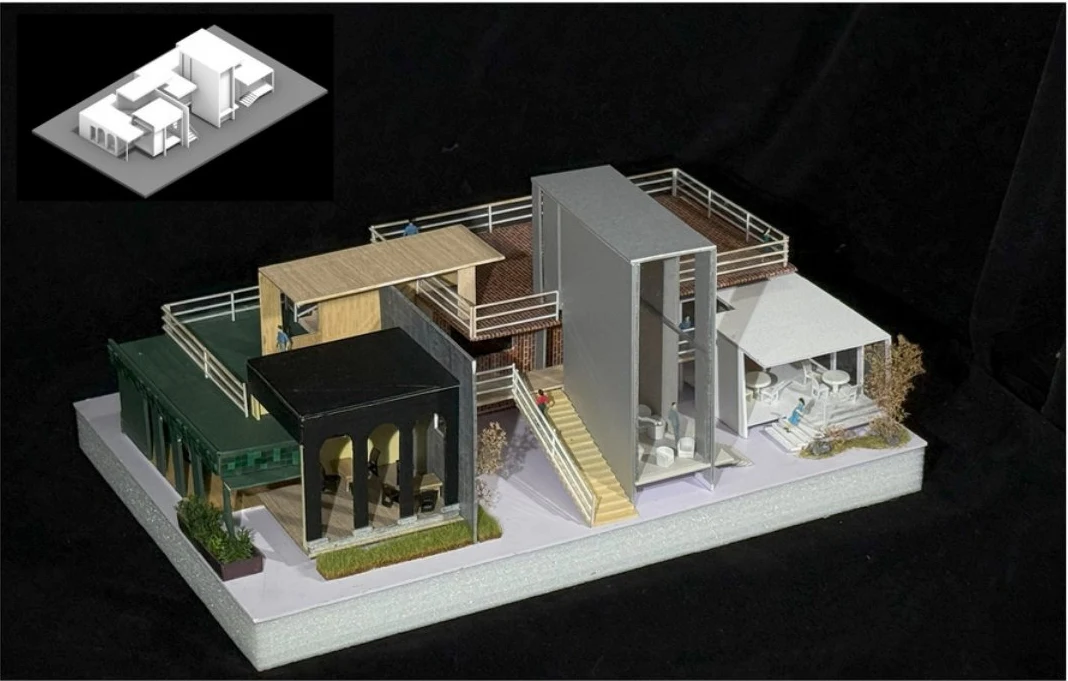
看完整作品:融合咖啡館 →
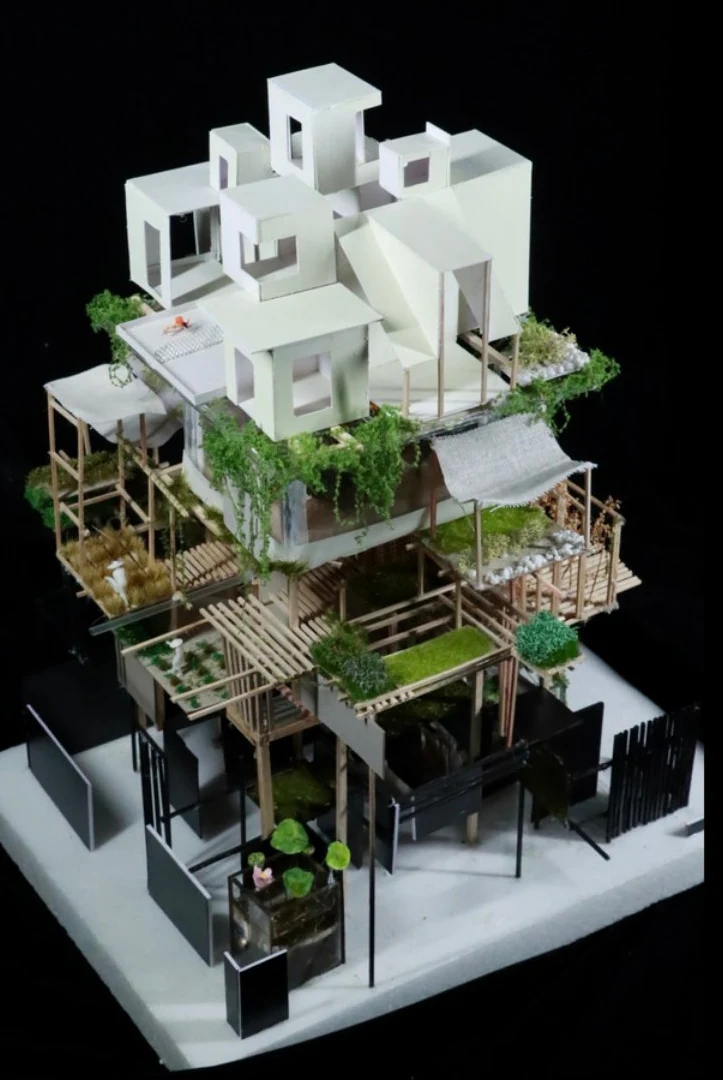
看完整作品:生活與耕種 →
為什麼「不是就建築談建築」反而加分?
這不是一本純藝術集,也不是一本純建築集。裡面有空間模型,也有材料實驗、裝置、產品、城市設計、手繪與拼貼,甚至有把身體經驗轉成空間裝置的項目。CMU 招生頁要求選件時「展現多種媒材、二維與三維的關係,以及多樣的主題,同時突出你最強的作品」,這份作品集正好對上。
例如「會呼吸的植物架」不是單純做一個花架,而是從天然纖維與植物出發,做出既有材料實驗、又有空間意味的作品;「生長的支架」則把膝關節韌帶重建手術與 MRI 影像,轉成一個帶有骨架、纏繞與生長感的空間模型。
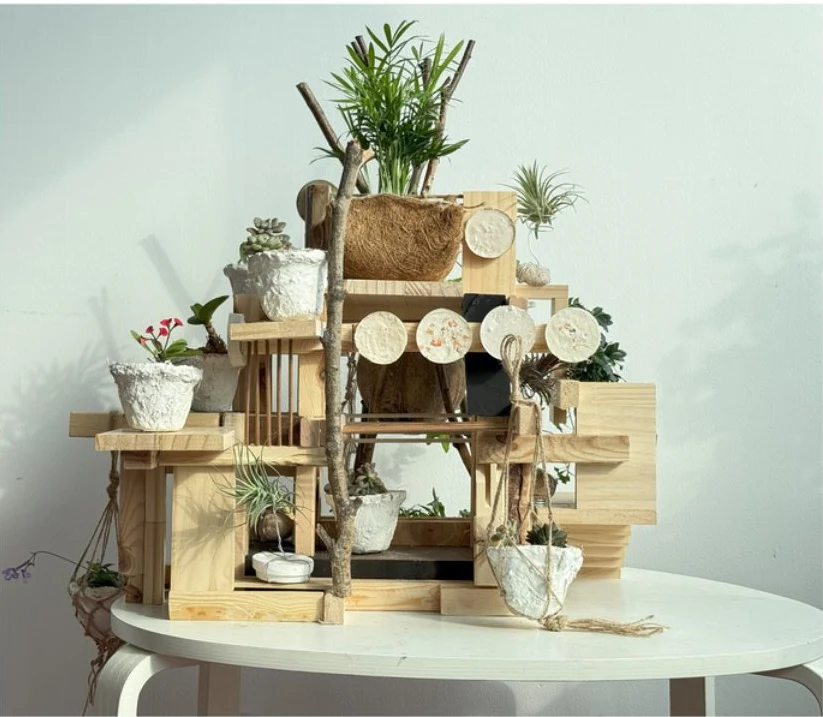
看完整作品:會呼吸的植物架 →
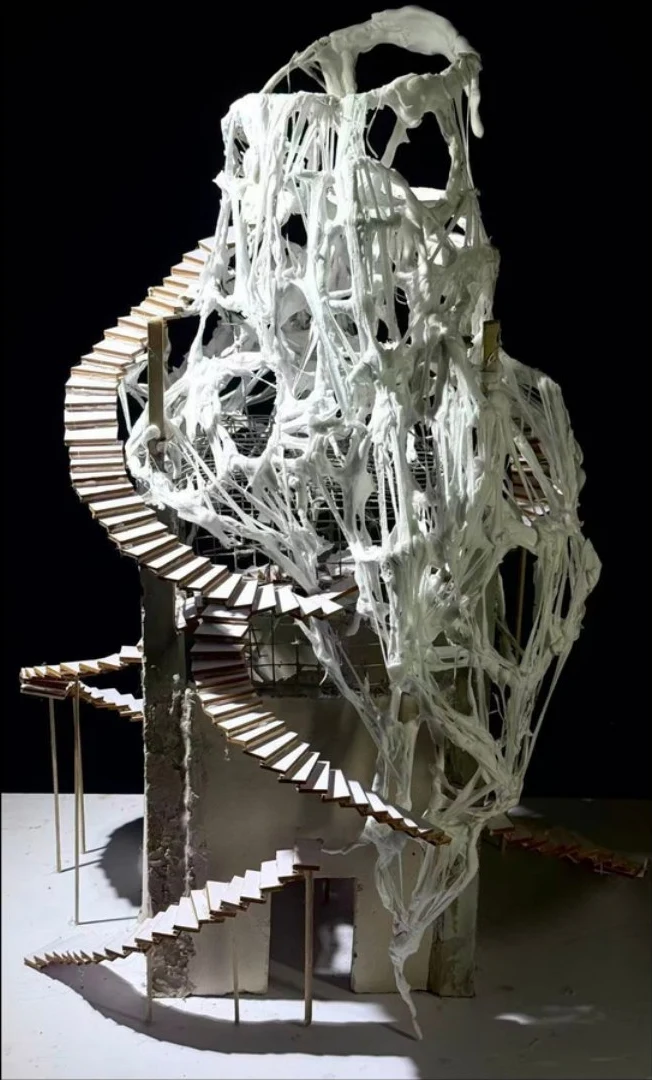
看完整作品:生長的支架 →
CMU 說的「空間推理」在作品集裡長什麼樣?
很多學生會畫也會做,卻未必能把二維和三維的關係處理清楚。這份作品集最明顯的例子,是她在大學夏校項目中做的「從圖案到體量」練習:不是把圖案直接複製成立體,而是先分析圖案內部的秩序和關係,再一步步推成體量。
後面的橘子涼亭、灰姑娘,以及建築拼貼和針管筆建築畫,也都能看出她不是在「描一個形」,而是在處理空間裡的層次、穿插、包裹、支撐和節奏。橘子涼亭先研究了二十多種水果的剖面,選定橘子,再把果肉的瓣形化為果園中竹編涼亭的屋頂——從觀察到結構,每一步都看得見。
手作在 CMU 作品集裡有多重要?
CMU 在本科招生頁特別寫出 desire to make and build things,建築學院的使命頁也說明,核心能力的教學建立在「透過繪圖與製作(手工與數位)學習」之上。這本作品集裡有大量需要長時間搭建和推敲的作品:灰姑娘那種藍白透明材料與螺旋上升的空間關係、生長的支架裡的纏繞、支撐與懸掛、永恆花園裡裝置與小尺度人物場景的結合,都不是快速拼出來的東西。它們讓招生官直接感受到:這個學生願意花時間做、肯吃苦,也有處理複雜關係的耐心。
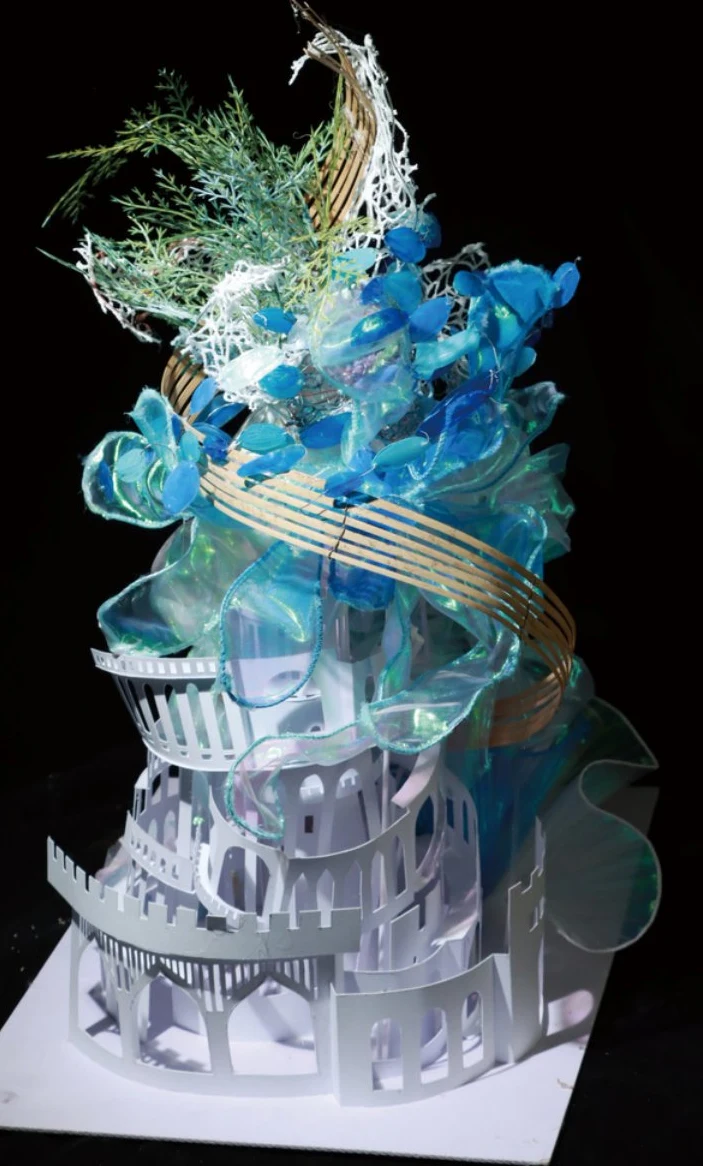
看完整作品:灰姑娘 →
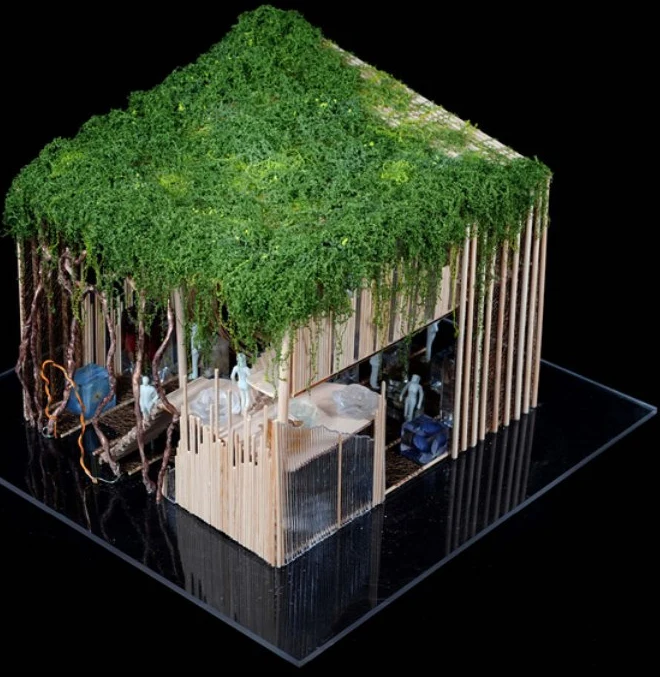
看完整作品:永恆花園 →
作品集怎麼講出一個完整的個人方向?
CMU 要求學生「仔細策展與編排作品集,講出一個關於你自己、你的能力與熱情、以及你投入建築學習的決心與動機的動人故事」。這份作品集跨了很多媒介,卻不亂:裡面一直有幾條穩定的線索——自然與生命、脆弱與生長、空間與情感、結構與包裹、身體經驗。
它不是每個項目都在展示「我會一個新技能」,而是每個項目都在從不同角度回答「我到底想透過空間表達什麼」。這讓整本作品集不顯得散,反而讓人看見一個完整的學生。
偏藝術裝置的作品集適合申請 CMU 嗎?
這本作品集有些項目更偏藝術裝置,和傳統意義上的建築項目仍有邊界;放到特別強調「建築像不像建築」的學校,未必會被同樣理解。但放在 CMU,這些「不那麼標準」的部分反而成了優勢:官網的 B.Arch 介紹寫明,前三年是高度結構化的基礎課程與設計課,第四、五年則依個人興趣選擇方向,學生可以在永續與計算、都市設計與建築性能等交叉領域打造自己的專長。
以我 12,000+ 小時設計教學與設計諮詢的經驗來看,這份作品集被 CMU 錄取,是因為它非常清楚地讓學校看見三件事:這個學生有真正的好奇心、有跨媒介的空間轉譯能力,也有把想法做出來的執行力——而這三件事,正是 CMU 招生頁列出最看重的能力。
準備 CMU 建築本科作品集的檢查清單
- 10 件不同作品:每件都要有自己的觀察起點,避免同一技能重複出現。
- 一頁一張圖:需要合併時一頁最多 3 張,JPG 格式,不交 PDF;少放技術製圖。
- 媒材與維度要有廣度:手繪、模型、材料實驗、裝置、數位作品都可以,重點是二維與三維之間的關係。
- 善用過程記錄:官網允許為其中一件作品附上過程記錄,選最能說明推導邏輯的那件。
- 整體敘事:編排順序本身就是作品,讓 10 件作品串成一條個人主線。
- 時間點:ED 作品集 11 月 2 日、RD 1 月 8 日(美東 23:59);送出 Common App 後盡早報名作品集面談。
有些作品集看起来很完整,却让人觉得它主要停留在屏幕里:图很顺、效果也不错,就是少了一种「这个学生真的动手试过」的痕迹。这份录取卡内基美隆大学(Carnegie Mellon University,CMU)建筑学院本科的作品集不一样——你能看到木、线、纤维、压克力、树脂、黏土、植物、金属丝被一点点组织起来。它不只是展示结果,而是展示一个学生如何和材料反复沟通。
这点很 CMU。CMU 建筑学院在本科招生页上明确写出,作品集要看到申请者 desire to make and build things——不是只会想,而是真的愿意把复杂的东西做出来。
2026 年 10 月重新查核:学制、作品集规定、截止日与作品集面谈日期,均依 CMU 建筑学院官网更新;本文作品属个人案例,送件前请再以官网最新公告为准。
CMU 建筑本科作品集官方要求是什么?
| 项目 | 官方内容 |
|---|---|
| 学位 | Bachelor of Architecture(B.Arch):五年制、NAAB 认证的专业学位;Bachelor of Arts in Architecture(B.A.):四年制、预备专业学位。两者申请材料完全相同,入学时不分学位,最晚在第二年结束前选定 |
| 申请流程 | 两步:先以 Common Application 申请大学并选 College of Fine Arts/School of Architecture,再经 SlideRoom 提交 Architecture Portfolio;只审 SlideRoom 上的作品集,不收实体作品集 |
| 截止日 | Early Decision:Common App 与作品集皆 11 月 2 日(作品集至美东 23:59),12 月 15 日公布;Regular Decision/转学:Common App 1 月 4 日、作品集 1 月 8 日(美东 23:59),最晚 4 月 1 日公布 |
| 作品集内容 | 填写两份表单、上传 10 件不同的创作作品,并录一段回应题目的简短视频;可选择为其中一件作品附上过程记录 |
| 格式 | 接受 JPG 图片与视频,不收 PDF;偏好一页一张图,若要合并,一页最多 3 张;建议在 Description 栏简述作品背景;不鼓励放技术制图 |
| 合作作品 | 鼓励放入,但须标注为 Collaborative、列出所有参与者,并说明自己的角色 |
| 作品集面谈 | 非必要但强烈建议:与教师进行 15 分钟 Zoom 面谈,须先送出 Common App 才能报名,名额先到先得 |
以上出自CMU 建筑学院本科招生页与CMU 建筑学院 B.Arch 项目页。招生页写得很直接:作品集要呈现好奇心、批判思考、创新、解决问题、空间推理/视觉思考、综合能力,以及动手制作与建造的欲望;而且「作品集整体编排的品质,与任何单件作品的品质同样重要」。
CMU 作品集要怎么证明「好奇心」?
这份作品集最贴近 CMU 的第一点,是它的好奇心很具体,而不是停在「我对很多东西感兴趣」。她会去看咖啡馆怎么把不同材料和光线拼在一起;会去想「居住」和「耕种」能不能在同一个垂直空间里共生;会去研究二十多种水果的剖面、植物纤维、庭院、城市广场,甚至身体里的组织结构,再把这些内容转译成模型或装置。
这种转译能力,比单纯做得漂不漂亮更重要:它说明她不是在套公式,而是在主动创建自己的设计语言。
看完整作品:融合咖啡馆 →
看完整作品:生活与耕种 →
为什么「不是就建筑谈建筑」反而加分?
这不是一本纯艺术集,也不是一本纯建筑集。里面有空间模型,也有材料实验、装置、产品、城市设计、手绘与拼贴,甚至有把身体经验转成空间装置的项目。CMU 招生页要求选件时「展现多种媒材、二维与三维的关系,以及多样的主题,同时突出你最强的作品」,这份作品集正好对上。
例如「会呼吸的植物架」不是单纯做一个花架,而是从天然纤维与植物出发,做出既有材料实验、又有空间意味的作品;「生长的支架」则把膝关节韧带重建手术与 MRI 影像,转成一个带有骨架、缠绕与生长感的空间模型。
看完整作品:会呼吸的植物架 →
看完整作品:生长的支架 →
CMU 说的「空间推理」在作品集里长什么样?
很多学生会画也会做,却未必能把二维和三维的关系处理清楚。这份作品集最明显的例子,是她在大学夏校项目中做的「从图案到体量」练习:不是把图案直接拷贝成立体,而是先分析图案内部的秩序和关系,再一步步推成体量。
后面的橘子凉亭、灰姑娘,以及建筑拼贴和针管笔建筑画,也都能看出她不是在「描一个形」,而是在处理空间里的层次、穿插、包裹、支撑和节奏。橘子凉亭先研究了二十多种水果的剖面,选定橘子,再把果肉的瓣形化为果园中竹编凉亭的屋顶——从观察到结构,每一步都看得见。
手作在 CMU 作品集里有多重要?
CMU 在本科招生页特别写出 desire to make and build things,建筑学院的使命页也说明,核心能力的教学创建在「通过绘图与制作(手工与数字)学习」之上。这本作品集里有大量需要长时间搭建和推敲的作品:灰姑娘那种蓝白透明材料与螺旋上升的空间关系、生长的支架里的缠绕、支撑与悬挂、永恒花园里装置与小尺度人物场景的结合,都不是快速拼出来的东西。它们让招生官直接感受到:这个学生愿意花时间做、肯吃苦,也有处理复杂关系的耐心。
看完整作品:灰姑娘 →
看完整作品:永恒花园 →
作品集怎么讲出一个完整的个人方向?
CMU 要求学生「仔细策展与编排作品集,讲出一个关于你自己、你的能力与热情、以及你投入建筑学习的决心与动机的动人故事」。这份作品集跨了很多媒介,却不乱:里面一直有几条稳定的线索——自然与生命、脆弱与生长、空间与情感、结构与包裹、身体经验。
它不是每个项目都在展示「我会一个新技能」,而是每个项目都在从不同角度回答「我到底想通过空间表达什么」。这让整本作品集不显得散,反而让人看见一个完整的学生。
偏艺术装置的作品集适合申请 CMU 吗?
这本作品集有些项目更偏艺术装置,和传统意义上的建筑项目仍有边界;放到特别强调「建筑像不像建筑」的学校,未必会被同样理解。但放在 CMU,这些「不那么标准」的部分反而成了优势:官网的 B.Arch 介绍写明,前三年是高度结构化的基础课程与设计课,第四、五年则依个人兴趣选择方向,学生可以在永续与计算、都市设计与建筑性能等交叉领域打造自己的专长。
以我 12,000+ 小时设计教学与设计咨询的经验来看,这份作品集被 CMU 录取,是因为它非常清楚地让学校看见三件事:这个学生有真正的好奇心、有跨媒介的空间转译能力,也有把想法做出来的运行力——而这三件事,正是 CMU 招生页列出最看重的能力。
准备 CMU 建筑本科作品集的检查清单
- 10 件不同作品:每件都要有自己的观察起点,避免同一技能重复出现。
- 一页一张图:需要合并时一页最多 3 张,JPG 格式,不交 PDF;少放技术制图。
- 媒材与维度要有广度:手绘、模型、材料实验、装置、数字作品都可以,重点是二维与三维之间的关系。
- 善用过程记录:官网允许为其中一件作品附上过程记录,选最能说明推导逻辑的那件。
- 整体叙事:编排顺序本身就是作品,让 10 件作品串成一条个人主线。
- 时间点:ED 作品集 11 月 2 日、RD 1 月 8 日(美东 23:59);送出 Common App 后尽早报名作品集面谈。
Some portfolios look complete and still feel as if they mostly stayed on a screen. The drawings are smooth and the effects are fine, and what is missing is the trace that "this student really tried it by hand." This portfolio, admitted to the undergraduate degree in the School of Architecture at Carnegie Mellon University (CMU), is different. You can see wood, thread, fiber, acrylic, resin, clay, plants, and metal wire being organized a little at a time. It shows the result and, more than that, how a student communicates with materials again and again.
This is very CMU. On its undergraduate admissions page, the CMU School of Architecture states plainly that a portfolio should show an applicant's desire to make and build things — a real willingness to make complicated things, which goes further than only being able to think.
Rechecked in October 2026: degree structure, portfolio rules, deadlines, and portfolio-interview dates are updated from the CMU School of Architecture website. The work in this article is an individual case; before you submit, take the latest notice on the official site as the authority.
What are the official requirements for a CMU undergraduate architecture portfolio?
| Project | Official details |
|---|---|
| Degree | Bachelor of Architecture (B.Arch): a five-year, NAAB-accredited professional degree. Bachelor of Arts in Architecture (B.A.): a four-year pre-professional degree. The application materials for the two are identical. Students are not separated by degree at admission, and they choose by the end of the second year at the latest |
| Application process | Two steps: first apply to the university with the Common Application and select College of Fine Arts / School of Architecture, then submit the Architecture Portfolio through SlideRoom. Only the portfolio on SlideRoom is reviewed. Physical portfolios are not accepted |
| Deadlines | Early Decision: both the Common App and the portfolio on November 2 (the portfolio until 23:59 US Eastern), with decisions on December 15. Regular Decision / transfer: the Common App on January 4, the portfolio on January 8 (23:59 US Eastern), with decisions by April 1 |
| Portfolio contents | Fill in two forms, upload 10 different creative works, and record a short video responding to the prompts. You may choose to attach a process record for one of the works |
| Format | JPG images and video are accepted; PDF is not. One image per page is preferred. If images are combined, at most 3 images per page. A short account of the work's background in the Description field is recommended. Technical drawings are discouraged |
| Collaborative work | Including it is encouraged, but it must be marked Collaborative, with every participant listed and your own role explained |
| Portfolio interview | Not required, but strongly recommended: a 15-minute Zoom interview with a faculty member. The Common App has to be submitted before you can sign up. Places are first come, first served |
The above is from the CMU School of Architecture undergraduate admissions page and the CMU School of Architecture B.Arch project page. The admissions page is direct: a portfolio should present curiosity, critical thinking, innovation, problem-solving, spatial reasoning / visual thinking, the ability to synthesize, and a desire to make and build; and "the quality of the portfolio's overall arrangement is as important as the quality of any single work."
How does a CMU portfolio prove "curiosity"?
What comes closest to CMU's first point is that the curiosity here is concrete, and it goes further than "I am interested in lots of things." She looks at how cafés piece different materials and light together. She asks whether "living" and "farming" can coexist in the same vertical space. She studies the sections of more than 20 kinds of fruit, plant fibers, courtyards, city squares, even the tissue structures inside the body, and then translates that material into models or installations.
This ability to translate matters more than whether something is simply made to look beautiful. It shows that she is actively building a design language of her own, which is a further step than applying a formula.
See the full project: The Fusion Cafe →
See the full project: Living and Farming →
Why does "not talking about architecture only as architecture" count in your favor?
This is not a pure art portfolio, and it is not a pure architecture portfolio. It contains spatial models, and also material experiments, installations, products, urban design, hand drawing, and collage, including projects that turn bodily experience into spatial installations. When it comes to choosing work, the CMU admissions page asks you to "show a range of media, the relationship between two and three dimensions, and a variety of themes, while featuring your strongest work." This portfolio meets that.
A Plant Stand That Breathes, for example, does more than make a flower stand. It starts from natural fiber and plants and makes a work that is a material experiment and also spatially meaningful. A Scaffold of Growth turns ligament-reconstruction surgery of the knee, and MRI images, into a spatial model with a sense of skeleton, winding, and growth.
See the full project: A Plant Stand That Breathes →
See the full project: A Scaffold of Growth →
What does the "spatial reasoning" CMU describes look like in a portfolio?
Many students can draw and can make, and still leave the relationship between two and three dimensions unclear. The clearest example in this portfolio is a "from pattern to volume" exercise she did in a university summer-school project. She analyzes the order and the relationships inside the pattern first, then pushes it step by step into volume, which is a different move from copying the pattern straight into a solid.
The orange pavilion and Cinderella that follow, along with the architectural collages and the technical-pen architectural drawings, also show that she is working with layers, interlocking, wrapping, support, and rhythm in space, which is a different task from "tracing a shape." The orange pavilion begins with sections of more than 20 kinds of fruit, settles on the orange, and turns the segments of the flesh into the roof of a bamboo-woven pavilion in an orchard. From observation to structure, every step is visible.
How important is making by hand in a CMU portfolio?
On the undergraduate admissions page, CMU specifically names a desire to make and build things, and the School of Architecture's mission page also explains that teaching of the core abilities is built on "learning through drawing and making (by hand and digitally)." This portfolio contains a great deal of work that takes a long time to build and to refine: the relationship, in Cinderella, between transparent blue-and-white material and a spiraling ascent; the winding, support, and suspension in A Scaffold of Growth; the joining of an installation and a small-scale figure scene in The Garden of Eternity. None of these is something assembled quickly. They let an admissions officer feel directly that this student is willing to spend time making, willing to take on hard work, and patient with complicated relationships.
See the full project: Cinderella →
See the full project: The Garden of Eternity →
How does a portfolio tell a complete personal direction?
CMU asks students to "curate and arrange the portfolio with care, and tell a moving story about yourself, your abilities and passions, and the resolve and motivation you bring to studying architecture." This portfolio crosses many media and stays coherent. A few stable threads run through it: nature and life, fragility and growth, space and emotion, structure and wrapping, bodily experience.
Each project answers, from a different angle, "what do I actually want to express through space?" That is a different job from every project showing "I can do a new skill." The whole portfolio holds together, and you can see one complete student.
Is a portfolio that leans toward art installation suitable for applying to CMU?
Some projects in this portfolio lean further toward art installation, and a boundary remains with architectural projects in the traditional sense. At a school that particularly stresses "whether the architecture looks like architecture," they would not necessarily be understood in the same way. At CMU, these "less standard" parts become an advantage. The B.Arch introduction on the site states that the first three years are a highly structured set of foundation courses and design courses, and that the fourth and fifth years are a direction chosen according to personal interest. Students can build their own expertise in intersecting fields such as sustainability and computation, or urban design and building performance.
From my 12,000+ hours of design teaching and design consulting, this portfolio was admitted to CMU because it lets the school see three things very clearly: this student has real curiosity, an ability to translate space across media, and the execution to make an idea. Those three things are exactly the abilities the CMU admissions page lists as what it weighs most.
A checklist for preparing a CMU undergraduate architecture portfolio
- 10 different works: each one needs its own observation to start from, so the same skill does not appear again.
- One image per page: when images need to be combined, at most 3 per page, in JPG, with no PDF. Include few technical drawings.
- Breadth of media and dimension: hand drawing, models, material experiments, installations, and digital work can all belong. What matters is the relationship between two and three dimensions.
- Use the process record well: the site allows a process record for one of the works. Choose the one that best explains the logic of how it was developed.
- An overall narrative: the order itself is part of the work. Let the 10 works form one personal line.
- Timing: the ED portfolio is due November 2 and the RD portfolio January 8 (23:59 US Eastern). After the Common App is submitted, sign up for the portfolio interview as early as you can.
English summary
An admitted portfolio for Carnegie Mellon University's School of Architecture undergraduate program, read against what CMU says it looks for: curiosity, critical thinking, innovation, problem-solving, spatial reasoning and visual thinking, ability to synthesize, and the desire to make and build things. The student's projects - a composite cafe, a living-and-farming tower, a fibre-cement plant stand, a clay-and-wire viewing tower inspired by knee-ligament reconstruction, a paper-and-resin fairy-tale tower, a mourning garden and a bamboo pavilion derived from mandarin segments - are hand-built, cross-media and tied together by themes of nature, growth, the body and memory. Facts checked on CMU pages in October 2026: five-year NAAB-accredited B.Arch and four-year B.A., same application, degree chosen by the end of year two; Common App plus SlideRoom portfolio of two forms, ten creative works and a short video; JPG/video only, no PDF; Early Decision deadline November 2, Regular Decision portfolio January 8; optional but strongly recommended 15-minute portfolio review interview.
常見問題常见问题FAQ
CMU 建築本科作品集要交幾件作品?CMU 建筑本科作品集要交几件作品?How many works does a CMU undergraduate architecture portfolio require?
依 CMU 建築學院官網,Architecture Portfolio 需在 SlideRoom 填寫兩份表單、上傳 10 件不同的創作作品,並錄一段回應題目的簡短影片;可選擇為其中一件作品附上過程記錄。接受 JPG 與影片,不收 PDF。
依 CMU 建筑学院官网,Architecture Portfolio 需在 SlideRoom 填写两份表单、上传 10 件不同的创作作品,并录一段回应题目的简短视频;可选择为其中一件作品附上过程记录。接受 JPG 与视频,不收 PDF。
According to the CMU School of Architecture website, the Architecture Portfolio requires two forms filled in on SlideRoom, 10 different creative works uploaded, and a short video responding to the prompts. You may choose to attach a process record for one of the works. JPG and video are accepted; PDF is not.
CMU 建築本科作品集什麼時候截止?CMU 建筑本科作品集什么时候截止?When is the deadline for a CMU undergraduate architecture portfolio?
Early Decision:Common App 與作品集皆 11 月 2 日(作品集至美東 23:59),12 月 15 日公布結果;Regular Decision 與轉學:Common App 1 月 4 日、作品集 1 月 8 日(美東 23:59),最晚 4 月 1 日公布。
Early Decision:Common App 与作品集皆 11 月 2 日(作品集至美东 23:59),12 月 15 日公布结果;Regular Decision 与转学:Common App 1 月 4 日、作品集 1 月 8 日(美东 23:59),最晚 4 月 1 日公布。
Early Decision: both the Common App and the portfolio are due November 2 (the portfolio until 23:59 US Eastern), with decisions released December 15. Regular Decision and transfer: the Common App is due January 4 and the portfolio January 8 (23:59 US Eastern), with decisions released by April 1.
CMU 的 B.Arch 和 B.A. 要分開申請嗎?CMU 的 B.Arch 和 B.A. 要分开申请吗?Do CMU's B.Arch and B.A. require separate applications?
不用。兩個學位的申請材料完全相同,錄取時不分學位;學生最晚在第二年結束前選擇五年制、NAAB 認證的 B.Arch,或四年制的 B.A. in Architecture。
不用。两个学位的申请材料完全相同,录取时不分学位;学生最晚在第二年结束前选择五年制、NAAB 认证的 B.Arch,或四年制的 B.A. in Architecture。
No. The application materials for the two degrees are identical, and admission does not separate them by degree. By the end of the second year at the latest, students choose the five-year, NAAB-accredited B.Arch or the four-year B.A. in Architecture.
CMU 建築作品集最看重什麼?CMU 建筑作品集最看重什么?What does a CMU architecture portfolio weigh most heavily?
官網列出好奇心、批判思考、創新、解決問題、空間推理/視覺思考、綜合能力,以及動手製作與建造的慾望;並強調作品集整體編排的品質與單件作品同樣重要,要講出關於自己、能力與熱情的故事。
官网列出好奇心、批判思考、创新、解决问题、空间推理/视觉思考、综合能力,以及动手制作与建造的欲望;并强调作品集整体编排的品质与单件作品同样重要,要讲出关于自己、能力与热情的故事。
The site lists curiosity, critical thinking, innovation, problem-solving, spatial reasoning / visual thinking, the ability to synthesize, and a desire to make and build. It also stresses that the quality of the portfolio's overall arrangement matters as much as any single work, and that the portfolio should tell a story about you, your abilities, and your passions.
CMU 作品集面談一定要參加嗎?CMU 作品集面谈一定要参加吗?Do you have to attend the CMU portfolio interview?
不是必要,但官網強烈建議。這是與教師進行的 15 分鐘 Zoom 面談,須先送出 Common App 才能報名,名額有限、先到先得。
不是必要,但官网强烈建议。这是与教师进行的 15 分钟 Zoom 面谈,须先送出 Common App 才能报名,名额有限、先到先得。
It is not required, but the site strongly recommends it. It is a 15-minute Zoom interview with a faculty member. You must submit the Common App before you can sign up. Places are limited and filled first come, first served.
訂閱新文章订阅新文章Subscribe
新文章會寄到這個信箱。新文章会寄到这个邮箱。New posts will be emailed to this address.
已訂閱。已订阅。Subscribed.暫時無法訂閱,請稍後再試。暂时无法订阅,请稍后再试。Could not subscribe. Please try again.相關文章相关文章Related posts
 建築作品集怎麼選方向?主題 Driven、尺度 Scale、技術 Skills、目的 Goal 四個維度,怎麼組合成一個項目建筑作品集怎么选方向?主题 Driven、尺度 Scale、技术 Skills、目的 Goal 四个维度,怎么组合成一个项目How do you choose a direction for an architecture portfolio? Combining theme (Driven), scale, skills and goal into one project作品集不要先從「我有哪些好看的圖」倒過來排,而要先選定主題(Driven)、尺度(Scale)、技術(Skills)與目的(Goal),再組合成一個說得清楚的項目。本文依教學簡報〈作品集準備及選擇方向〉整理這四個維度,並說明簡報如何用一個項目示範組合方法。簡報中的學生案例只寫錄取學校與作品方向,不具名。作品集不要先从「我有哪些好看的图」倒过来排,而要先选定主题(Driven)、尺度(Scale)、技术(Skills)与目的(Goal),再组合成一个说得清楚的项目。本文依教学简报〈作品集准备及选择方向〉整理这四个维度,并说明简报如何用一个项目示范组合方法。简报中的学生案例只写录取学校与作品方向,不具名。Do not build a portfolio by lining up your best-looking drawings and working backwards. Choose a theme (Driven), a scale, the skills to make visible, and a goal, then combine them into a project you can explain. This article follows the teaching deck “Portfolio preparation and choosing a direction,” including the deck’s worked example of how to combine the four dimensions. Student cases are anonymous: only the schools listed on the slide and the direction of the work are given.
 4 份作品集都錄取康乃爾建築本科:他們把生活經驗「轉譯」成空間(2026 年 10 月官方查核)4 份作品集都录取康乃尔建筑本科:他们把生活经验「转译」成空间(2026 年 10 月官方查核)Four portfolios, four Cornell B.Arch offers: how admitted students translated everyday experience into space (checked October 2026)四份風格完全不同的作品集都錄取康乃爾 B.Arch:繪畫與陶瓷、計算設計、遊戲敘事、生態行動。拆解它們的共同點——從個人經驗出發、保留過程證據、多媒材、價值方向具體,並對照康乃爾 AAP 官網:作品集 15–20 張、每項目最多 2 張,ED 11 月 1 日、RD 1 月 2 日截止,加 3 分鐘影片面試。四份风格完全不同的作品集都录取康乃尔 B.Arch:绘画与陶瓷、计算设计、游戏叙事、生态行动。拆解它们的共同点——从个人经验出发、保留过程证据、多媒材、价值方向具体,并对照康乃尔 AAP 官网:作品集 15–20 张、每项目最多 2 张,ED 11 月 1 日、RD 1 月 2 日截止,加 3 分钟视频面试。Four portfolios in completely different styles were admitted to the Cornell B.Arch: painting and ceramics, computational design, game narrative, and ecological action. They share a start in personal experience, process kept as evidence, multiple media, and a concrete direction of values, set against the Cornell AAP site: 15–20 images, at most 2 per project, Early Decision due November 1, Regular Decision due January 2, and a 3-minute video interview.
 從帆船與海洋環保出發,RD 拿下康乃爾景觀建築:一本主線清楚的本科作品集怎麼做(2026 年 10 月官方查核)从帆船与海洋环保出发,RD 拿下康乃尔景观建筑:一本主线清楚的本科作品集怎么做(2026 年 10 月官方查核)From sailing to Cornell Landscape Architecture (BSLA): an ocean-themed undergraduate portfolio that won in RD (checked October 2026)ED 落空、劍橋 pool 後未獲錄取,他在 RD 補上一個帆船基地船屋項目,最後拿到康乃爾景觀建築(BSLA)、萊斯與卡內基美隆 B.Arch、UCL、港大 Design+、柏克萊等錄取。整理他以海洋環保為主線的作品集、活動與文書策略,並對照康乃爾官網:BSLA 屬 CALS、作品集 10–12 件且小於 20 MB。ED 落空、剑桥 pool 后未获录取,他在 RD 补上一个帆船基地船屋项目,最后拿到康乃尔景观建筑(BSLA)、莱斯与卡内基美隆 B.Arch、UCL、港大 Design+、柏克莱等录取。整理他以海洋环保为主线的作品集、活动与文书策略,并对照康乃尔官网:BSLA 属 CALS、作品集 10–12 件且小于 20 MB。After ED produced no offer and a Cambridge pool ended with no college place, he added a sailing-base boathouse project for RD and was admitted to Cornell Landscape Architecture (BSLA), Rice and Carnegie Mellon B.Arch, UCL, HKU Design+, UC Berkeley, and others. This post sets out his ocean-conservation portfolio, activities, and essay strategy against Cornell’s website: BSLA is in CALS, and the portfolio is 10–12 works under 20 MB.