DigitalFUTURES CDRF 2027 怎麼投稿?建築生能發表國際會議論文嗎?摘要截止 2026/12/15、格式與工作營整理DigitalFUTURES CDRF 2027 怎么投稿?建筑生能发表国际会议论文吗?摘要截止 2026/12/15、格式与工作营整理How do you submit to DigitalFUTURES CDRF 2027? Can architecture students publish an international conference paper? Abstract deadline 15 Dec 2026, format and workshops
用微信掃描這張 QR code 即可分享。用微信扫描这张 QR code 即可分享。Scan this QR code with WeChat to share.
掃描或下載這張 QR code。扫描或下载这张 QR code。Scan or download this QR code.
結論先講:想在申請研究所或找工作前拿到一篇國際會議論文,計算設計與機器人建造領域的 DigitalFUTURES CDRF(International Conference on Computational Design and Robotic Fabrication)依我的觀察,是建築生常見的選項之一。CDRF 2027 由倫敦 UCL 巴特雷建築學院(The Bartlett)主辦,2027 年 7 月 8–9 日在 UCL East/Here East 開會,主題是「Matter Intelligence」;投稿已開放(DigitalFUTURES 官網與 EasyChair,2026 年 11 月 10 日查核;UCL 頁列 11 月 16 日為徵稿日),摘要截止 2026 年 12 月 15 日,全文截止 2027 年 3 月 15 日。論文採摘要+全文兩階段審查,摘要約 600 字(英文),全文最多 10 頁,錄取論文由 Springer 出版論文集。2027 年的註冊費官網尚未公布。以上依 2026 年 11 月 10 日(台北時間)DigitalFUTURES、UCL 與 EasyChair 查核。
換句話說:如果你手上有一個參數化設計、數位製造、材料實驗或機器人建造的項目,在 2026 年 12 月 15 日摘要截止前,是把它改寫成研究摘要、搭上 2027 這一輪的時間點。
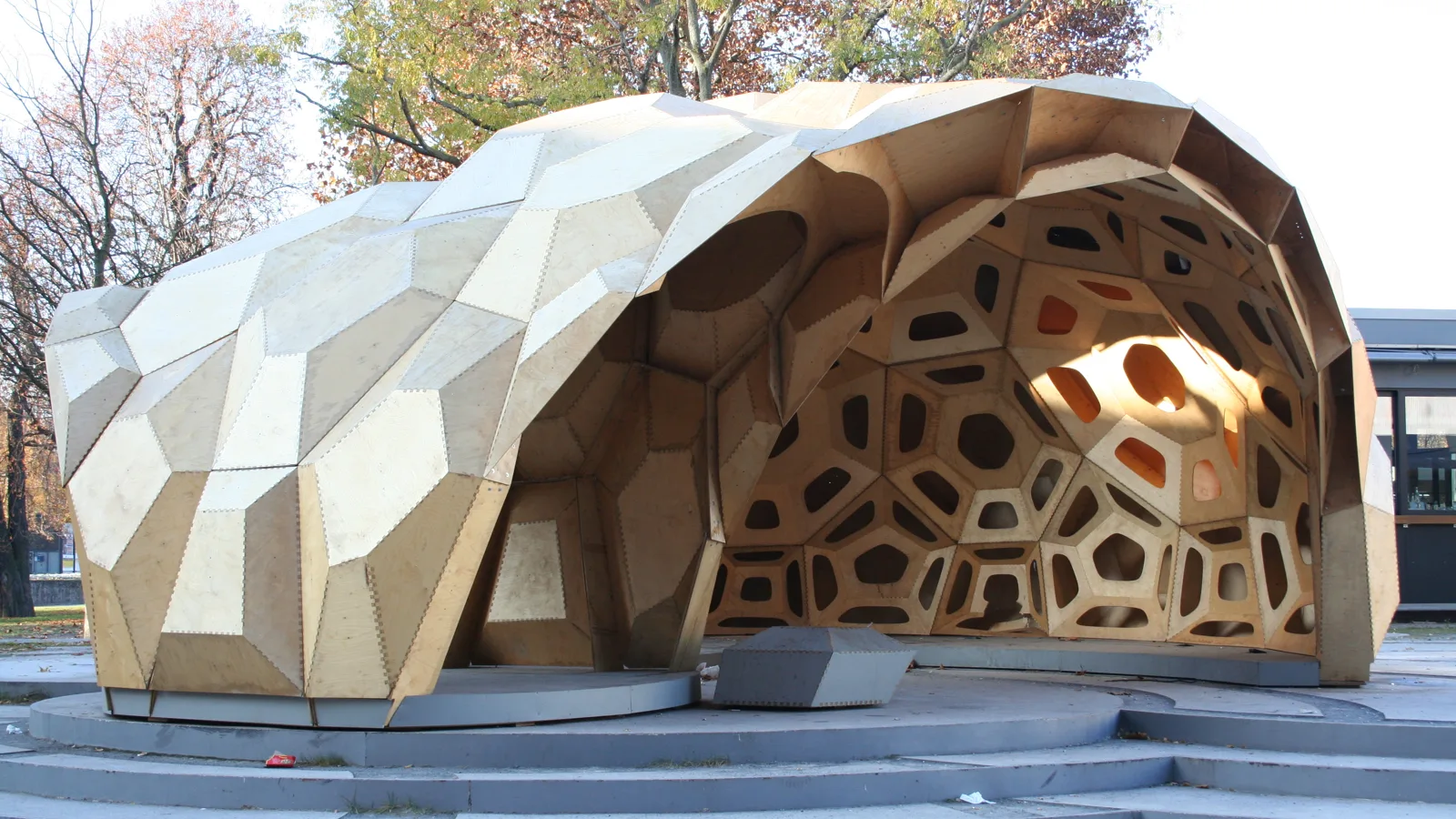
封面為德國斯圖加特大學 ICD 2011 研究展亭:以機械手臂加工的木板拼成殼體,是計算設計與機器人建造的經典案例,非學生作品。圖片來源:Wikimedia Commons(ICD Research Pavilion 2011 Stuttgart 01.jpg,MSeses,CC BY-SA 4.0;裁切、縮圖)
DigitalFUTURES CDRF 是什麼會議?
DigitalFUTURES 於 2011 年由同濟大學建築與城市規劃學院(CAUP)、上海數字建造工程技術研究中心與上海市建築學會數字建築分會共同發起,活動包括講座、會議、工作營與展覽(UCL Bartlett CDRF 2027 頁)。CDRF 是它的國際學術會議,聚焦計算設計(computational design)與機器人建造(robotic fabrication)。
依 DigitalFUTURES 官網:CDRF 論文由 Springer 出版,官網列出的收錄資料庫為 EI、CumInCAD、DOAJ 與 Scopus;歷屆論文集可在官網連到 Springer 頁面查看。2026 年第 8 屆在澳洲雪梨的新南威爾斯大學(UNSW)舉行,2027 年第 9 屆移到倫敦 UCL。
CDRF 2027 的截止日與時程是什麼?
- 徵稿:已開放(UCL 列 2026/11/16;投稿見 EasyChair)
- 摘要截止:2026 年 12 月 15 日
- 摘要錄取通知:2027 年 1 月 15 日
- 全文截止:2027 年 3 月 15 日
- 全文錄取通知:2027 年 4 月 15 日
- 修訂稿截止:2027 年 5 月 17 日
- 會前大師班(masterclass):2027 年 7 月 7 日(Bartlett Here East 校區)
- 會議:2027 年 7 月 8–9 日(倫敦 UCL East/Here East)
以上取自 UCL 官網與 DigitalFUTURES 官網,兩者的截止與會議日期一致;官方未標時區,以 EasyChair 投稿頁顯示為準,建議提早一天送出。UCL 頁面寫明註冊將於 2026 年 11 月開放。
CDRF 2027 收哪些研究題目?
2027 主題「Matter Intelligence」把重點放在材料:計算方法如何理解與設計材料、機器人與先進製造如何擴展材料表現與建造方式。官網列出三大方向(DigitalFUTURES 官網):
- Material Design:材料性能的計算模擬、材料導向的生成設計與多目標最佳化、AI 與機器學習用於材料探索、實體實驗與數位模擬。
- Physical Fabrication:機器人建造,積層、減材與混合製造,感測與機器視覺回饋,生物基、回收與複合材料,人機協作,連接設計到性能驗證的建築原型。
- Matter Systems:從材料微結構到建築的跨尺度整合、自適應系統與建築外殼、生命週期與循環利用、跨領域教育與產業合作。
UCL 頁面也寫明歡迎研究型與實踐型投稿。會前大師班由 Bartlett 的 B-made 團隊開設,題目包括土或高分子材料的機器人積層製造、以日本榫接為原理的機器人木構加工、具感測回饋的多機器人組裝。
CDRF 投稿要準備什麼?摘要和全文格式
- 摘要:約 600 字,含標題、3–5 個關鍵字、1–3 張圖與主要參考文獻。
- 全文:最多 10 頁,使用 CDRF 論文範本(範本在全文階段才公布),含標題、摘要、關鍵字、圖表與參考文獻。
- 格式與語言:PDF,英文。
- 原創性:不得同時投其他期刊或會議,禁止抄襲(含自我抄襲),審查與出版前會多次查核原創性。
以 2026 這一屆為例,同濟大學 CAUP 的公告寫明:全文要在原摘要的投稿系統上更新、不另開新稿,且須匿名;錄取論文至少一位作者須註冊並到會發表,論文才會出版;2026 年註冊費一般 AUD 300、學生 AUD 150(同濟大學 CAUP 2026 公告)。2027 年的費用與規則官網尚未公布,請以開放註冊後的公告為準。
學生可以投稿嗎?本科生、研究生發表會議論文有什麼用?
官網的投稿規則沒有限定作者身分;UCL 頁寫徵稿對象為研究者、學者、實務者與業界專業人員,未排除學生。評審看的是品質、原創性與相關性;2026 年還設有學生註冊價。依我在 12,000+ 小時設計教學與設計諮詢中的觀察,學生作者通常和指導老師或研究團隊共同署名,能走到全文錄取的,多半是有清楚研究問題、方法可重現、有實體或數據驗證的項目,而不是單純漂亮的效果圖。
對申請建築、計算設計或 HCI 類研究所的人,一篇經同儕審查的會議論文能具體證明你的研究能力與英文學術寫作;但它不是錄取的必要條件,作品集與研究計畫本身仍是主體。請把論文當成作品集裡一個項目的延伸,而不是另外硬做一件事。
不投論文,也能參加 DigitalFUTURES 工作營嗎?
可以。DigitalFUTURES 每年夏天另有工作營(workshop),以 2026 年為例(DigitalFUTURES 工作營申請頁):
- 統一申請 2026 年 5 月 11 日至 25 日(北京時間 22:00),之後有滾動申請;
- 申請材料為背景資訊、個人陳述、3 張自己作品的圖、個人技能清單;統一申請每人最多選 3 個工作營;
- 2026 年費用:學生 RMB 3,800、一般 RMB 4,800(只含學費,交通食宿自理,不退費);須全程參加 6 月 27 日至 7 月 5 日才發證書。
2027 年工作營時程與費用官網尚未公布。
建築生怎麼把作品集項目改寫成 CDRF 摘要?
- 先對主題:2027 年是「Matter Intelligence」,你的項目要能說清楚和材料性質、製造或材料系統的關係。
- 把設計敘事改成研究問題:「我想做一個漂亮的展亭」改成「某種材料在某種製造方式下,如何影響形態與性能?」
- 交代方法與工具:Grasshopper、模擬軟體、機器學習模型、機械手臂或 3D 列印流程,寫到別人能重現。
- 拿出驗證:實體原型、測試數據、比較實驗,比單張渲染圖更有說服力;摘要可放 1–3 張圖,請選最能說明方法與結果的圖。
- 倒推時間:12 月 15 日摘要截止,建議 12 月初就請老師或研究夥伴讀過英文稿。
结论先讲:想在申请研究所或找工作前拿到一篇国际会议论文,计算设计与机器人建造领域的 DigitalFUTURES CDRF(International Conference on Computational Design and Robotic Fabrication)依我的观察,是建筑生常见的选项之一。CDRF 2027 由伦敦 UCL 巴特雷建筑学院(The Bartlett)主办,2027 年 7 月 8–9 日在 UCL East/Here East 开会,主题是「Matter Intelligence」;投稿已开放(DigitalFUTURES 官网与 EasyChair,2026 年 11 月 10 日查核;UCL 页列 11 月 16 日为征稿日),摘要截止 2026 年 12 月 15 日,全文截止 2027 年 3 月 15 日。论文采摘要+全文两阶段审查,摘要约 600 字(英文),全文最多 10 页,录取论文由 Springer 出版论文集。2027 年的注册费官网尚未公布。以上依 2026 年 11 月 10 日(台北时间)DigitalFUTURES、UCL 与 EasyChair 查核。
换句话说:如果你手上有一个参数化设计、数字制造、材料实验或机器人建造的项目,在 2026 年 12 月 15 日摘要截止前,是把它改写成研究摘要、搭上 2027 这一轮的时间点。
封面为德国斯图加特大学 ICD 2011 研究展亭:以机械手臂加工的木板拼成壳体,是计算设计与机器人建造的经典案例,非学生作品。图片来源:Wikimedia Commons(ICD Research Pavilion 2011 Stuttgart 01.jpg,MSeses,CC BY-SA 4.0;裁切、缩略图)
DigitalFUTURES CDRF 是什么会议?
DigitalFUTURES 于 2011 年由同济大学建筑与城市规划学院(CAUP)、上海数字建造工程技术研究中心与上海市建筑学会数字建筑分会共同发起,活动包括讲座、会议、工作营与展览(UCL Bartlett CDRF 2027 页)。CDRF 是它的国际学术会议,聚焦计算设计(computational design)与机器人建造(robotic fabrication)。
依 DigitalFUTURES 官网:CDRF 论文由 Springer 出版,官网列出的收录数据库为 EI、CumInCAD、DOAJ 与 Scopus;历届论文集可在官网连到 Springer 页面查看。2026 年第 8 届在澳洲雪梨的新南威尔斯大学(UNSW)举行,2027 年第 9 届移到伦敦 UCL。
CDRF 2027 的截止日与时程是什么?
- 征稿:已开放(UCL 列 2026/11/16;投稿见 EasyChair)
- 摘要截止:2026 年 12 月 15 日
- 摘要录取通知:2027 年 1 月 15 日
- 全文截止:2027 年 3 月 15 日
- 全文录取通知:2027 年 4 月 15 日
- 修订稿截止:2027 年 5 月 17 日
- 会前大师班(masterclass):2027 年 7 月 7 日(Bartlett Here East 校区)
- 会议:2027 年 7 月 8–9 日(伦敦 UCL East/Here East)
以上取自 UCL 官网与 DigitalFUTURES 官网,两者的截止与会议日期一致;官方未标时区,以 EasyChair 投稿页显示为准,建议提早一天送出。UCL 页面写明注册将于 2026 年 11 月开放。
CDRF 2027 收哪些研究题目?
2027 主题「Matter Intelligence」把重点放在材料:计算方法如何理解与设计材料、机器人与先进制造如何扩展材料表现与建造方式。官网列出三大方向(DigitalFUTURES 官网):
- Material Design:材料性能的计算仿真、材料导向的生成设计与多目标优化、AI 与机器学习用于材料探索、实体实验与数字仿真。
- Physical Fabrication:机器人建造,积层、减材与混合制造,传感与机器视觉回馈,生物基、回收与复合材料,人机协作,连接设计到性能验证的建筑原型。
- Matter Systems:从材料微结构到建筑的跨尺度集成、自适应系统与建筑外壳、生命周期与循环利用、跨领域教育与产业合作。
UCL 页面也写明欢迎研究型与实践型投稿。会前大师班由 Bartlett 的 B-made 团队开设,题目包括土或高分子材料的机器人积层制造、以日本榫接为原理的机器人木构加工、具传感回馈的多机器人组装。
CDRF 投稿要准备什么?摘要和全文格式
- 摘要:约 600 字,含标题、3–5 个关键字、1–3 张图与主要参考文献。
- 全文:最多 10 页,使用 CDRF 论文范本(范本在全文阶段才公布),含标题、摘要、关键字、图表与参考文献。
- 格式与语言:PDF,英文。
- 原创性:不得同时投其他期刊或会议,禁止抄袭(含自我抄袭),审查与出版前会多次查核原创性。
以 2026 这一届为例,同济大学 CAUP 的公告写明:全文要在原摘要的投稿系统上更新、不另开新稿,且须匿名;录取论文至少一位作者须注册并到会发表,论文才会出版;2026 年注册费一般 AUD 300、学生 AUD 150(同济大学 CAUP 2026 公告)。2027 年的费用与规则官网尚未公布,请以开放注册后的公告为准。
学生可以投稿吗?本科生、研究生发表会议论文有什么用?
官网的投稿规则没有限定作者身分;UCL 页写征稿对象为研究者、学者、实务者与业界专业人员,未排除学生。评审看的是品质、原创性与相关性;2026 年还设有学生注册价。依我在 12,000+ 小时设计教学与设计咨询中的观察,学生作者通常和指导老师或研究团队共同署名,能走到全文录取的,多半是有清楚研究问题、方法可重现、有实体或数据验证的项目,而不是单纯漂亮的效果图。
对申请建筑、计算设计或 HCI 类研究所的人,一篇经同侪审查的会议论文能具体证明你的研究能力与英文学术写作;但它不是录取的必要条件,作品集与研究计划本身仍是主体。请把论文当成作品集里一个项目的延伸,而不是另外硬做一件事。
不投论文,也能参加 DigitalFUTURES 工作营吗?
可以。DigitalFUTURES 每年夏天另有工作营(workshop),以 2026 年为例(DigitalFUTURES 工作营申请页):
- 统一申请 2026 年 5 月 11 日至 25 日(北京时间 22:00),之后有滚动申请;
- 申请材料为背景信息、个人陈述、3 张自己作品的图、个人技能清单;统一申请每人最多选 3 个工作营;
- 2026 年费用:学生 RMB 3,800、一般 RMB 4,800(只含学费,交通食宿自理,不退费);须全程参加 6 月 27 日至 7 月 5 日才发证书。
2027 年工作营时程与费用官网尚未公布。
建筑生怎么把作品集项目改写成 CDRF 摘要?
- 先对主题:2027 年是「Matter Intelligence」,你的项目要能说清楚和材料性质、制造或材料系统的关系。
- 把设计叙事改成研究问题:「我想做一个漂亮的展亭」改成「某种材料在某种制造方式下,如何影响形态与性能?」
- 交代方法与工具:Grasshopper、仿真软件、机器学习模型、机械手臂或 3D 打印流程,写到别人能重现。
- 拿出验证:实体原型、测试数据、比较实验,比单张渲染图更有说服力;摘要可放 1–3 张图,请选最能说明方法与结果的图。
- 倒推时间:12 月 15 日摘要截止,建议 12 月初就请老师或研究伙伴读过英文稿。
The short answer: if you want a peer-reviewed international conference paper before applying to graduate school or for jobs, DigitalFUTURES CDRF (the International Conference on Computational Design and Robotic Fabrication) is, in my observation, one of the common options for architecture students. CDRF 2027 is hosted by The Bartlett School of Architecture, UCL, at UCL East / Here East in London on 8–9 July 2027, under the theme “Matter Intelligence”. Submissions are already open (DigitalFUTURES and EasyChair, checked 10 November 2026; the UCL page lists 16 November 2026 as the call-for-abstracts date), and abstracts are due on 15 December 2026; full papers are due on 15 March 2027. Papers go through a two-stage review (abstract, then full paper); abstracts are about 600 words in English, full papers up to 10 pages, and accepted papers are published by Springer. Registration fees for 2027 have not yet been published. All of this was checked against the DigitalFUTURES, UCL and EasyChair websites on 10 November 2026 (Taipei time).
In other words: if you have a parametric design, digital fabrication, material experiment or robotic construction project, the period before the 15 December 2026 abstract deadline is your window to turn it into a research abstract for the 2027 round.
Cover: the ICD Research Pavilion 2011 at the University of Stuttgart, a shell assembled from robotically fabricated timber plates and a classic case of computational design and robotic fabrication; not student work. Image: Wikimedia Commons (ICD Research Pavilion 2011 Stuttgart 01.jpg, MSeses, CC BY-SA 4.0; cropped, resized)
What is the DigitalFUTURES CDRF conference?
DigitalFUTURES was launched in 2011 by the College of Architecture and Urban Planning (CAUP) at Tongji University, the Shanghai Digital Architecture Fabrication Technology Center and the Digital Architecture Branch of the Architectural Society of Shanghai China; its activities include lectures, conferences, workshops and exhibitions (UCL Bartlett CDRF 2027 page). CDRF is its international academic conference, focused on computational design and robotic fabrication.
According to the DigitalFUTURES website, CDRF papers are published by Springer and the site lists indexing in EI, CumInCAD, DOAJ and Scopus; past proceedings are linked from the site to Springer. The 8th edition in 2026 was held at UNSW in Sydney; the 9th, in 2027, moves to UCL in London.
What are the CDRF 2027 deadlines and key dates?
- Call for abstracts: already open (UCL lists 16 November 2026; submit via EasyChair)
- Abstract deadline: 15 December 2026
- Abstract acceptance notification: 15 January 2027
- Full paper deadline: 15 March 2027
- Full paper acceptance notification: 15 April 2027
- Revised full paper deadline: 17 May 2027
- Pre-conference masterclasses: 7 July 2027 (Bartlett Here East campus)
- Conference: 8–9 July 2027 (The Bartlett, UCL East / Here East, London)
These come from the UCL website and the DigitalFUTURES website, which agree on the deadlines and conference dates; official pages do not state a time zone, so follow what the EasyChair submission page shows, and submit a day early. The UCL page says registration will open in November 2026.
What research topics does CDRF 2027 accept?
The 2027 theme, “Matter Intelligence”, centres on materials: how computational methods can support the understanding and design of materials, and how robotics and advanced manufacturing can expand material expression and construction. The website lists three areas (DigitalFUTURES website):
- Material Design: computational modelling of material properties and performance, material-informed generative design and multi-objective optimisation, AI and machine learning in material exploration, physical experimentation and digital simulation.
- Physical Fabrication: robotic fabrication; additive, subtractive and hybrid manufacturing; sensing and machine-vision feedback; bio-based, recycled and composite materials; human–robot collaboration; architectural prototypes linking design to performance validation.
- Matter Systems: cross-scale integration from material microstructure to buildings, adaptive systems and building envelopes, life-cycle performance and circular use, interdisciplinary education and industry collaboration.
The UCL page also welcomes both research-based and practice-based contributions. The pre-conference masterclasses are run by the Bartlett’s B-made staff and include robotic additive manufacturing with soil or polymers, robotic timber fabrication based on Japanese joinery, and automated multi-robot assembly with sensing and feedback.
What do you need to submit to CDRF? Abstract and full-paper format
- Abstract: about 600 words, including title, 3–5 keywords, 1–3 figures and key references.
- Full paper: up to 10 pages in the CDRF template (released at the full-paper stage), including title, abstract, keywords, figures, tables and references.
- Format and language: PDF, English.
- Originality: no simultaneous submission elsewhere; plagiarism, including self-plagiarism, is prohibited, and originality is checked during review and before publication.
For the 2026 edition, Tongji CAUP’s notice said full papers had to update the existing abstract submission rather than create a new one, and be anonymous; at least one author of an accepted paper had to register and present for it to be published; and 2026 registration was AUD 300 (regular) or AUD 150 (student) (Tongji CAUP 2026 notice). Fees and rules for 2027 have not been published yet; follow the announcement when registration opens.
Can students submit? What does a conference paper do for undergraduate or graduate applicants?
The submission rules do not restrict who can be an author; the UCL page invites abstracts from researchers, academics, practitioners and industry professionals, and does not exclude students. Reviewers judge quality, originality and relevance, and 2026 even had a student registration rate. From my observation over 12,000+ hours of design teaching and design consulting, student authors usually co-author with a supervisor or research team, and the projects that reach full-paper acceptance tend to have a clear research question, reproducible methods and physical or data-based validation, not just attractive renderings.
For applicants to architecture, computational design or HCI research programmes, a peer-reviewed conference paper is concrete evidence of research ability and academic English writing. It is not required for admission, though; the portfolio and research proposal remain the core. Treat the paper as an extension of a project already in your portfolio rather than a separate add-on.
Can you join a DigitalFUTURES workshop without submitting a paper?
Yes. DigitalFUTURES also runs summer workshops. Using 2026 as the example (DigitalFUTURES workshop application page):
- unified applications ran from 11 to 25 May 2026 (22:00 GMT+8), followed by rolling applications;
- materials were background information, a personal statement, three drawings of your own work and a list of skills; in the unified round each person could choose up to three workshops;
- 2026 fees: RMB 3,800 for students and RMB 4,800 general (tuition only; travel, accommodation and meals not included; non-refundable), with full attendance from 27 June to 5 July required for a certificate.
The 2027 workshop schedule and fees have not been published yet.
How can an architecture student turn a portfolio project into a CDRF abstract?
- Match the theme: for 2027 it is “Matter Intelligence”, so show how your project relates to material properties, fabrication or material systems.
- Turn the design story into a research question: instead of “I wanted to design a beautiful pavilion”, ask “how does a given material, under a given fabrication process, affect form and performance?”
- Explain methods and tools: Grasshopper, simulation software, machine-learning models, robot arms or 3D-printing workflows, described well enough to be reproduced.
- Show validation: physical prototypes, test data and comparative experiments persuade more than a single rendering; the abstract allows 1–3 figures, so choose those that explain method and results.
- Work backwards: abstracts are due on 15 December, so ask a supervisor or research partner to read your English draft in early December.
English summary
How can architecture students publish a peer-reviewed conference paper? DigitalFUTURES CDRF, the International Conference on Computational Design and Robotic Fabrication, publishes its proceedings with Springer. Checked on 10 November 2026: CDRF 2027 is hosted by The Bartlett School of Architecture, UCL, in London on 8–9 July 2027 (masterclasses 7 July), themed Matter Intelligence; submissions are already open (checked 10 November 2026 on DigitalFUTURES and EasyChair; the UCL page lists 16 November 2026 as the call-for-abstracts date), abstracts of about 600 words are due on 15 December 2026, full papers of up to 10 pages on 15 March 2027 and revisions on 17 May 2027, with a two-stage review. 2027 registration fees are unpublished (2026: AUD 300 regular, AUD 150 student). The post also covers the 2026 DigitalFUTURES summer workshop process and practical steps for turning a portfolio project into an abstract.
常見問題常见问题FAQ
CDRF 2027 的摘要截止日是什麼時候?CDRF 2027 的摘要截止日是什么时候?When is the CDRF 2027 abstract deadline?
2026 年 12 月 15 日。投稿已開放(DigitalFUTURES 官網與 EasyChair,2026 年 11 月 10 日查核;UCL 頁列 11 月 16 日為徵稿日);摘要錄取 2027 年 1 月 15 日通知,全文 2027 年 3 月 15 日截止,修訂稿 2027 年 5 月 17 日截止。官方未標時區,以 EasyChair 投稿頁顯示為準,建議提早送出。
2026 年 12 月 15 日。投稿已开放(DigitalFUTURES 官网与 EasyChair,2026 年 11 月 10 日查核;UCL 页列 11 月 16 日为征稿日);摘要录取 2027 年 1 月 15 日通知,全文 2027 年 3 月 15 日截止,修订稿 2027 年 5 月 17 日截止。官方未标时区,以 EasyChair 投稿页显示为准,建议提早送出。
15 December 2026. Submissions are already open on DigitalFUTURES and EasyChair (checked 10 November 2026; the UCL page lists 16 November 2026 as the call-for-abstracts date); abstract decisions come on 15 January 2027, full papers are due on 15 March 2027 and revised papers on 17 May 2027. Official pages do not state a time zone; follow what the EasyChair submission page shows, and submit early.
CDRF 2027 在哪裡舉行?CDRF 2027 在哪里举行?Where is CDRF 2027 held?
由倫敦 UCL 巴特雷建築學院(The Bartlett)主辦,會議 2027 年 7 月 8–9 日,會前大師班 7 月 7 日在 Bartlett Here East 校區。
由伦敦 UCL 巴特雷建筑学院(The Bartlett)主办,会议 2027 年 7 月 8–9 日,会前大师班 7 月 7 日在 Bartlett Here East 校区。
It is hosted by The Bartlett School of Architecture, UCL, in London: the conference runs on 8–9 July 2027, with pre-conference masterclasses on 7 July at the Bartlett Here East campus.
CDRF 論文摘要要寫多長?CDRF 论文摘要要写多长?How long should a CDRF abstract be?
約 600 字(英文),含標題、3–5 個關鍵字、1–3 張圖與主要參考文獻;全文最多 10 頁,PDF 格式,範本在全文階段公布。
约 600 字(英文),含标题、3–5 个关键字、1–3 张图与主要参考文献;全文最多 10 页,PDF 格式,范本在全文阶段公布。
About 600 words in English, including title, 3–5 keywords, 1–3 figures and key references; full papers are up to 10 pages in PDF, with the template released at the full-paper stage.
CDRF 2027 註冊費多少?CDRF 2027 注册费多少?How much is CDRF 2027 registration?
2027 年費用官網尚未公布;UCL 頁面寫註冊將於 2026 年 11 月開放。參考:2026 年一般 AUD 300、學生 AUD 150,且錄取論文至少一位作者須註冊並發表。
2027 年费用官网尚未公布;UCL 页面写注册将于 2026 年 11 月开放。参考:2026 年一般 AUD 300、学生 AUD 150,且录取论文至少一位作者须注册并发表。
2027 fees have not been published; the UCL page says registration opens in November 2026. For reference, 2026 registration was AUD 300 regular and AUD 150 for students, and at least one author of each accepted paper had to register and present.
本科生可以投稿 CDRF 嗎?本科生可以投稿 CDRF 吗?Can undergraduates submit to CDRF?
投稿規則沒有限定作者身分;UCL 頁列研究者、學者、實務者與業界專業人員,未排除學生。評審看品質、原創性與相關性。學生常與指導老師或研究團隊共同署名;重點是清楚的研究問題、可重現的方法與驗證。
投稿规则没有限定作者身分;UCL 页列研究者、学者、实务者与业界专业人员,未排除学生。评审看品质、原创性与相关性。学生常与指导老师或研究团队共同署名;重点是清楚的研究问题、可重现的方法与验证。
The rules do not restrict who can be an author; the UCL page invites abstracts from researchers, academics, practitioners and industry professionals, and does not exclude students. Reviewers judge quality, originality and relevance. Students often co-author with a supervisor or research team; what matters is a clear research question, reproducible methods and validation.
DigitalFUTURES 工作營怎麼申請?DigitalFUTURES 工作营怎么申请?How do you apply for a DigitalFUTURES workshop?
以 2026 年為例:5 月統一申請、6 月滾動申請,需背景資訊、個人陳述、3 張自己作品的圖與技能清單;學生費用 RMB 3,800。2027 年時程與費用官網尚未公布。
以 2026 年为例:5 月统一申请、6 月滚动申请,需背景信息、个人陈述、3 张自己作品的图与技能清单;学生费用 RMB 3,800。2027 年时程与费用官网尚未公布。
In 2026: unified applications in May and rolling applications in June, with background information, a personal statement, three drawings of your own work and a skills list; the student fee was RMB 3,800. The 2027 schedule and fees have not been published.
訂閱新文章订阅新文章Subscribe
新文章會寄到這個信箱。新文章会寄到这个邮箱。New posts will be emailed to this address.
已訂閱。已订阅。Subscribed.暫時無法訂閱,請稍後再試。暂时无法订阅,请稍后再试。Could not subscribe. Please try again.相關文章相关文章Related posts
 建築作品集怎麼選方向?主題 Driven、尺度 Scale、技術 Skills、目的 Goal 四個維度,怎麼組合成一個項目建筑作品集怎么选方向?主题 Driven、尺度 Scale、技术 Skills、目的 Goal 四个维度,怎么组合成一个项目How do you choose a direction for an architecture portfolio? Combining theme (Driven), scale, skills and goal into one project作品集不要先從「我有哪些好看的圖」倒過來排,而要先選定主題(Driven)、尺度(Scale)、技術(Skills)與目的(Goal),再組合成一個說得清楚的項目。本文依教學簡報〈作品集準備及選擇方向〉整理這四個維度,並說明簡報如何用一個項目示範組合方法。簡報中的學生案例只寫錄取學校與作品方向,不具名。作品集不要先从「我有哪些好看的图」倒过来排,而要先选定主题(Driven)、尺度(Scale)、技术(Skills)与目的(Goal),再组合成一个说得清楚的项目。本文依教学简报〈作品集准备及选择方向〉整理这四个维度,并说明简报如何用一个项目示范组合方法。简报中的学生案例只写录取学校与作品方向,不具名。Do not build a portfolio by lining up your best-looking drawings and working backwards. Choose a theme (Driven), a scale, the skills to make visible, and a goal, then combine them into a project you can explain. This article follows the teaching deck “Portfolio preparation and choosing a direction,” including the deck’s worked example of how to combine the four dimensions. Student cases are anonymous: only the schools listed on the slide and the direction of the work are given.
 錄取卡內基美隆建築本科的作品集:她把橘子、身體、植物與記憶都搭成了空間(2026 年 10 月官方查核)录取卡内基美隆建筑本科的作品集:她把橘子、身体、植物与记忆都搭成了空间(2026 年 10 月官方查核)A Carnegie Mellon architecture portfolio: how one admitted student built oranges, the body, plants and memory into space (checked October 2026)一份錄取卡內基美隆(CMU)建築本科的作品集,如何對應官網列出的好奇心、空間推理、綜合能力與「動手製作的慾望」?拆解橘子涼亭、生長的支架、灰姑娘等作品,並對照 CMU 官網:10 件作品、經 SlideRoom 提交,ED 11 月 2 日、RD 1 月 8 日截止。一份录取卡内基美隆(CMU)建筑本科的作品集,如何对应官网列出的好奇心、空间推理、综合能力与「动手制作的欲望」?拆解橘子凉亭、生长的支架、灰姑娘等作品,并对照 CMU 官网:10 件作品、经 SlideRoom 提交,ED 11 月 2 日、RD 1 月 8 日截止。How does a portfolio admitted to Carnegie Mellon (CMU) undergraduate architecture meet the curiosity, spatial reasoning, ability to synthesize, and "desire to make" named on the official site? It unpacks the orange pavilion, A Scaffold of Growth, Cinderella, and other works, set against the CMU site: 10 works, submitted through SlideRoom, with Early Decision due November 2 and Regular Decision due January 8.
 4 份作品集都錄取康乃爾建築本科:他們把生活經驗「轉譯」成空間(2026 年 10 月官方查核)4 份作品集都录取康乃尔建筑本科:他们把生活经验「转译」成空间(2026 年 10 月官方查核)Four portfolios, four Cornell B.Arch offers: how admitted students translated everyday experience into space (checked October 2026)四份風格完全不同的作品集都錄取康乃爾 B.Arch:繪畫與陶瓷、計算設計、遊戲敘事、生態行動。拆解它們的共同點——從個人經驗出發、保留過程證據、多媒材、價值方向具體,並對照康乃爾 AAP 官網:作品集 15–20 張、每項目最多 2 張,ED 11 月 1 日、RD 1 月 2 日截止,加 3 分鐘影片面試。四份风格完全不同的作品集都录取康乃尔 B.Arch:绘画与陶瓷、计算设计、游戏叙事、生态行动。拆解它们的共同点——从个人经验出发、保留过程证据、多媒材、价值方向具体,并对照康乃尔 AAP 官网:作品集 15–20 张、每项目最多 2 张,ED 11 月 1 日、RD 1 月 2 日截止,加 3 分钟视频面试。Four portfolios in completely different styles were admitted to the Cornell B.Arch: painting and ceramics, computational design, game narrative, and ecological action. They share a start in personal experience, process kept as evidence, multiple media, and a concrete direction of values, set against the Cornell AAP site: 15–20 images, at most 2 per project, Early Decision due November 1, Regular Decision due January 2, and a 3-minute video interview.