TU Delft AUBS 建築技術(Building Technology)碩士作品集:2027 入學規格、自我反思與 6 項評分標準(2026 年 10 月官網查核)TU Delft AUBS 建筑技术(Building Technology)硕士作品集:2027 入学规格、自我反思与 6 项评分标准(2026 年 10 月官网查核)TU Delft AUBS Building Technology portfolio: 2027 format, self-reflection questions and six evaluation criteria (checked October 2026)
用微信掃描這張 QR code 即可分享。用微信扫描这张 QR code 即可分享。Scan this QR code with WeChat to share.
掃描或下載這張 QR code。扫描或下载这张 QR code。Scan or download this QR code.
申請台夫特理工大學(TU Delft)建築、城市與建築科學碩士(MSc Architecture, Urbanism and Building Sciences,簡稱 AUBS)的 Building Technology(建築技術,BT)方向,很多人第一反應是把最漂亮的效果圖放進作品集。但 BT 的評審要找的是另一種人:能把結構、立面、氣候與數位設計,真正整合進建築設計的「技術型設計者」。換句話說,你交的不只是作品集,而是一份「我能把設計建出來」的證據。
以下資訊於 2026 年 10 月對照 TU Delft 官網與官方公布的 2027–2029 評分標準查核,針對 2027 年 9 月入學;學校仍可能調整,送件前請以官網為準。舊資料中的排名說法未在本文重複。
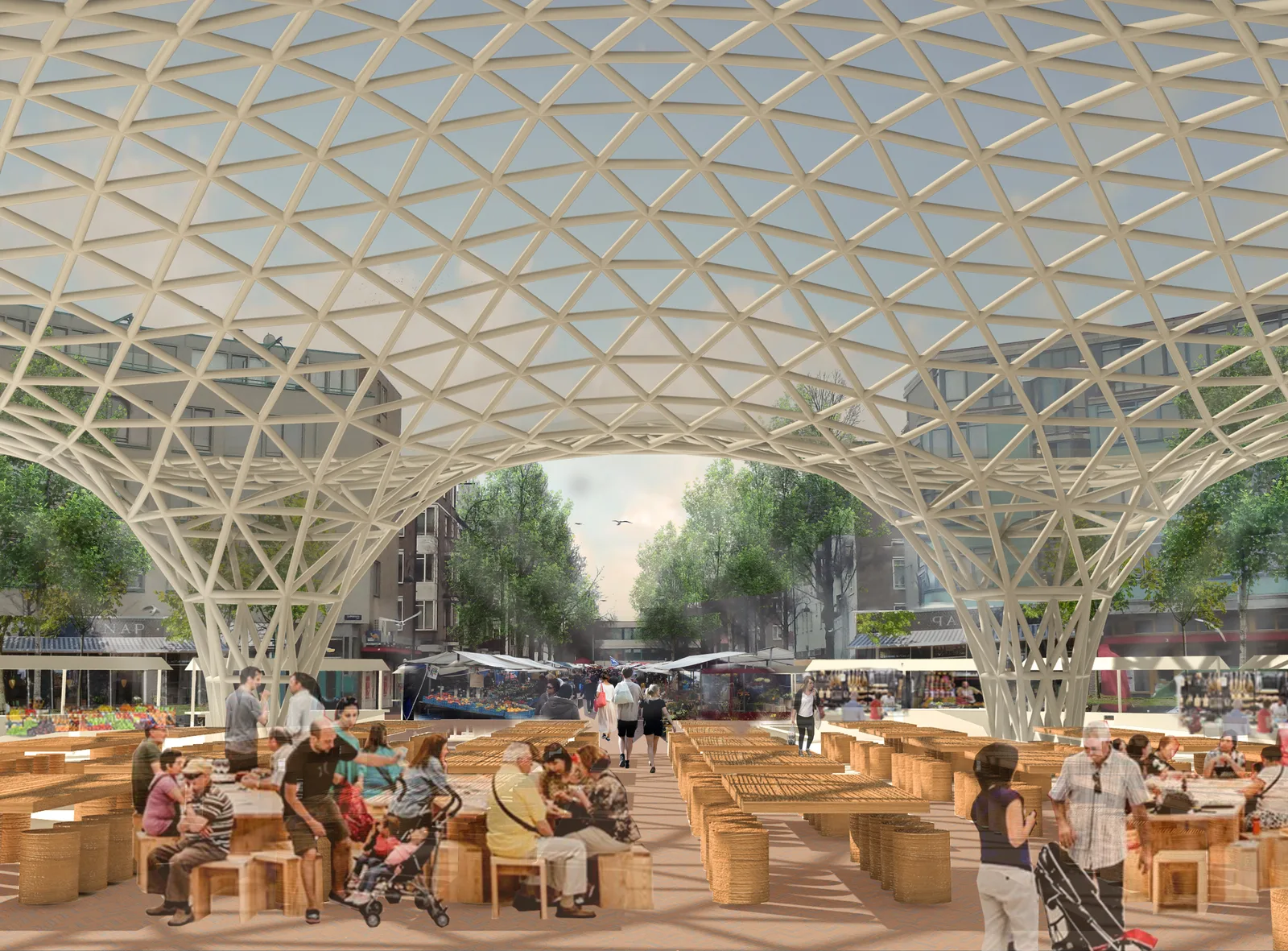
文首封面是 AUBS 課程官網上代表 Building Technology 方向的圖片:木構網殼屋頂下的半戶外市集空間渲染圖。圖片來源:台夫特理工大學 官網
Building Technology 方向在學什麼?
AUBS 是兩年制、120 EC、全英語授課的碩士,新生只能 9 月入學,共有五個方向:Architecture、Building Technology、Landscape Architecture、Management in the Built Environment、Urbanism。官網對 BT 的定位是培養「永續設計者」,重點是創新、永續的建築構件設計,以及它們如何整合進建成環境;課程不專攻單一領域,而是橫跨氣候設計、立面與產品設計、結構設計、設計資訊學(design informatics),目標是「懂得工程師怎麼工作的設計師」。
- 第一年上學期(MSc1):核心技術課+ Bucky Lab 設計工作室,有機會以 1:1 比例實際建造自己的設計。
- 第一年下學期(MSc2):3 門 BT 選修(各 5 EC),再從 EXTREME technology(極端氣候、地點或功能下的建築)、MEGA(具工程挑戰的大型建築)、Heritage and Architecture Design Studio(既有建築)、Entrepreneurship in the Built Environment 四門設計課中選一門;第四學季與其他方向同學合作跨領域課程。
- 第二年:第五學季修跨院系或與校外夥伴合作的選修,接著用三個學季完成畢業設計;BT 只有一個畢業工作室,學生須結合至少兩個主題(結構、氣候、立面與產品、設計資訊學)同時做研究與設計。
官網也直接寫明:申請者必須同時展現技術與建築兩方面的能力、興趣與理解。這個方向適合想補強技術能力的建築背景學生,也適合想加強設計能力的技術背景學生。
2027 入學:截止日與基本流程
- 非歐盟/EFTA 申請者:截止 2027 年 1 月 15 日 23:59(荷蘭時間);線上申請系統 2026 年 10 月 15 日開放。
- 歐盟/EFTA 申請者:截止 2027 年 4 月 1 日,滾動審核,送齊文件後 12 週內評估。
- 獎學金:學院每年只頒發 2 個 Justus & Louise van Effen Excellence Scholarship,須在 2026 年 12 月 1 日前完成申請才有資格。
- 其他:每學年只能遞交一份 AUBS 申請;官網估計非歐盟學生每年總花費約 5 萬歐元(學費、生活、保險等)。學費細項可參考歐洲建築留學 14 校學費與工簽整理。符合學歷與語言等一般門檻後,所有人還要通過作品集+自我反思這道篩選,且至少由兩位委員審閱。
作品集規格(2027–2029 申請週期)
- PDF、不超過 20 MB、不超過 30 頁,A4 或 A3、全部橫式;一個螢幕只能顯示一頁,不可用跨頁(booklet)格式。
- 最多 5 個項目,其中職業項目最多 2 個;至少 1 個個人項目;必須包含畢業設計(未完成則放最近一個項目);要有能展現技術能力的項目,官網強烈建議放在畢業設計或最深入的項目裡。
- 每個項目都要寫明:名稱與地點、學術或職業、個人或小組、你在過程中的角色、你的確切貢獻、年級/學期、日期、指導老師姓名,並以英文詳細說明。
- 所有合作成果,包括使用 AI 工具的部分,都必須公開標註;未如實揭露貢獻可能被視為不當行為。
- 手繪、繪畫或手工不是必要的;若要放,請放在最後並限 2–3 頁。封面寫全名與聯絡方式。
新規定:作品集第一頁要放 6 題自我反思
2027–2029 週期起,作品集第一頁(項目之前)要放所申請方向的自我反思答案,每題不超過 150 字(英文),必須引用作品集或履歷中的具體項目。BT 的 6 題大意是:
- 為什麼選 TU Delft 的 BT:哪個項目暴露了你的知識缺口,你想補什麼能力?
- 技術學科的應用:結構、氣候、運算設計或細部如何影響最終設計,你如何發展與測試解法?
- 原創與獨立思考:一個具體設計決策為何這樣選、如何影響結果?小組項目請說明你的角色。
- 批判思考:兩個以上性能目標的衝突(例如採光與過熱、結構與可變性、美觀與可建造性),你如何取捨?
- 學術發展與自我反思:一次不如預期的經驗,你考慮過哪些選項、今天還會這樣決定嗎?
- 研究與設計整合:原本的假設是什麼、什麼證據讓你質疑、你用什麼方法驗證、他人如何回應?
BT 的 6 項評分標準:缺一項就可能被拒
官方公布的 BT 評分標準(2027–2029)同時套用在作品集與反思答案上:
- 動機:展現對 BT 課程的強烈興趣,並有選擇 TU Delft 的具說服力理由。
- 技術學科的應用:透過結構設計、構造設計、氣候設計、設計資訊學等,證明項目在技術上可行。
- 設計能力:適當的建築設計能力,以及想法的原創性與創新性。
- 整合設計:能以整合系統思考與設計,理解建築中複雜的技術關係。
- 學術態度:能從研究或功能分析中提出設計目標、產生選項,並說明決策理由。
- 溝通:能簡潔地用文字、圖面與其他媒介表達想法,並清楚標示你在項目中的確切貢獻。
標準最後一句是:「所有標準都必須符合,任何一項不及格都可能導致被拒。」所以 BT 作品集最怕偏科——只有漂亮的圖、或只有工程計算,都有風險。
怎麼把作品集改成 BT 想看的樣子?
以下是我依官方標準整理的建議,不是官網要求:
- 每個項目至少一次「系統性取捨」:例如結構、圍護、環境、運算中兩項以上互相牽制的決策,並畫出你比較過的選項。這也直接對應反思第 4 題。
- 讓技術出現在設計過程中,而不是最後一頁貼節點:用「問題/研究輸入 → 方法(實驗、模型、模擬指標)→ 方案迭代 → 結論」的順序排版,評審才看得到研究與技術設計。
- 把貢獻綁在關鍵圖上:在重點頁直接標註 my role,小組項目與 AI 輔助的部分寫清楚,越完整的項目越要說明哪一段是你做的。
- 反思答案與作品集同構:6 題的例子都從作品集裡挑,讓評審翻到對應頁就能找到證據。
- 把 30 頁留給 5 個最強的項目:畢業設計做最深,其他項目各自補一個評分維度,比塞滿 8 個淺項目更有效。
我從 2017 年至今累積 12,000+ 小時設計教學與設計諮詢。申請歐洲技術型課程時,最常見的落差就是作品集只呈現「結果」,卻看不到推導。TU Delft 已經把評分表公開了,最穩的做法就是逐條對照,讓每一項標準都能在作品集裡被「看見」。
申请台夫特理工大学(TU Delft)建筑、城市与建筑科学硕士(MSc Architecture, Urbanism and Building Sciences,简称 AUBS)的 Building Technology(建筑技术,BT)方向,很多人第一反应是把最漂亮的效果图放进作品集。但 BT 的评审要找的是另一种人:能把结构、立面、气候与数字设计,真正集成进建筑设计的「技术型设计者」。换句话说,你交的不只是作品集,而是一份「我能把设计建出来」的证据。
以下信息于 2026 年 10 月对照 TU Delft 官网与官方公布的 2027–2029 评分标准查核,针对 2027 年 9 月入学;学校仍可能调整,送件前请以官网为准。旧资料中的排名说法未在本文重复。
文首封面是 AUBS 课程官网上代表 Building Technology 方向的图片:木构网壳屋顶下的半户外市集空间渲染图。图片来源:台夫特理工大学 官网
Building Technology 方向在学什么?
AUBS 是两年制、120 EC、全英语授课的硕士,新生只能 9 月入学,共有五个方向:Architecture、Building Technology、Landscape Architecture、Management in the Built Environment、Urbanism。官网对 BT 的定位是培养「永续设计者」,重点是创新、永续的建筑构件设计,以及它们如何集成进建成环境;课程不专攻单一领域,而是横跨气候设计、立面与产品设计、结构设计、设计信息学(design informatics),目标是「懂得工程师怎么工作的设计师」。
- 第一年上学期(MSc1):核心技术课+ Bucky Lab 设计工作室,有机会以 1:1 比例实际建造自己的设计。
- 第一年下学期(MSc2):3 门 BT 选修(各 5 EC),再从 EXTREME technology(极端气候、地点或功能下的建筑)、MEGA(具工程挑战的大型建筑)、Heritage and Architecture Design Studio(既有建筑)、Entrepreneurship in the Built Environment 四门设计课中选一门;第四学季与其他方向同学合作跨领域课程。
- 第二年:第五学季修跨院系或与校外伙伴合作的选修,接着用三个学季完成毕业设计;BT 只有一个毕业工作室,学生须结合至少两个主题(结构、气候、立面与产品、设计信息学)同时做研究与设计。
官网也直接写明:申请者必须同时展现技术与建筑两方面的能力、兴趣与理解。这个方向适合想补强技术能力的建筑背景学生,也适合想加强设计能力的技术背景学生。
2027 入学:截止日与基本流程
- 非欧盟/EFTA 申请者:截止 2027 年 1 月 15 日 23:59(荷兰时间);在线申请系统 2026 年 10 月 15 日开放。
- 欧盟/EFTA 申请者:截止 2027 年 4 月 1 日,滚动审核,送齐文档后 12 周内评估。
- 奖学金:学院每年只颁发 2 个 Justus & Louise van Effen Excellence Scholarship,须在 2026 年 12 月 1 日前完成申请才有资格。
- 其他:每学年只能递交一份 AUBS 申请;官网估计非欧盟学生每年总花费约 5 万欧元(学费、生活、保险等)。学费细项可参考欧洲建筑留学 14 校学费与工签整理。符合学历与语言等一般门槛后,所有人还要通过作品集+自我反思这道筛选,且至少由两位委员审阅。
作品集规格(2027–2029 申请周期)
- PDF、不超过 20 MB、不超过 30 页,A4 或 A3、全部横式;一个屏幕只能显示一页,不可用跨页(booklet)格式。
- 最多 5 个项目,其中职业项目最多 2 个;至少 1 个个人项目;必须包含毕业设计(未完成则放最近一个项目);要有能展现技术能力的项目,官网强烈建议放在毕业设计或最深入的项目里。
- 每个项目都要写明:名称与地点、学术或职业、个人或小组、你在过程中的角色、你的确切贡献、年级/学期、日期、指导老师姓名,并以英文详细说明。
- 所有合作成果,包括使用 AI 工具的部分,都必须公开标注;未如实揭露贡献可能被视为不当行为。
- 手绘、绘画或手工不是必要的;若要放,请放在最后并限 2–3 页。封面写全名与联系方式。
新规定:作品集第一页要放 6 题自我反思
2027–2029 周期起,作品集第一页(项目之前)要放所申请方向的自我反思答案,每题不超过 150 字(英文),必须引用作品集或履历中的具体项目。BT 的 6 题大意是:
- 为什么选 TU Delft 的 BT:哪个项目暴露了你的知识缺口,你想补什么能力?
- 技术学科的应用:结构、气候、运算设计或细部如何影响最终设计,你如何发展与测试解法?
- 原创与独立思考:一个具体设计决策为何这样选、如何影响结果?小组项目请说明你的角色。
- 批判思考:两个以上性能目标的冲突(例如采光与过热、结构与可变性、美观与可建造性),你如何取舍?
- 学术发展与自我反思:一次不如预期的经验,你考虑过哪些选项、今天还会这样决定吗?
- 研究与设计集成:原本的假设是什么、什么证据让你质疑、你用什么方法验证、他人如何回应?
BT 的 6 项评分标准:缺一项就可能被拒
官方公布的 BT 评分标准(2027–2029)同时套用在作品集与反思答案上:
- 动机:展现对 BT 课程的强烈兴趣,并有选择 TU Delft 的具说服力理由。
- 技术学科的应用:通过结构设计、构造设计、气候设计、设计信息学等,证明项目在技术上可行。
- 设计能力:适当的建筑设计能力,以及想法的原创性与创新性。
- 集成设计:能以集成系统思考与设计,理解建筑中复杂的技术关系。
- 学术态度:能从研究或功能分析中提出设计目标、产生选项,并说明决策理由。
- 沟通:能简洁地用文本、图面与其他媒介表达想法,并清楚标示你在项目中的确切贡献。
标准最后一句是:「所有标准都必须符合,任何一项不及格都可能导致被拒。」所以 BT 作品集最怕偏科——只有漂亮的图、或只有工程计算,都有风险。
怎么把作品集改成 BT 想看的样子?
以下是我依官方标准整理的建议,不是官网要求:
- 每个项目至少一次「系统性取舍」:例如结构、围护、环境、运算中两项以上互相牵制的决策,并画出你比较过的选项。这也直接对应反思第 4 题。
- 让技术出现在设计过程中,而不是最后一页贴节点:用「问题/研究输入 → 方法(实验、模型、仿真指针)→ 方案迭代 → 结论」的顺序排版,评审才看得到研究与技术设计。
- 把贡献绑在关键图上:在重点页直接标注 my role,小组项目与 AI 辅助的部分写清楚,越完整的项目越要说明哪一段是你做的。
- 反思答案与作品集同构:6 题的例子都从作品集里挑,让评审翻到对应页就能找到证据。
- 把 30 页留给 5 个最强的项目:毕业设计做最深,其他项目各自补一个评分维度,比塞满 8 个浅项目更有效。
我从 2017 年至今累积 12,000+ 小时设计教学与设计咨询。申请欧洲技术型课程时,最常见的落差就是作品集只呈现「结果」,却看不到推导。TU Delft 已经把评分表公开了,最稳的做法就是逐条对照,让每一项标准都能在作品集里被「看见」。
When applying to the Building Technology (BT) track of the MSc Architecture, Urbanism and Building Sciences (AUBS) at TU Delft, many people instinctively fill the portfolio with their best renderings. BT reviewers are looking for something else: a "technical designer" who can genuinely integrate structural, façade, climate and computational design into architecture. In other words, you are not just submitting a portfolio but evidence that you can get a design built.
The information below was checked in October 2026 against the TU Delft website and the official 2027–2029 evaluation criteria, for September 2027 entry. The university may still change details, so confirm on the official pages before you apply. Ranking claims from older material are not repeated here.
The cover image represents the Building Technology track on the AUBS programme website: a rendering of a semi-outdoor market space under a timber gridshell roof. Image source: TU Delft official website
What does the Building Technology track teach?
AUBS is a two-year, 120 EC master's taught in English; new students can only start in September, and there are five tracks: Architecture, Building Technology, Landscape Architecture, Management in the Built Environment and Urbanism. The official site positions BT as training "the sustainable designer", with the emphasis on designing innovative and sustainable building components and integrating them into the built environment. Rather than one specialism, students cover climate design, façade and product design, structural design and design informatics, becoming designers who know how engineers work.
- Year 1, first semester (MSc1): core technical courses plus the Bucky Lab design studio, where you can build your own project at 1:1 scale.
- Year 1, second semester (MSc2): three BT electives (5 EC each) and one of four design courses: EXTREME technology (building in extreme climates, locations or functions), MEGA (large buildings with engineering challenges), Heritage and Architecture Design Studio (existing buildings) or Entrepreneurship in the Built Environment; in the fourth quarter you join intradisciplinary courses with students from other tracks.
- Year 2: interdisciplinary electives in the fifth quarter with other faculties or external partners, then a graduation project over three quarters. BT has a single graduation studio, and students graduate on a combination of at least two themes (structural, climate, façade and product, design informatics) in both research and design.
The official site states plainly that prospective students must show both technical and architectural skills, interest and understanding. The track suits architecture graduates who want stronger technical qualifications and technical graduates who want stronger design abilities.
2027 entry: deadlines and process
- Non-EU/EFTA applicants: deadline 15 January 2027, 23:59 Dutch time; the online application system opens on 15 October 2026.
- EU/EFTA applicants: deadline 1 April 2027, with rolling admission assessed within 12 weeks of a complete application.
- Scholarships: the faculty awards only two Justus & Louise van Effen Excellence Scholarships a year; you must apply by 1 December 2026 to be eligible.
- Other: you may submit only one AUBS application per academic year, and the official site estimates total costs for non-EU students at around €50,000 a year (tuition, living, insurance and more). For tuition details, see our guide to tuition and work permits at 14 European architecture schools. After meeting the general academic and language requirements, everyone is selected on a portfolio plus self-reflection, assessed by at least two committee members.
Portfolio format (2027–2029 cycle)
- PDF, no larger than 20 MB, no more than 30 pages, A4 or A3, all landscape; one page per screen, and no booklet (spread) format.
- A maximum of five projects, no more than two of them professional; at least one individual project; your final project (or most recent one if unfinished); and projects that demonstrate technical capability, which the official site strongly recommends showing in your thesis or most advanced project.
- For each project, state the name and location, academic or professional, individual or group, your role in the process, your exact contribution, the year or semester, the date and the supervisor's name, and describe it in detail in English.
- All collaborative work, including work produced with AI tools, must be openly acknowledged; failing to disclose contributions accurately may be treated as malpractice.
- Freehand sketches, paintings or handicrafts are not required; if included, put them at the end and limit them to 2–3 pages. Put your full name and contact details on the cover.
New rule: six self-reflection answers on the first page
From the 2027–2029 cycle, the first page of the portfolio (before the projects) must contain your answers to the self-reflection questions for your track, each no more than 150 words, citing specific projects from your portfolio or CV. The six BT questions are, in short:
- Why BT at TU Delft: which project exposed a gap in your knowledge, and what skills do you want to develop?
- Application of technical disciplines: how did structural, climate or computational design or detailing shape the final design, and how did you develop and test the solution?
- Originality and independent thinking: why did you make one specific design decision and how did it shape the outcome? For team projects, explain your role.
- Critical thinking: a conflict between performance objectives (daylight vs. overheating, structure vs. adaptability, aesthetics vs. constructability) and how you made the trade-offs.
- Academic development and self-reflection: an experience that did not go as planned, the options you considered, and whether you would decide the same today.
- Research and design integration: your original assumption, the evidence that made you question it, the method you used to verify the alternative and how another person responded.
BT's six evaluation criteria: failing one can mean rejection
The official BT evaluation criteria (2027–2029) apply to both the portfolio and the reflection answers:
- Motivation: a strong interest in the BT programme and convincing reasons for choosing TU Delft.
- Application of technical disciplines: the technical viability of projects through structural design, design of construction, climate design and design informatics.
- Design skills: appropriate architectural design skills and original, innovative ideas.
- Integral design: the ability to think and design in integrated systems and understand complex technical relations in buildings.
- Academic attitude: formulating design goals from research or functional analysis, creating options and explaining the reasoning behind decisions.
- Communication: expressing ideas concisely in words, drawings and other media, with your exact contribution to each project clearly indicated.
The document ends: "All criteria must be met. Failing on one of them can lead to a rejection." So the biggest risk for a BT portfolio is imbalance: only beautiful images, or only engineering calculations.
How to reshape your portfolio for BT
These are my suggestions based on the official criteria, not official requirements:
- Show at least one systemic trade-off per project: decisions where two or more of structure, envelope, environment and computation constrain each other, with the options you compared. This also answers reflection question 4.
- Put technology inside the design process, not as a detail on the last page: lay projects out as problem or research input → method (tests, models, simulation metrics) → design iterations → conclusion, so reviewers can see research and technical design.
- Tie your contribution to key drawings: label "my role" on the main pages, and state clearly which parts were group or AI-assisted; the more polished a project, the more you need to show which part was yours.
- Make the reflection answers mirror the portfolio: draw every example from your portfolio so reviewers can turn to the page and find the evidence.
- Spend the 30 pages on your five strongest projects: develop the thesis most deeply and let each other project add one criterion; this works better than eight shallow projects.
Since 2017 I have accumulated 12,000+ hours of design teaching and design consultation. The most common gap in applications to technical European programmes is a portfolio that shows results but not reasoning. TU Delft has published its scoring criteria, so the safest approach is to check them one by one and make sure every criterion is visible in your portfolio.
English summary
A guide to the Building Technology track of TU Delft's MSc Architecture, Urbanism and Building Sciences (AUBS) for September 2027 entry, checked on official pages in October 2026. The two-year, 120 EC programme covers climate, façade and product, structural design and design informatics, with a 1:1 Bucky Lab studio and a graduation project combining at least two themes. Non-EU applicants apply by 15 January 2027 (1 December 2026 for Excellence Scholarship eligibility). Selection is by portfolio and self-reflection: a PDF of up to 20 MB and 30 landscape pages with at most five projects, exact contributions and disclosed AI use, plus six 150-word reflection answers on page one. Six criteria (motivation, technical disciplines, design skills, integral design, academic attitude, communication) must all be met.
常見問題常见问题FAQ
TU Delft AUBS 2027 年入學什麼時候截止?TU Delft AUBS 2027 年入学什么时候截止?When is the 2027 deadline for TU Delft AUBS?
非歐盟/EFTA 申請者為 2027 年 1 月 15 日 23:59(荷蘭時間),歐盟/EFTA 申請者為 2027 年 4 月 1 日(滾動審核)。線上申請系統 2026 年 10 月 15 日開放;想申請 Excellence 獎學金須在 2026 年 12 月 1 日前送件。
非欧盟/EFTA 申请者为 2027 年 1 月 15 日 23:59(荷兰时间),欧盟/EFTA 申请者为 2027 年 4 月 1 日(滚动审核)。在线申请系统 2026 年 10 月 15 日开放;想申请 Excellence 奖学金须在 2026 年 12 月 1 日前送件。
Non-EU/EFTA applicants: 15 January 2027 at 23:59 Dutch time; EU/EFTA applicants: 1 April 2027 with rolling admission. The online system opens on 15 October 2026, and you must apply by 1 December 2026 to be eligible for an Excellence Scholarship.
TU Delft AUBS 的作品集有什麼規格?TU Delft AUBS 的作品集有什么规格?What are the TU Delft AUBS portfolio requirements?
PDF、不超過 20 MB、不超過 30 頁,A4 或 A3 全部橫式,一個螢幕一頁、不可跨頁。最多 5 個項目,職業項目最多 2 個,至少 1 個個人項目,須包含畢業設計或最近的項目;每個項目寫明角色、確切貢獻、年級、日期與指導老師,合作與 AI 輔助部分須公開標註。
PDF、不超过 20 MB、不超过 30 页,A4 或 A3 全部横式,一个屏幕一页、不可跨页。最多 5 个项目,职业项目最多 2 个,至少 1 个个人项目,须包含毕业设计或最近的项目;每个项目写明角色、确切贡献、年级、日期与指导老师,合作与 AI 辅助部分须公开标注。
A PDF of no more than 20 MB and 30 pages, A4 or A3, all landscape, one page per screen with no spreads. Up to five projects, no more than two professional, at least one individual, including your final or most recent project; for each, state your role, exact contribution, study year, date and supervisor, and disclose collaborative and AI-assisted work.
Building Technology 方向的評分標準是什麼?Building Technology 方向的评分标准是什么?What are the evaluation criteria for the Building Technology track?
官方 2027–2029 標準共 6 項:動機、技術學科的應用、設計能力、整合設計、學術態度、溝通(含清楚標示個人貢獻)。所有標準都必須符合,任何一項不及格都可能導致被拒。
官方 2027–2029 标准共 6 项:动机、技术学科的应用、设计能力、集成设计、学术态度、沟通(含清楚标示个人贡献)。所有标准都必须符合,任何一项不及格都可能导致被拒。
The official 2027–2029 criteria are motivation, application of technical disciplines, design skills, integral design, academic attitude and communication (including clearly indicating your contribution). All criteria must be met, and failing one can lead to rejection.
自我反思題要怎麼寫?自我反思题要怎么写?How should I answer the self-reflection questions?
放在作品集第一頁、項目之前,BT 共 6 題,每題不超過 150 字(英文)。每題都要引用作品集或履歷中的具體項目,說明情境、你的角色、遇到的限制與決策,並反思過程而不只是結果。
放在作品集第一页、项目之前,BT 共 6 题,每题不超过 150 字(英文)。每题都要引用作品集或履历中的具体项目,说明情境、你的角色、遇到的限制与决策,并反思过程而不只是结果。
Place them on the first page of the portfolio, before the projects. BT has six questions, each answered in no more than 150 words. Cite specific projects from your portfolio or CV, explain the context, your role, the constraints and your decisions, and reflect on the process, not only the outcome.
訂閱新文章订阅新文章Subscribe
新文章會寄到這個信箱。新文章会寄到这个邮箱。New posts will be emailed to this address.
已訂閱。已订阅。Subscribed.暫時無法訂閱,請稍後再試。暂时无法订阅,请稍后再试。Could not subscribe. Please try again.相關文章相关文章Related posts
 建築作品集怎麼選方向?主題 Driven、尺度 Scale、技術 Skills、目的 Goal 四個維度,怎麼組合成一個項目建筑作品集怎么选方向?主题 Driven、尺度 Scale、技术 Skills、目的 Goal 四个维度,怎么组合成一个项目How do you choose a direction for an architecture portfolio? Combining theme (Driven), scale, skills and goal into one project作品集不要先從「我有哪些好看的圖」倒過來排,而要先選定主題(Driven)、尺度(Scale)、技術(Skills)與目的(Goal),再組合成一個說得清楚的項目。本文依教學簡報〈作品集準備及選擇方向〉整理這四個維度,並說明簡報如何用一個項目示範組合方法。簡報中的學生案例只寫錄取學校與作品方向,不具名。作品集不要先从「我有哪些好看的图」倒过来排,而要先选定主题(Driven)、尺度(Scale)、技术(Skills)与目的(Goal),再组合成一个说得清楚的项目。本文依教学简报〈作品集准备及选择方向〉整理这四个维度,并说明简报如何用一个项目示范组合方法。简报中的学生案例只写录取学校与作品方向,不具名。Do not build a portfolio by lining up your best-looking drawings and working backwards. Choose a theme (Driven), a scale, the skills to make visible, and a goal, then combine them into a project you can explain. This article follows the teaching deck “Portfolio preparation and choosing a direction,” including the deck’s worked example of how to combine the four dimensions. Student cases are anonymous: only the schools listed on the slide and the direction of the work are given.
 錄取卡內基美隆建築本科的作品集:她把橘子、身體、植物與記憶都搭成了空間(2026 年 10 月官方查核)录取卡内基美隆建筑本科的作品集:她把橘子、身体、植物与记忆都搭成了空间(2026 年 10 月官方查核)A Carnegie Mellon architecture portfolio: how one admitted student built oranges, the body, plants and memory into space (checked October 2026)一份錄取卡內基美隆(CMU)建築本科的作品集,如何對應官網列出的好奇心、空間推理、綜合能力與「動手製作的慾望」?拆解橘子涼亭、生長的支架、灰姑娘等作品,並對照 CMU 官網:10 件作品、經 SlideRoom 提交,ED 11 月 2 日、RD 1 月 8 日截止。一份录取卡内基美隆(CMU)建筑本科的作品集,如何对应官网列出的好奇心、空间推理、综合能力与「动手制作的欲望」?拆解橘子凉亭、生长的支架、灰姑娘等作品,并对照 CMU 官网:10 件作品、经 SlideRoom 提交,ED 11 月 2 日、RD 1 月 8 日截止。How does a portfolio admitted to Carnegie Mellon (CMU) undergraduate architecture meet the curiosity, spatial reasoning, ability to synthesize, and "desire to make" named on the official site? It unpacks the orange pavilion, A Scaffold of Growth, Cinderella, and other works, set against the CMU site: 10 works, submitted through SlideRoom, with Early Decision due November 2 and Regular Decision due January 8.
 4 份作品集都錄取康乃爾建築本科:他們把生活經驗「轉譯」成空間(2026 年 10 月官方查核)4 份作品集都录取康乃尔建筑本科:他们把生活经验「转译」成空间(2026 年 10 月官方查核)Four portfolios, four Cornell B.Arch offers: how admitted students translated everyday experience into space (checked October 2026)四份風格完全不同的作品集都錄取康乃爾 B.Arch:繪畫與陶瓷、計算設計、遊戲敘事、生態行動。拆解它們的共同點——從個人經驗出發、保留過程證據、多媒材、價值方向具體,並對照康乃爾 AAP 官網:作品集 15–20 張、每項目最多 2 張,ED 11 月 1 日、RD 1 月 2 日截止,加 3 分鐘影片面試。四份风格完全不同的作品集都录取康乃尔 B.Arch:绘画与陶瓷、计算设计、游戏叙事、生态行动。拆解它们的共同点——从个人经验出发、保留过程证据、多媒材、价值方向具体,并对照康乃尔 AAP 官网:作品集 15–20 张、每项目最多 2 张,ED 11 月 1 日、RD 1 月 2 日截止,加 3 分钟视频面试。Four portfolios in completely different styles were admitted to the Cornell B.Arch: painting and ceramics, computational design, game narrative, and ecological action. They share a start in personal experience, process kept as evidence, multiple media, and a concrete direction of values, set against the Cornell AAP site: 15–20 images, at most 2 per project, Early Decision due November 1, Regular Decision due January 2, and a 3-minute video interview.