室內設計背景申上倫敦藝大 MA Cities:用「寵物友善城市」作品集打動 UAL(2026 年 10 月官方查核)室内设计背景申上伦敦艺大 MA Cities:用「宠物友善城市」作品集打动 UAL(2026 年 10 月官方查核)From interior design to UAL MA Cities: a pet-friendly city portfolio that worked (checked October 2026)
用微信掃描這張 QR code 即可分享。用微信扫描这张 QR code 即可分享。Scan this QR code with WeChat to share.
掃描或下載這張 QR code。扫描或下载这张 QR code。Scan or download this QR code.
室內設計本科、GPA 約 2.8、申請時雅思只有 6.0,作品集從連建模軟體都不熟開始——這樣的條件,能不能拿到倫敦藝術大學(UAL)中央聖馬丁學院 MA Cities 的錄取?這篇整理我指導過的一位學生的真實經驗:她最後拿到 UAL MA Cities、雪梨大學 Master of Urban Design、愛丁堡大學 MA Interior(ECA)、曼徹斯特大學 MA Architecture and Adaptive Reuse、格拉斯哥大學 Master of Design in Interior Design、雪菲爾大學 MA Architectural Design 共 6 個碩士錄取。
關鍵不在技術多強,而在一個從真實情感出發、又能推到城市尺度的作品:她的「狗狗項目」——一套人與寵物共享的城市空間系統。
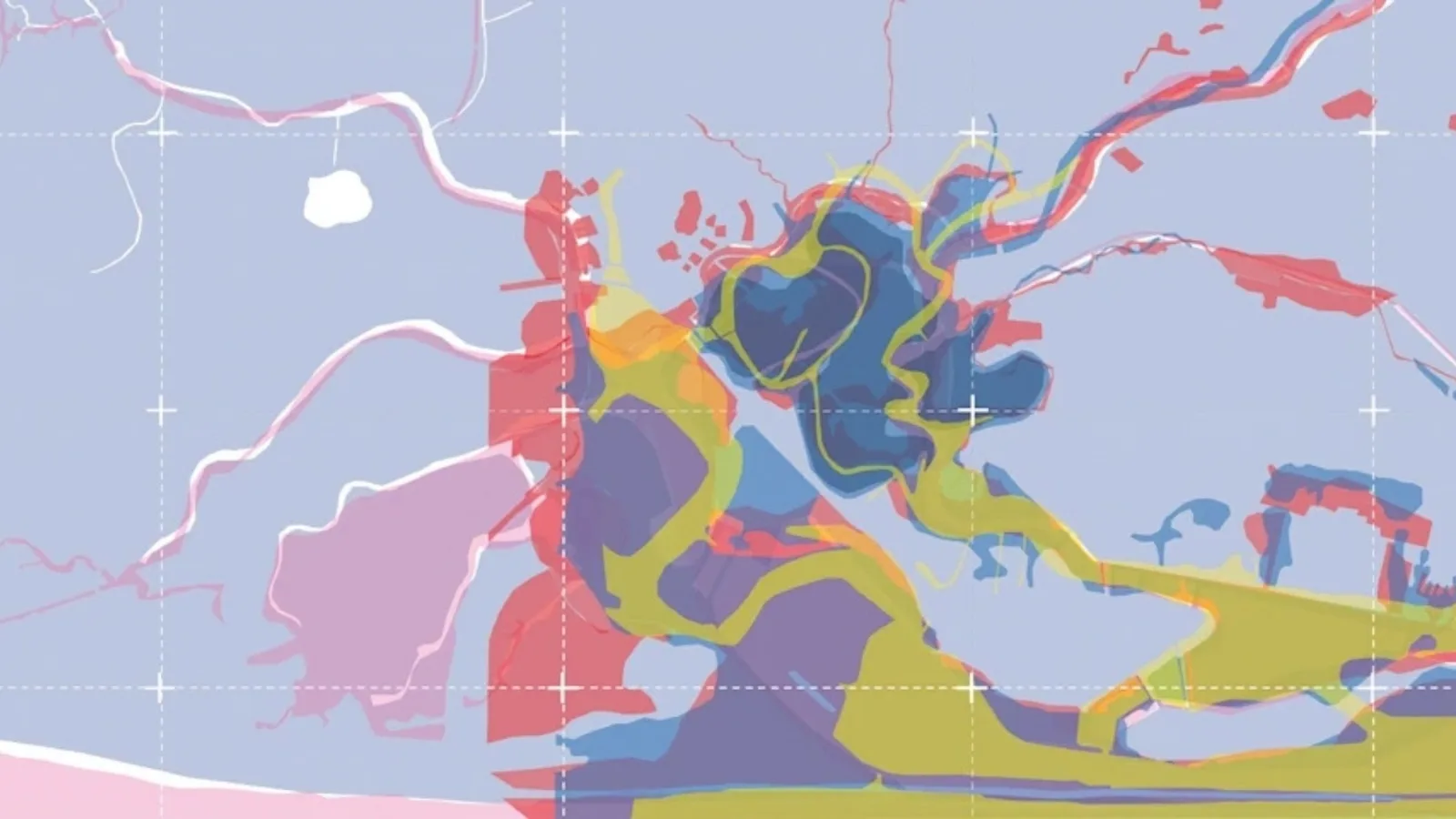
2026 年 10 月重新查核:MA Cities 的學制、學費、截止日、入學要求、英語門檻、作品集與面試規定,均依 UAL 官網 2027 年入學資訊更新;送件前請再以官網最新公告為準。封面圖為 UAL MA Cities 課程頁主視覺(MA Cities 一年級學生繪製的巴西累西腓城市地下水流變遷地圖),圖片來源:倫敦藝術大學(UAL)官網。
UAL MA Cities 重點一覽(2027 年 9 月入學,官方資料)
| 項目 | 內容 |
|---|---|
| 學院 | 中央聖馬丁(Central Saint Martins),屬 Spatial Practices 課程群 |
| 學制 | Extended Full Time,2 學年共 60 週、180 學分,每週約 30 小時學習 |
| 學費 | 國際生每年 £20,240、英國本地生每年 £7,700(2027/28 入學) |
| 申請截止 | 第一輪 2026 年 12 月 1 日、第二輪 2027 年 2 月 17 日(皆為格林威治時間下午 1 點);2 月後仍有名額會繼續收件至額滿 |
| 學歷背景 | 相關領域二等一(upper second-class)學士或同等學歷;建築、各類設計、景觀、城市規劃、地理、藝術、媒體等都在列舉範圍 |
| 英語 | IELTS 6.5,單項不低於 5.5 |
| 申請步驟 | 先交 500 字以內個人陳述與 CV → 學校通知後 7 天內交影片任務與最多 10 頁數位作品集(PebblePad)→ 可能受邀 15–20 分鐘線上面試;約 6 週內出結果 |
以上皆出自 UAL MA Cities 官方課程頁。特別注意:官網寫明課程希望招收有至少一年工作經驗的申請者,「通常不招收」本科直升的應屆生;但也有 AP(E)L 機制,個人陳述品質、相關經歷與有力的推薦信可以彌補。應屆申請者要在文書與作品集裡清楚呈現實習、田野調查、社區參與等經驗。
她的起點:申請季一開始就落後
她大二第一次接觸作品集時,只覺得那是升學路上「不得不完成的任務」,心態也是「隨便上上」。真正的轉折,是一堂課上老師發現她連基礎建模軟體都不熟,直接點出問題。從那之後她才沉下心,從最基本的建模指令一步步補起。
選方向時,她結合三年的室內設計背景,聽了學校導師的建議轉向城市設計:新建築不斷融入傳統街區,城市更新需求只會越來越大。這讓她對 UAL 的城市設計方向產生強烈認同——而 UAL 一直是她的夢校,她嚮往的是一個能自由探索、表達創意的環境。
作品集核心:從「狗狗項目」看個人化表達
她的每個項目都來自真實的情感、經歷或好奇,而不是空洞的題目。最珍視的是「狗狗項目」:從她和狗狗相處的日常出發,追問「人與動物的情感連結,如何在城市空間中被尊重?城市裡的寵物面臨什麼樣的生存困境?」
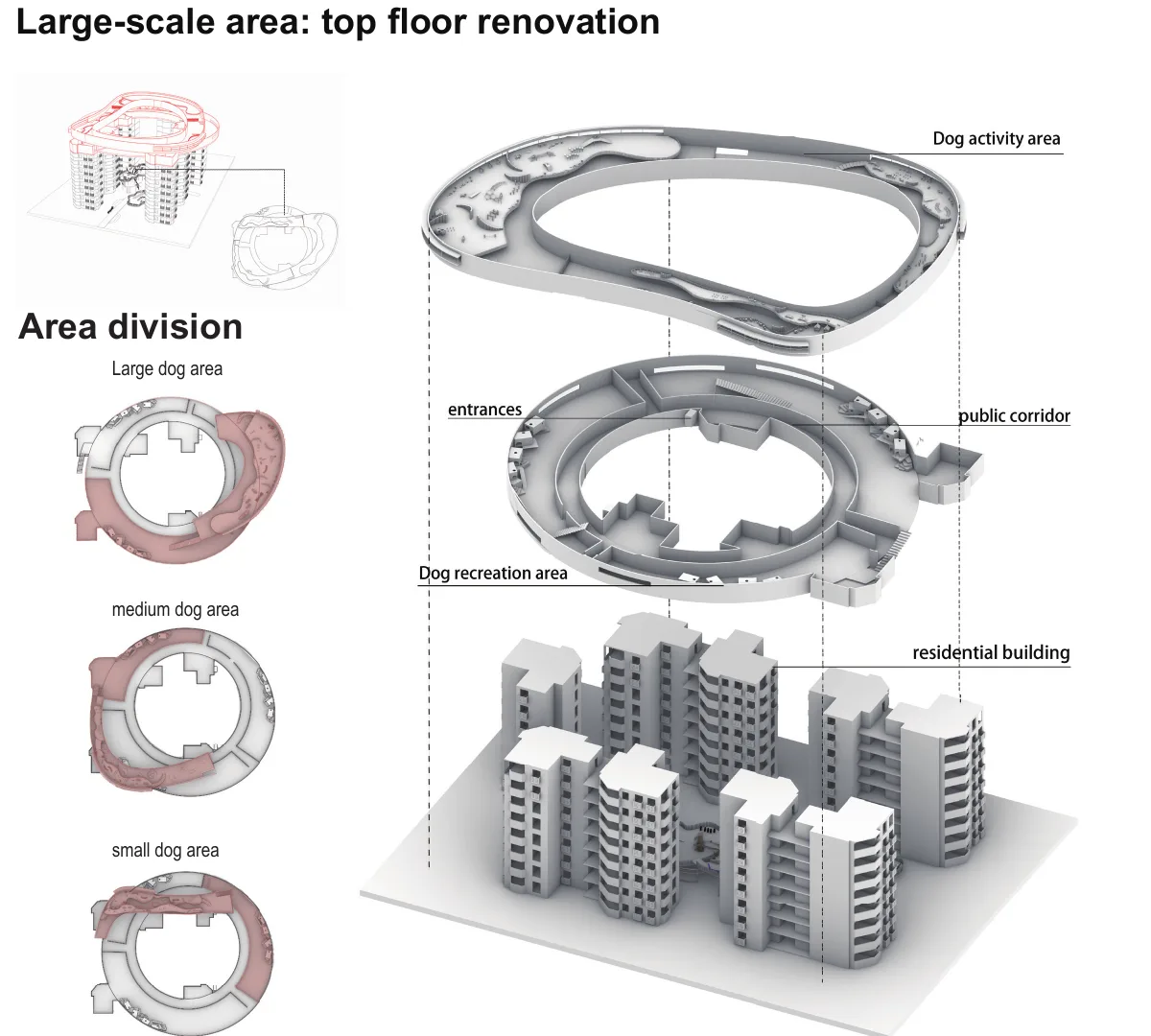
- 三個空間層級:城市中屬於狗狗的私有空間、人類住宅內的寵物專屬區域,以及人與寵物和諧共享的公共空間。
- 修正理想化:她一開始想模糊人與寵物在公共空間的所有邊界,追求完全包容;幾輪評圖後才意識到,關鍵不是強求無界共享,而是在「共享」與「分隔」之間找到友善、可行的平衡點。
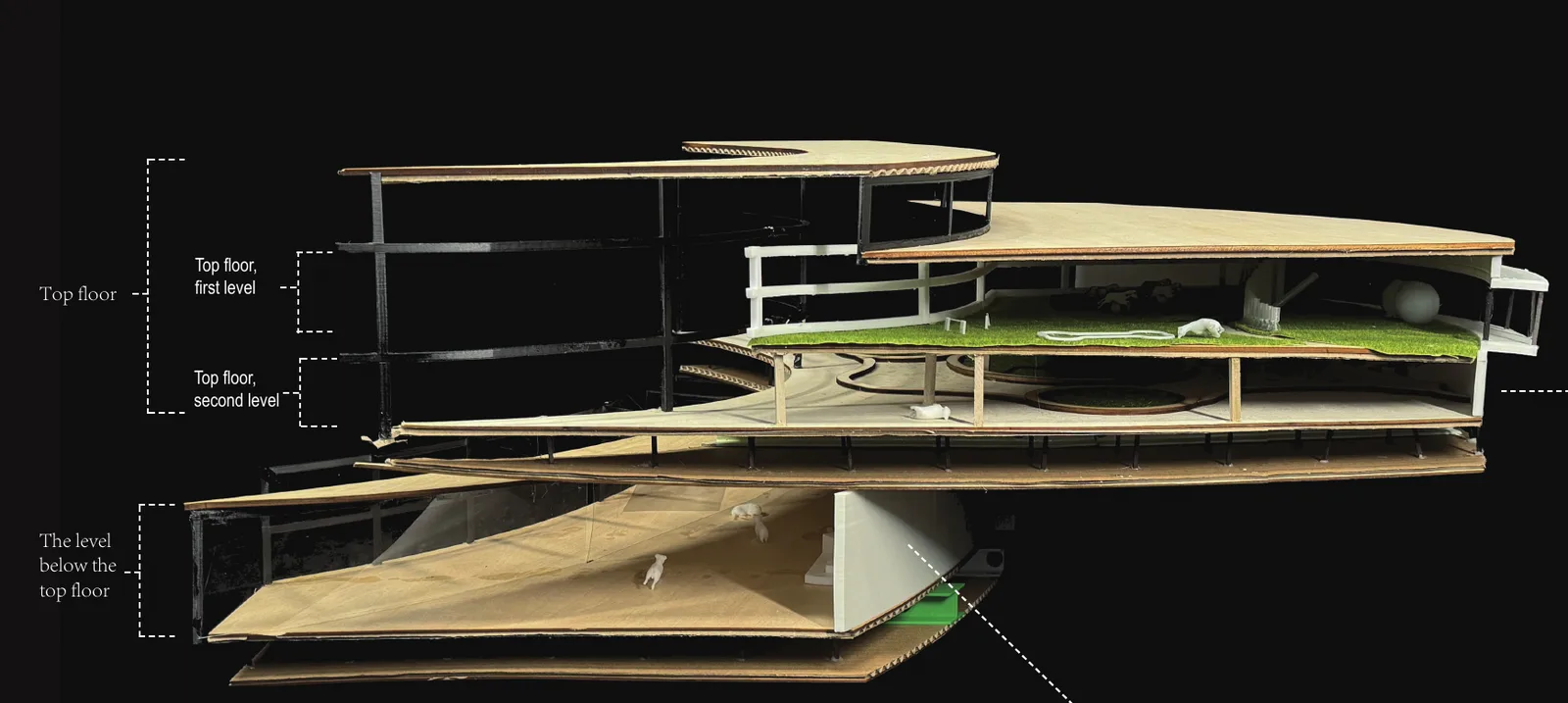
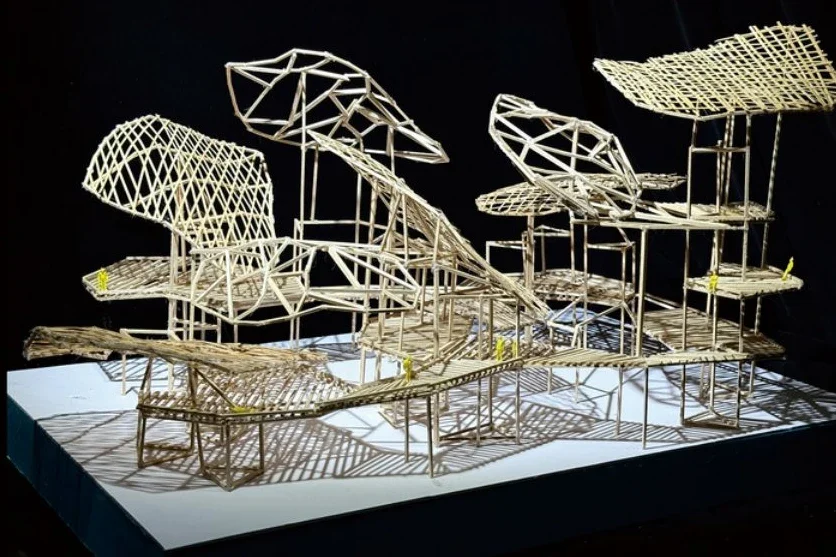
- 用實體模型推敲:她用厚卡紙、木板、泡沫塊做了多個不同尺度的模型,反覆測試動線、氣候適應性與使用安全。
我在指導時的角色,不是直接幫她改錯,而是在她冒出不成形的想法時,馬上找出相關案例與設計師作品,讓她看「人家是怎麼處理的」,再帶她去美術館找靈感,讓項目逐步走向更清楚、可落地的方向。她自己的總結是:「這是我用空間語言,回應內心深處柔軟關切的一次真誠嘗試。」
看完整作品:搖尾之路 →
看完整作品:搖尾之路 →
為什麼這種作品打動 MA Cities?對照官方選才標準
UAL 官網列出的 MA Cities 選才標準中,有一條特別值得注意:申請者要有能力讓實踐、研究與產出「超越個人與情感層面,走向基礎設施、社會技術與全球尺度」。這正好說明了「狗狗項目」為什麼有效——它起點是個人情感,但最後落在城市公共空間系統與共享規則上。其他幾條標準也值得逐條對照:
- 清楚的個人陳述,以及你對「塑造城市」的立場,並與課程目標相關。
- 對城市營造(city-making)的興趣與投入,重點在社會正義與氣候正義。
- 對世界的深度好奇,以及在設計過程每個階段的嚴謹投入。
- 能以視覺、文字與口語清楚溝通;能抽象、概念化與策略性思考;具備跨領域、跨文化協作的心態。
官方作品集指引也和她的做法一致:作品要展現在不同城市尺度上的興趣,可以放研究、實驗與進行中的作品(例如探討空間狀況的攝影系列、沒有總圖也沒關係的分析圖、提出空間介入的拼貼),並且「挑選與課程契合的內容,而不是放完每個項目的每一頁」。協作作品要反思合作在創作過程中的角色。
作品集不要往同一個方向扎堆
她後來在 UAL 語言班聽到老師說:「作品集不需要面面俱到,只要有一個真正打動人的點,讓老師看到你身上的可能性,就夠了。」這也是我帶她做作品集的思路——從不讓幾個項目往同一個方向扎堆,而是挖掘不同維度:有的側重空間敘事,有的試驗材料語言,另一個把景觀思維融入她原有的校園改造項目,並嘗試拼貼等表現手法。比起反覆展示同一種熟練技能,不雷同的作品更能呈現思考的廣度。
MA Cities 的作品集上限是 10 頁(含影片任務),空間很小,更需要這種「每個項目代表一種能力」的編排。想看更多錄取作品如何用研究推動設計,可以讀看完這五個作品,你會明白名校想要的到底是什麼。
申請時間線:第二輪投遞也能拿到夢校
- 她在農曆新年前幾天才完成作品集,已經是第二輪投遞,心裡很忐忑。
- 幾天後先收到雪梨大學的錄取,第一封 offer 讓她「突然有了一點譜」。
- 其他錄取陸續到來,最期待的 UAL 最晚出結果;她邊準備雅思、邊每天登入系統查看,直到某天凌晨收到 UAL 錄取。
現在 UAL 碩士採兩輪截止(12 月、2 月),官方說明交件後約 6 週出結果。我的建議仍是盡量趕第一輪:第二輪可行,但作品集一旦拖到最後,焦慮成本非常高。
評圖與同伴:不是考核,是成長機會
她原本把評圖當成「考核」,怕被看出破綻;參加多次後才發現,不同老師從各自專業給出建議,有的幫她跳出固有思路,有的點出邏輯盲區,還能從同學作品看清自己的短板與優勢。後期衝刺時,她和同學幾乎天天一起自習、互相交換建議、一起列待辦清單。她給後來者的話是:「腳踏實地過好每一天,不要在一個小細節上卡太久,過度追求局部完美反而可能迷失方向。」
英語:拿到 offer 後再補雅思
她拿到錄取時雅思只有 6.0,低於 MA Cities 要求的 IELTS 6.5(單項 5.5)。她的做法是一邊等結果一邊準備雅思,並參加 UAL 的語言課程。建議你預留重考時間,並在送件前到 UAL 官網確認英語要求與語言課程的最新規定。
寫在最後
這位學生 GPA 不占優勢、基礎也相對薄弱,但她把焦慮轉成穩定的產出,並用一個真誠、從個人關懷出發的項目,證明自己能把小議題推到城市尺度。我從 2017 年至今累積 12,000+ 小時設計教學與設計諮詢,最常提醒學生的就是:設計不必總是宏大敘事,對身邊一個小角落的細緻觀察,只要能推演成清楚有力的空間方案,就足以讓評審看見你的可能性。如果你也在比較英國與歐洲的設計學校,可以參考英國藝術設計類申請整理與歐洲建築留學 14 所學校學費與工簽整理。
室内设计本科、GPA 约 2.8、申请时雅思只有 6.0,作品集从连建模软件都不熟开始——这样的条件,能不能拿到伦敦艺术大学(UAL)中央圣马丁学院 MA Cities 的录取?这篇整理我指导过的一位学生的真实经验:她最后拿到 UAL MA Cities、雪梨大学 Master of Urban Design、爱丁堡大学 MA Interior(ECA)、曼彻斯特大学 MA Architecture and Adaptive Reuse、格拉斯哥大学 Master of Design in Interior Design、雪菲尔大学 MA Architectural Design 共 6 个硕士录取。
关键不在技术多强,而在一个从真实情感出发、又能推到城市尺度的作品:她的「狗狗项目」——一套人与宠物共享的城市空间系统。
2026 年 10 月重新查核:MA Cities 的学制、学费、截止日、入学要求、英语门槛、作品集与面试规定,均依 UAL 官网 2027 年入学信息更新;送件前请再以官网最新公告为准。封面图为 UAL MA Cities 课程页主视觉(MA Cities 一年级学生绘制的巴西累西腓城市地下水流变迁地图),图片来源:伦敦艺术大学(UAL)官网。
UAL MA Cities 重点一览(2027 年 9 月入学,官方资料)
| 项目 | 内容 |
|---|---|
| 学院 | 中央圣马丁(Central Saint Martins),属 Spatial Practices 课程群 |
| 学制 | Extended Full Time,2 学年共 60 周、180 学分,每周约 30 小时学习 |
| 学费 | 国际生每年 £20,240、英国本地生每年 £7,700(2027/28 入学) |
| 申请截止 | 第一轮 2026 年 12 月 1 日、第二轮 2027 年 2 月 17 日(皆为格林威治时间下午 1 点);2 月后仍有名额会继续收件至额满 |
| 学历背景 | 相关领域二等一(upper second-class)学士或同等学历;建筑、各类设计、景观、城市规划、地理、艺术、媒体等都在枚举范围 |
| 英语 | IELTS 6.5,单项不低于 5.5 |
| 申请步骤 | 先交 500 字以内个人陈述与 CV → 学校通知后 7 天内交视频任务与最多 10 页数字作品集(PebblePad)→ 可能受邀 15–20 分钟在线面试;约 6 周内出结果 |
以上皆出自 UAL MA Cities 官方课程页。特别注意:官网写明课程希望招收有至少一年工作经验的申请者,「通常不招收」本科直升的应届生;但也有 AP(E)L 机制,个人陈述品质、相关经历与有力的推荐信可以弥补。应届申请者要在文书与作品集里清楚呈现实习、田野调查、社区参与等经验。
她的起点:申请季一开始就落后
她大二第一次接触作品集时,只觉得那是升学路上「不得不完成的任务」,心态也是「随便上上」。真正的转折,是一堂课上老师发现她连基础建模软件都不熟,直接点出问题。从那之后她才沉下心,从最基本的建模指令一步步补起。
选方向时,她结合三年的室内设计背景,听了学校导师的建议转向城市设计:新建筑不断融入传统街区,城市更新需求只会越来越大。这让她对 UAL 的城市设计方向产生强烈认同——而 UAL 一直是她的梦校,她向往的是一个能自由探索、表达创意的环境。
作品集核心:从「狗狗项目」看个人化表达
她的每个项目都来自真实的情感、经历或好奇,而不是空洞的题目。最珍视的是「狗狗项目」:从她和狗狗相处的日常出发,追问「人与动物的情感连接,如何在城市空间中被尊重?城市里的宠物面临什么样的生存困境?」
- 三个空间层级:城市中属于狗狗的私有空间、人类住宅内的宠物专属区域,以及人与宠物和谐共享的公共空间。
- 修正理想化:她一开始想模糊人与宠物在公共空间的所有边界,追求完全包容;几轮评图后才意识到,关键不是强求无界共享,而是在「共享」与「分隔」之间找到友善、可行的平衡点。
- 用实体模型推敲:她用厚卡纸、木板、泡沫块做了多个不同尺度的模型,反复测试动线、气候适应性与使用安全。
我在指导时的角色,不是直接帮她改错,而是在她冒出不成形的想法时,马上找出相关案例与设计师作品,让她看「人家是怎么处理的」,再带她去美术馆找灵感,让项目逐步走向更清楚、可落地的方向。她自己的总结是:「这是我用空间语言,回应内心深处柔软关切的一次真诚尝试。」
看完整作品:摇尾之路 →
看完整作品:摇尾之路 →
为什么这种作品打动 MA Cities?对照官方选才标准
UAL 官网列出的 MA Cities 选才标准中,有一条特别值得注意:申请者要有能力让实践、研究与产出「超越个人与情感层面,走向基础设施、社会技术与全球尺度」。这正好说明了「狗狗项目」为什么有效——它起点是个人情感,但最后落在城市公共空间系统与共享规则上。其他几条标准也值得逐条对照:
- 清楚的个人陈述,以及你对「塑造城市」的立场,并与课程目标相关。
- 对城市营造(city-making)的兴趣与投入,重点在社会正义与气候正义。
- 对世界的深度好奇,以及在设计过程每个阶段的严谨投入。
- 能以视觉、文本与口语清楚沟通;能抽象、概念化与策略性思考;具备跨领域、跨文化协作的心态。
官方作品集指引也和她的做法一致:作品要展现在不同城市尺度上的兴趣,可以放研究、实验与进行中的作品(例如探讨空间状况的摄影系列、没有总图也没关系的分析图、提出空间介入的拼贴),并且「挑选与课程契合的内容,而不是放完每个项目的每一页」。协作作品要反思合作在创作过程中的角色。
作品集不要往同一个方向扎堆
她后来在 UAL 语言班听到老师说:「作品集不需要面面俱到,只要有一个真正打动人的点,让老师看到你身上的可能性,就够了。」这也是我带她做作品集的思路——从不让几个项目往同一个方向扎堆,而是挖掘不同维度:有的侧重空间叙事,有的试验材料语言,另一个把景观思维融入她原有的校园改造项目,并尝试拼贴等表现手法。比起反复展示同一种熟练技能,不雷同的作品更能呈现思考的广度。
MA Cities 的作品集上限是 10 页(含视频任务),空间很小,更需要这种「每个项目代表一种能力」的编排。想看更多录取作品如何用研究推动设计,可以读看完这五个作品,你会明白名校想要的到底是什么。
申请时间线:第二轮投递也能拿到梦校
- 她在农历新年前几天才完成作品集,已经是第二轮投递,心里很忐忑。
- 几天后先收到雪梨大学的录取,第一封 offer 让她「突然有了一点谱」。
- 其他录取陆续到来,最期待的 UAL 最晚出结果;她边准备雅思、边每天登录系统查看,直到某天凌晨收到 UAL 录取。
现在 UAL 硕士采两轮截止(12 月、2 月),官方说明交件后约 6 周出结果。我的建议仍是尽量赶第一轮:第二轮可行,但作品集一旦拖到最后,焦虑成本非常高。
评图与同伴:不是考核,是成长机会
她原本把评图当成「考核」,怕被看出破绽;参加多次后才发现,不同老师从各自专业给出建议,有的帮她跳出固有思路,有的点出逻辑盲区,还能从同学作品看清自己的短板与优势。后期冲刺时,她和同学几乎天天一起自习、互相交换建议、一起列待办清单。她给后来者的话是:「脚踏实地过好每一天,不要在一个小细节上卡太久,过度追求局部完美反而可能迷失方向。」
英语:拿到 offer 后再补雅思
她拿到录取时雅思只有 6.0,低于 MA Cities 要求的 IELTS 6.5(单项 5.5)。她的做法是一边等结果一边准备雅思,并参加 UAL 的语言课程。建议你预留重考时间,并在送件前到 UAL 官网确认英语要求与语言课程的最新规定。
写在最后
这位学生 GPA 不占优势、基础也相对薄弱,但她把焦虑转成稳定的产出,并用一个真诚、从个人关怀出发的项目,证明自己能把小议题推到城市尺度。我从 2017 年至今累积 12,000+ 小时设计教学与设计咨询,最常提醒学生的就是:设计不必总是宏大叙事,对身边一个小角落的细致观察,只要能推演成清楚有力的空间方案,就足以让评审看见你的可能性。如果你也在比较英国与欧洲的设计学校,可以参考英国艺术设计类申请整理与欧洲建筑留学 14 所学校学费与工签整理。
An undergraduate degree in interior design, a GPA of about 2.8, an IELTS score of only 6.0 when she applied, and a portfolio that started from barely knowing the modelling software — with a profile like that, could she be admitted to MA Cities at Central Saint Martins, University of the Arts London (UAL)? This post sets out the real experience of a student I have advised. She ended up with 6 master’s offers: UAL MA Cities, the Master of Urban Design at the University of Sydney, MA Interior (ECA) at the University of Edinburgh, MA Architecture and Adaptive Reuse at the University of Manchester, the Master of Design in Interior Design at the University of Glasgow, and MA Architectural Design at the University of Sheffield.
The key is not how strong the technique is, but a piece of work that starts from a real feeling and can be pushed up to the scale of the city: her project about dogs — a system of urban space shared by people and pets.
Rechecked in October 2026: the structure, fees, deadlines, entry requirements, English threshold, and the portfolio and interview rules for MA Cities have all been updated from the 2027 entry information on the UAL website. Before you submit, go by the latest notice on the official site. The cover image is the lead visual on the UAL MA Cities course page (a map of changing underground water flows in Recife, Brazil, drawn by first-year MA Cities students). Image source: University of the Arts London (UAL) official website.
UAL MA Cities at a glance (September 2027 entry, official information)
| Category | Content |
|---|---|
| College | Central Saint Martins, in the Spatial Practices course group |
| Structure | Extended Full Time; 2 academic years, 60 weeks and 180 credits in total; about 30 hours of study a week |
| Tuition | £20,240 a year for international students and £7,700 a year for UK home students (2027/28 entry) |
| Application deadline | Round one: 1 December 2026; round two: 17 February 2027 (both at 1:00 pm Greenwich Mean Time); if places remain after February, applications stay open until the course is full |
| Academic background | An upper second-class bachelor’s degree or equivalent in a related field; architecture, design disciplines of various kinds, landscape, urban planning, geography, art and media are all within the range listed |
| English | IELTS 6.5, with no component below 5.5 |
| Application steps | First submit a personal statement of no more than 500 words and a CV → within 7 days of the school’s notice, submit a video task and a digital portfolio of at most 10 pages (PebblePad) → you may be invited to an online interview of 15–20 minutes; a result in about 6 weeks |
All of the above comes from the official UAL MA Cities course page. Take particular note: the website states that the course hopes to admit applicants with at least one year of work experience, and that it “does not usually admit” new graduates coming straight from an undergraduate degree. There is also an AP(E)L route, and the quality of the personal statement, relevant experience and a strong reference can make up the difference. Applicants who are about to graduate need to show internships, fieldwork, community involvement and similar experience clearly in the statement and the portfolio.
Her starting point: already behind when application season began
The first time she came across a portfolio, in her second year, she thought of it only as a “task she had no choice but to finish” on the way to further study, and her attitude was “I’ll just get in somewhere”. The real turning point was a class in which the teacher saw that she was not even familiar with basic modelling software and named the problem directly. Only after that did she settle down and build up from the most basic modelling commands, one step at a time.
When she chose a direction, she drew on three years of interior design and followed a tutor’s advice at school to turn toward urban design: new buildings keep being folded into traditional neighbourhoods, and the demand for urban renewal will only grow. That led her to identify strongly with UAL’s urban design direction — and UAL had always been her dream school. What she wanted was a place where she could explore freely and express her ideas.
The heart of the portfolio: personal expression, seen through a project about dogs
Each of her projects came from a real feeling, an experience or a curiosity, rather than an empty topic. The one she values most is the project about dogs. It starts from everyday life with her dog and asks: “How can the emotional bond between people and animals be respected in urban space? What plight do pets face as they try to live in the city?”
- Three spatial levels: private space in the city that belongs to dogs, pet-only zones inside people’s homes, and public space that people and pets share in harmony.
- Correcting an idealised view: at first she wanted to blur every boundary between people and pets in public space and aim for total inclusion. After several crits she realised the point was not to force sharing with no boundary at all, but to find a friendly, workable balance between “sharing” and “separation”.
- Working it out with physical models: she made models at several scales from thick card, wooden boards and foam blocks, and tested circulation, adaptation to climate and safety in use again and again.
My role in advising her was not to correct the work for her directly. When a half-formed idea appeared, I would immediately find related cases and designers’ work, so she could see “how other people had handled it”, and then take her to art museums for inspiration, letting the project move, step by step, toward a clearer direction that could be carried out. Her own summary was: “This is a sincere attempt of mine to answer, in the language of space, a tender concern deep inside me.”
See the full project: The Wagging Way — A Pet-Friendly Neighbourhood for People and Dogs →
See the full project: The Wagging Way — A Pet-Friendly Neighbourhood for People and Dogs →
Why does this kind of work move MA Cities? Set against the official selection criteria
Among the MA Cities selection criteria on the UAL website, one line is especially worth noticing: applicants need to be able to take practice, research and output “beyond the personal and the emotional, toward infrastructure, the sociotechnical and the global scale”. That is exactly why the project about dogs works — it starts from a personal feeling, and it lands on systems of urban public space and on rules for sharing. The other criteria are worth setting side by side as well:
- A clear personal statement, and your position on “shaping the city”, related to the aims of the course.
- An interest in and commitment to city-making, with the emphasis on social justice and climate justice.
- A deep curiosity about the world, and rigorous commitment at every stage of the design process.
- Clear communication in visual, written and spoken form; the ability to think abstractly, conceptually and strategically; and a mindset for collaboration across disciplines and cultures.
The official portfolio guidance matches what she did. The work should show an interest at different urban scales. Research, experiments and work in progress can go in (for example a photographic series exploring a spatial condition, analytical drawings that are fine without a masterplan, collages that propose a spatial intervention), and you should “choose content that fits the course, rather than including every page of every project”. For collaborative work, reflect on the role collaboration played in the making.
Don’t let the portfolio bunch up in one direction
Later, in a UAL language class, she heard a teacher say: “A portfolio does not need to cover everything. One point that truly moves people, enough for a teacher to see the possibility in you, is sufficient.” That is also how I led her through the portfolio — I never let several projects bunch up in the same direction, and instead drew out different dimensions: some lean on spatial narrative, some test a material language, and another folds landscape thinking into her existing campus-renewal project and tries collage and other ways of representing. Work that does not repeat itself shows the breadth of her thinking more clearly than demonstrating the same fluent skill over and over.
The MA Cities portfolio is capped at 10 pages (including the video task). The room is small, so this kind of sequence — “each project stands for one ability” — matters even more. To see more admitted work use research to drive design, read After these five projects, you will see what top schools actually want.
Application timeline: a round-two submission can still win the dream school
- She finished the portfolio only a few days before Lunar New Year. By then it was already a round-two submission, and she felt uneasy about it.
- A few days later the offer from the University of Sydney arrived first. That first offer made her feel she “suddenly had some sense of how this was going”.
- The other offers followed. UAL, the one she wanted most, was the last to release a result. She prepared for IELTS and logged into the system every day, until one day in the small hours the UAL offer arrived.
UAL master’s applications now have two deadline rounds (December and February). Officially, a result comes about 6 weeks after submission. My advice is still to aim for round one if you can. Round two can work, but once a portfolio slips to the very end, the cost in anxiety is very high.
Crits and peers: not an assessment, a chance to grow
She had treated the crit as an “assessment” and was afraid her weak spots would show. After taking part several times, she found that different teachers gave advice from their own disciplines. Some helped her step out of a fixed way of thinking, some pointed out blind spots in the logic, and she could also see her own gaps and strengths in her classmates’ work. In the final push she and her classmates sat in self-study together almost every day, swapped suggestions and made to-do lists together. What she tells people coming after her is: “Keep your feet on the ground and live each day properly. Don’t stay stuck on one small detail for too long. Chasing perfection in one small part can leave you lost.”
English: bringing IELTS up after the offer
When she received the offer her IELTS was only 6.0, below the IELTS 6.5 (no component below 5.5) that MA Cities requires. What she did was prepare for IELTS while she waited for results, and take UAL’s language course. Leave yourself time for a retake, and before you submit, check the latest English requirements and language-course rules on the UAL website.
In closing
This student’s GPA gave her no advantage, and her foundation was relatively thin, but she turned anxiety into steady output. With one sincere project that started from a personal concern, she showed she could push a small issue up to the scale of the city. From 2017 to now I have accumulated 12,000+ hours of design teaching and design consulting. The reminder I give students most often is this: design does not always have to be a grand narrative. Careful observation of one small corner close to you, once it can be developed into a clear and forceful spatial proposal, is enough for reviewers to see the possibility in you. If you are also comparing design schools in the UK and Europe, see A guide to applying for art and design in the UK and Studying architecture in Europe: tuition and work visas at 14 schools.
English summary
A case study of an interior design graduate with a modest GPA who received six master's offers, including MA Cities at Central Saint Martins, University of the Arts London, the University of Sydney Master of Urban Design and the University of Edinburgh MA Interior, cross-checked against the UAL MA Cities course page in October 2026. MA Cities is a 60-week, two-year extended full-time, 180-credit MA; 2027/28 international fees are GBP 20,240 per year. Deadlines for September 2027 entry are 1 December 2026 and 17 February 2027 (1pm GMT). Applicants need an upper second-class degree in a relevant field and IELTS 6.5 with 5.5 in each skill; the course prefers candidates with at least one year of work experience. Applications start with a 500-word personal statement and CV, followed by a video task and a digital portfolio of up to 10 pages, and possibly a 15-20 minute online interview. The post explains how a personal project on shared urban space for people and dogs, developed through physical models, matched the course's selection criteria of moving from personal concerns to infrastructural and planetary scales.
常見問題常见问题FAQ
UAL MA Cities 讀幾年?學費多少?UAL MA Cities 读几年?学费多少?How long is UAL MA Cities, and what does it cost?
Extended Full Time,2 學年共 60 週、180 學分;2027/28 入學國際生學費每年 £20,240,英國本地生每年 £7,700,可分期繳納。
Extended Full Time,2 学年共 60 周、180 学分;2027/28 入学国际生学费每年 £20,240,英国本地生每年 £7,700,可分期缴纳。
It is Extended Full Time: 2 academic years, 60 weeks and 180 credits in total. For 2027/28 entry, international tuition is £20,240 a year and UK home tuition is £7,700 a year. Fees can be paid in instalments.
UAL MA Cities 2027 年入學的申請截止日是什麼時候?UAL MA Cities 2027 年入学的申请截止日是什么时候?When is the application deadline for UAL MA Cities entry in 2027?
第一輪 2026 年 12 月 1 日、第二輪 2027 年 2 月 17 日,皆為格林威治時間下午 1 點;2 月 17 日後若仍有名額,會繼續收件至額滿。
第一轮 2026 年 12 月 1 日、第二轮 2027 年 2 月 17 日,皆为格林威治时间下午 1 点;2 月 17 日后若仍有名额,会继续收件至额满。
Round one is 1 December 2026 and round two is 17 February 2027, both at 1:00 pm Greenwich Mean Time. If places remain after 17 February, applications stay open until the course is full.
UAL MA Cities 作品集有什麼要求?UAL MA Cities 作品集有什么要求?What are the portfolio requirements for UAL MA Cities?
學校通知後 7 天內透過 PebblePad 提交,最多 10 頁(含影片任務);要展現不同城市尺度的興趣、專業經驗與實作能力,可放研究、實驗與進行中的作品,挑選與課程契合的內容,並反思協作作品中的合作角色。
学校通知后 7 天内通过 PebblePad 提交,最多 10 页(含视频任务);要展现不同城市尺度的兴趣、专业经验与实作能力,可放研究、实验与进行中的作品,挑选与课程契合的内容,并反思协作作品中的合作角色。
Submit via PebblePad within 7 days of the school’s notice, up to 10 pages including the video task. It should show an interest in different urban scales, professional experience and the ability to make work. Research, experiments and work in progress can be included. Choose content that fits the course, and reflect on the role of collaboration in work made with others.
申請 UAL MA Cities 需要什麼英語成績和背景?申请 UAL MA Cities 需要什么英语成绩和背景?What English scores and academic background do you need to apply for UAL MA Cities?
IELTS 6.5,單項不低於 5.5;學歷為相關領域二等一學士或同等學歷,涵蓋建築、各類設計、景觀、城市規劃等;課程偏好有一年以上工作經驗者,通常不招收本科直升生,但可透過 AP(E)L 以文書、相關經歷與推薦信爭取。
IELTS 6.5,单项不低于 5.5;学历为相关领域二等一学士或同等学历,涵盖建筑、各类设计、景观、城市规划等;课程偏好有一年以上工作经验者,通常不招收本科直升生,但可通过 AP(E)L 以文书、相关经历与推荐信争取。
IELTS 6.5, with no component below 5.5. The degree requirement is an upper second-class bachelor’s degree or equivalent in a related field, including architecture, the various design disciplines, landscape and urban planning, among others. The course prefers applicants with more than one year of work experience and does not usually admit students coming straight from an undergraduate degree, but through AP(E)L a case can be made with the statement, relevant experience and references.
室內設計背景適合申請城市設計方向的碩士嗎?室内设计背景适合申请城市设计方向的硕士吗?Is an interior design background a good fit for a master’s in urban design?
適合。室內設計擅長人的尺度與空間體驗,關鍵是作品集要證明你能把議題從個人或室內尺度推到城市公共空間與系統層面,例如從人與寵物的關係推演到城市共享空間規則。
适合。室内设计擅长人的尺度与空间体验,关键是作品集要证明你能把议题从个人或室内尺度推到城市公共空间与系统层面,例如从人与宠物的关系推演到城市共享空间规则。
Yes. Interior design is strong at the human scale and in spatial experience. The portfolio has to show that you can take an issue from the personal or interior scale up to urban public space and to systems, for example from the relationship between people and pets to rules for shared space in the city.
訂閱新文章订阅新文章Subscribe
新文章會寄到這個信箱。新文章会寄到这个邮箱。New posts will be emailed to this address.
已訂閱。已订阅。Subscribed.暫時無法訂閱,請稍後再試。暂时无法订阅,请稍后再试。Could not subscribe. Please try again.相關文章相关文章Related posts
 建築作品集怎麼選方向?主題 Driven、尺度 Scale、技術 Skills、目的 Goal 四個維度,怎麼組合成一個項目建筑作品集怎么选方向?主题 Driven、尺度 Scale、技术 Skills、目的 Goal 四个维度,怎么组合成一个项目How do you choose a direction for an architecture portfolio? Combining theme (Driven), scale, skills and goal into one project作品集不要先從「我有哪些好看的圖」倒過來排,而要先選定主題(Driven)、尺度(Scale)、技術(Skills)與目的(Goal),再組合成一個說得清楚的項目。本文依教學簡報〈作品集準備及選擇方向〉整理這四個維度,並說明簡報如何用一個項目示範組合方法。簡報中的學生案例只寫錄取學校與作品方向,不具名。作品集不要先从「我有哪些好看的图」倒过来排,而要先选定主题(Driven)、尺度(Scale)、技术(Skills)与目的(Goal),再组合成一个说得清楚的项目。本文依教学简报〈作品集准备及选择方向〉整理这四个维度,并说明简报如何用一个项目示范组合方法。简报中的学生案例只写录取学校与作品方向,不具名。Do not build a portfolio by lining up your best-looking drawings and working backwards. Choose a theme (Driven), a scale, the skills to make visible, and a goal, then combine them into a project you can explain. This article follows the teaching deck “Portfolio preparation and choosing a direction,” including the deck’s worked example of how to combine the four dimensions. Student cases are anonymous: only the schools listed on the slide and the direction of the work are given.
 錄取卡內基美隆建築本科的作品集:她把橘子、身體、植物與記憶都搭成了空間(2026 年 10 月官方查核)录取卡内基美隆建筑本科的作品集:她把橘子、身体、植物与记忆都搭成了空间(2026 年 10 月官方查核)A Carnegie Mellon architecture portfolio: how one admitted student built oranges, the body, plants and memory into space (checked October 2026)一份錄取卡內基美隆(CMU)建築本科的作品集,如何對應官網列出的好奇心、空間推理、綜合能力與「動手製作的慾望」?拆解橘子涼亭、生長的支架、灰姑娘等作品,並對照 CMU 官網:10 件作品、經 SlideRoom 提交,ED 11 月 2 日、RD 1 月 8 日截止。一份录取卡内基美隆(CMU)建筑本科的作品集,如何对应官网列出的好奇心、空间推理、综合能力与「动手制作的欲望」?拆解橘子凉亭、生长的支架、灰姑娘等作品,并对照 CMU 官网:10 件作品、经 SlideRoom 提交,ED 11 月 2 日、RD 1 月 8 日截止。How does a portfolio admitted to Carnegie Mellon (CMU) undergraduate architecture meet the curiosity, spatial reasoning, ability to synthesize, and "desire to make" named on the official site? It unpacks the orange pavilion, A Scaffold of Growth, Cinderella, and other works, set against the CMU site: 10 works, submitted through SlideRoom, with Early Decision due November 2 and Regular Decision due January 8.
 4 份作品集都錄取康乃爾建築本科:他們把生活經驗「轉譯」成空間(2026 年 10 月官方查核)4 份作品集都录取康乃尔建筑本科:他们把生活经验「转译」成空间(2026 年 10 月官方查核)Four portfolios, four Cornell B.Arch offers: how admitted students translated everyday experience into space (checked October 2026)四份風格完全不同的作品集都錄取康乃爾 B.Arch:繪畫與陶瓷、計算設計、遊戲敘事、生態行動。拆解它們的共同點——從個人經驗出發、保留過程證據、多媒材、價值方向具體,並對照康乃爾 AAP 官網:作品集 15–20 張、每項目最多 2 張,ED 11 月 1 日、RD 1 月 2 日截止,加 3 分鐘影片面試。四份风格完全不同的作品集都录取康乃尔 B.Arch:绘画与陶瓷、计算设计、游戏叙事、生态行动。拆解它们的共同点——从个人经验出发、保留过程证据、多媒材、价值方向具体,并对照康乃尔 AAP 官网:作品集 15–20 张、每项目最多 2 张,ED 11 月 1 日、RD 1 月 2 日截止,加 3 分钟视频面试。Four portfolios in completely different styles were admitted to the Cornell B.Arch: painting and ceramics, computational design, game narrative, and ecological action. They share a start in personal experience, process kept as evidence, multiple media, and a concrete direction of values, set against the Cornell AAP site: 15–20 images, at most 2 per project, Early Decision due November 1, Regular Decision due January 2, and a 3-minute video interview.