康乃爾建築本科為什麼地位這麼穩?AAP 五年制 B.Arch. 優勢、和萊斯比較與申請門檻康乃尔建筑本科为什么地位这么稳?AAP 五年制 B.Arch. 优势、和莱斯比较与申请门槛Why Has Cornell Undergraduate Architecture Held Its Standing So Steadily? The AAP Five-Year B.Arch. Advantages, a Comparison with Rice, and the Admissions Bar
用微信掃描這張 QR code 即可分享。用微信扫描这张 QR code 即可分享。Scan this QR code with WeChat to share.
掃描或下載這張 QR code。扫描或下载这张 QR code。Scan or download this QR code.

每年談到美國建築本科,康乃爾大學建築、藝術與規劃學院(AAP)幾乎都會被放進第一梯隊。它的地位為什麼一直這麼穩?我把這幾年帶學生申請康乃爾的經驗,加上 2026 年 10 月重新查核的官方資料,整理成這篇:康乃爾建築到底強在哪、和萊斯(Rice)差在哪、申請門檻有多高,以及錄取學生的作品長什麼樣子。
康乃爾建築本科是什麼學位?
康乃爾 AAP 的建築本科是五年制專業學位 Bachelor of Architecture(B.Arch.),在綺色佳(Ithaca)主校區就讀。依 AAP 的 NAAB 認證頁,B.Arch. 目前的 NAAB 認證期為 2025–2033 年,需修滿 154 學分。和普林斯頓那種四年制、偏通識的預備專業學位不同(我在普林斯頓建築本科錄取解析裡有詳細比較),康乃爾畢業時拿的就是可以銜接建築師執照路徑的專業學位。
康乃爾建築的地位,穩在哪四件事?
1. 專業學院的強度,綜合大學的廣度。AAP 官方 B.Arch. 頁寫得很清楚:這個學位把五年專業教育的強度,和一所研究型大學的資源結合在一起。雖然大部分課程都和建築直接相關,學生仍有約四分之一的課會在康乃爾其他學院或 AAP 其他系修讀——從工程、商學到人文,都能成為你的「建築+X」。
2. 先打底、再深化的課程結構。所有學生前三年走同一套核心課程,涵蓋設計、理論、歷史、技術、表現法與結構;最後四個學期鼓勵跨領域、偏研究與思辨的學習。官方列出的專長方向有五個:建築、文化與社會;建築科學與技術;建築史;建築理論;建築視覺表現。
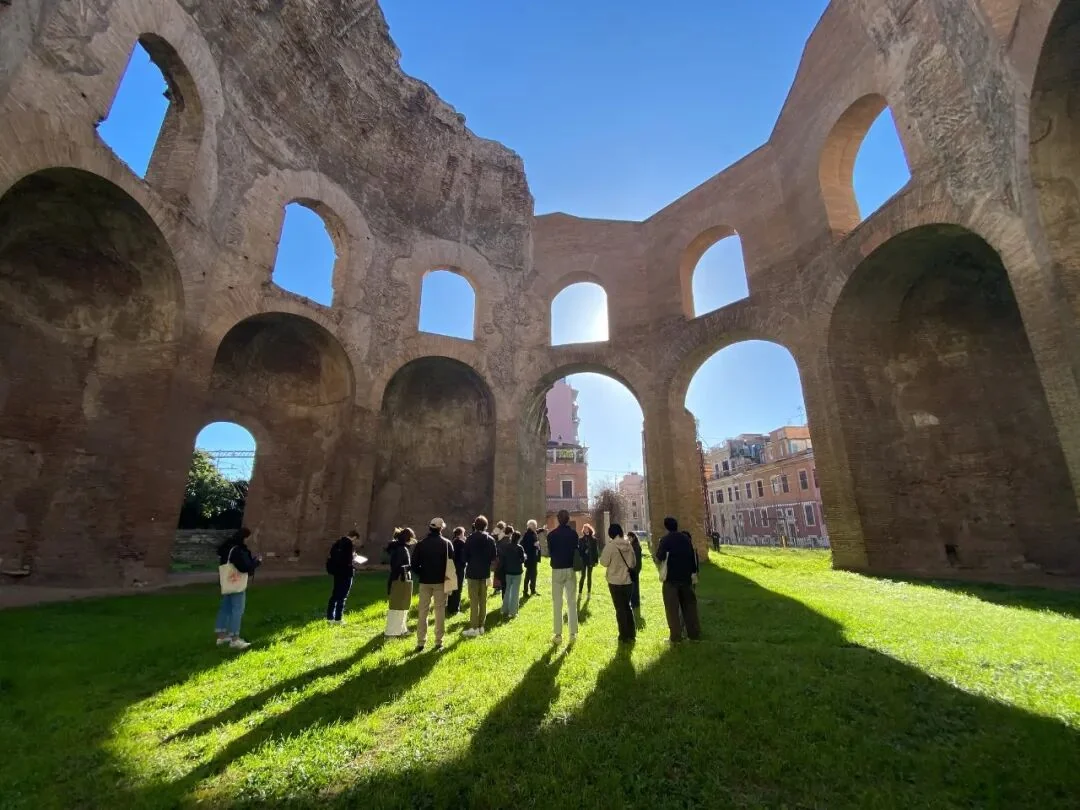
3. 羅馬與紐約的一學期。B.Arch. 學生有機會到 Cornell in Rome 或紐約的 Gensler Family AAP NYC Center 各待一學期——一邊是兩千年的城市教科書,一邊是當代建築實務的現場。
4. STEM 認證與 NAAB 認證。官方說明 B.Arch. 被認定為 STEM 學程(Architectural and Building Sciences/Technology),國際生畢業後可延長 F-1 身分、在美國工作最長三年(OPT 加上 STEM 延長)。加上 NAAB 認證,對想在美國累積實務經驗的國際生很實際。官網也自述這個學位「consistently ranked one of the top programs in the country」——排名每年會變,但它長期在前段,這是事實。
康乃爾 vs. 萊斯:兩所頂尖建築本科怎麼選?
常有家長問我:康乃爾和萊斯都很強,差在哪?我用官方資料整理成一張表:
| 比較項目 | 康乃爾大學(Cornell AAP) | 萊斯大學(Rice Architecture) |
|---|---|---|
| 學位結構 | 五年制 B.Arch.,一個專業學位 | 四年 B.A. in Architecture,再申請兩年 B.Arch.(共六年、兩個學位) |
| 招牌經驗 | 羅馬學期、紐約 AAP NYC Center | Preceptorship:在知名事務所支薪實習 9–12 個月 |
| 大學環境 | 大型綜合研究型大學,約 1/4 課程可跨院修讀 | 規模較小的研究型大學,B.Arch. 階段須再以作品集申請 |
| 適合誰 | 目標明確、想五年拿到專業學位、善用綜合大學資源 | 想先廣泛探索、重視長時間實務歷練 |
資料來源:Cornell AAP、Rice School of Architecture(2026-10-21 查核)。兩條路沒有高下,重點是哪一種節奏適合你。
申請康乃爾建築本科需要什麼條件?
依 康乃爾招生處的學院別要求與 新生申請頁(2026-10-21 查核):
- 高中課程:AAP 要求 4 年英文、3 年數學、3 年科學;建築系要求 4 年數學,並建議修微積分與物理。
- 標準化考試:自 2026 秋季入學起,所有新生申請者必須提交 SAT 或 ACT(可先自報分數)。康乃爾表明沒有 GPA 或分數門檻,採整體審查。
- 推薦信:1 份升學輔導(counselor)推薦+ 2 份老師推薦。
- 文書:Common App 加上康乃爾補充文書(依所申請學院作答)。
- 作品集+影片面試(必交):只能透過 Cornell AAP SlideRoom 提交,ED 11 月 1 日、RD 1 月 2 日截止,逾期不收。另外,AAP 已公告 2027 秋季不接受外校轉學申請。
作品集的格式細節(15–20 張、每個項目最多 2 張、每張說明建議 50 字內、禁止 AI 生成圖、3 分鐘不剪輯影片回答三題),我在康乃爾建築本科作品集怎麼做一文已逐條拆解,這裡不重複。
康乃爾 AAP 在找什麼樣的人?
這是我覺得最值得細讀的部分。AAP 建築招生頁列出七種它重視的特質,申請者具備其中「一項或多項」即可:
- Expressive Designers:能綜合多種資訊,清楚表達設計意圖。
- Creative Thinkers:能把創新的想法說清楚、做出形式。
- Spatial Changemakers:對建築與城市的現狀提出批判與挑戰。
- Cultural Innovators:尋找個人或集體設計的新形式。
- Rigorous Makers:主動精進技術與創作能力。
- Empathic Individuals:在乎共同打造公平、永續、有韌性的環境。
- Broad Thinkers:興趣橫跨科學到人文。
換句話說,作品集不必面面俱到,但要讓評審一眼看出「你是哪一種人」。下面用我指導、獲康乃爾錄取學生的作品,對照這幾種特質。
康乃爾建築錄取作品實例:對照 AAP 的特質
看完整作品:無障礙休閒園區 →
看完整作品:探索中國書法 →

看完整作品:與竹共綻 →
看完整作品:空間中的空間 →
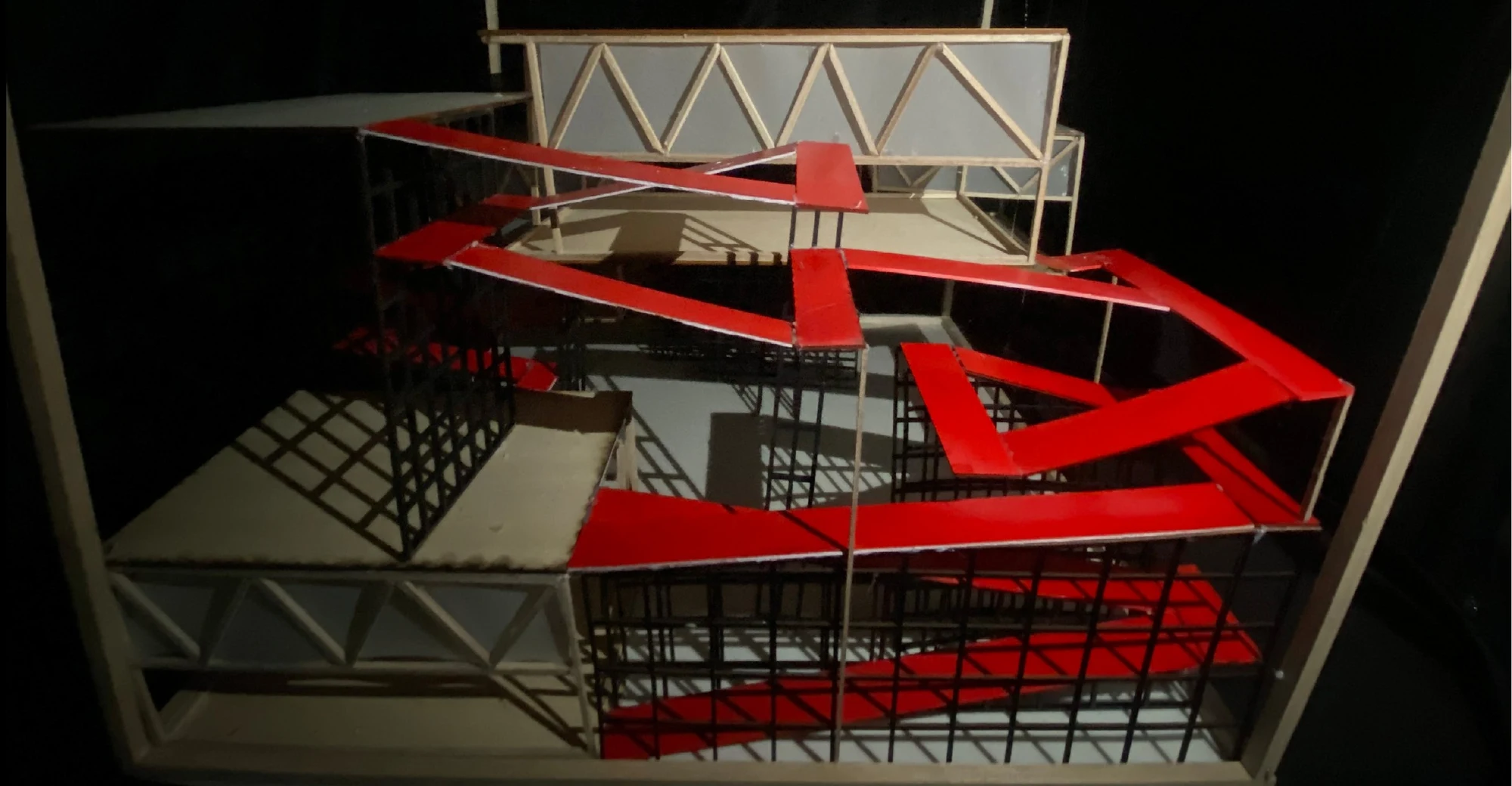
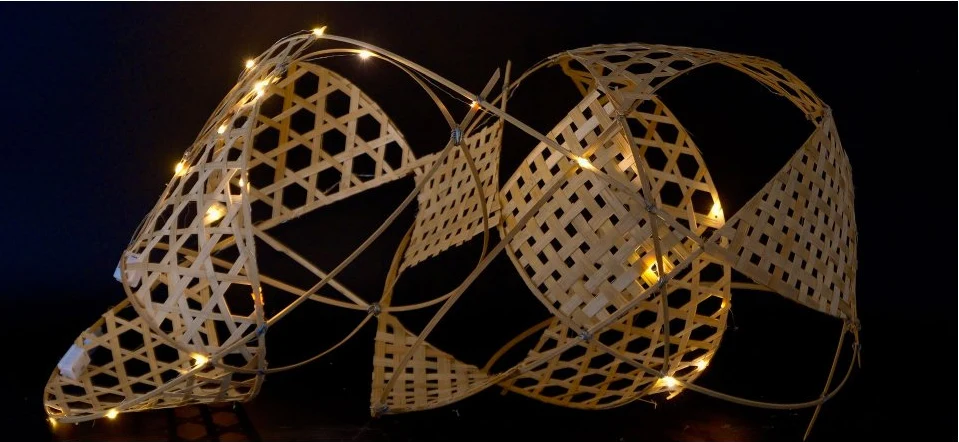
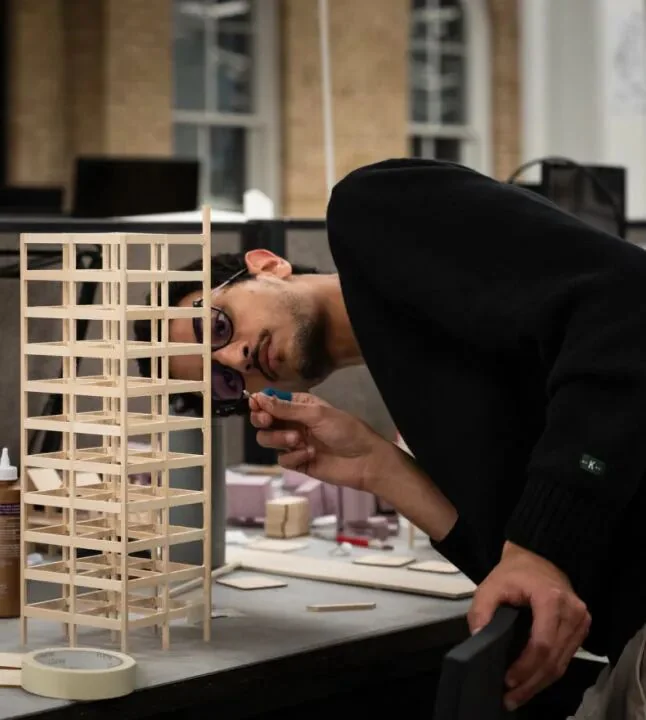
這四件作品的共同點是:每件都有一個清楚的出發點(一群使用者、一種文化、一朵花的結構、一只絲瓜),而不是「我會做模型」而已。這也是我帶學生時最常說的一句話:先決定你想讓評審記住你是誰,再決定放哪些作品。另一個從聲音分析走到實體模型的例子,可以看小提琴聲波的立體呈現:把自己演奏的小提琴曲聲波描成草圖,再用木棒與 PVC 三角板做成立體結構。

我的建議:怎麼為康乃爾做準備?
1. 學術成績不能鬆。4 年數學(最好含微積分)、物理,加上 SAT/ACT 已恢復必交——康乃爾建築不是「作品好就好」的學校。
2. 從七種特質裡挑一到兩種,當成作品集的主軸。官方說「一項或多項」,與其每種都沾一點,不如把一兩種講深。
3. 讓作品集和影片說同一個故事。影片第二題要你講一個項目的設計過程與影響,最好就是作品集裡最有分量的那一件。
4. ED 要提早一年規劃。作品集 11 月 1 日就要交,比多數學校早;真正能動手做作品的時間,通常是高二升高三的暑假前後。

本文依 2026 年 10 月官方資料更新。
每年谈到美国建筑本科,康乃尔大学建筑、艺术与规划学院(AAP)几乎都会被放进第一梯队。它的地位为什么一直这么稳?我把这几年带学生申请康乃尔的经验,加上 2026 年 10 月重新查核的官方资料,整理成这篇:康乃尔建筑到底强在哪、和莱斯(Rice)差在哪、申请门槛有多高,以及录取学生的作品长什么样子。
康乃尔建筑本科是什么学位?
康乃尔 AAP 的建筑本科是五年制专业学位 Bachelor of Architecture(B.Arch.),在绮色佳(Ithaca)主校区就读。依 AAP 的 NAAB 认证页,B.Arch. 目前的 NAAB 认证期为 2025–2033 年,需修满 154 学分。和普林斯顿那种四年制、偏通识的预备专业学位不同(我在普林斯顿建筑本科录取解析里有详细比较),康乃尔毕业时拿的就是可以衔接建筑师执照路径的专业学位。
康乃尔建筑的地位,稳在哪四件事?
1. 专业学院的强度,综合大学的广度。AAP 官方 B.Arch. 页写得很清楚:这个学位把五年专业教育的强度,和一所研究型大学的资源结合在一起。虽然大部分课程都和建筑直接相关,学生仍有约四分之一的课会在康乃尔其他学院或 AAP 其他系修读——从工程、商学到人文,都能成为你的「建筑+X」。
2. 先打底、再深化的课程结构。所有学生前三年走同一套核心课程,涵盖设计、理论、历史、技术、表现法与结构;最后四个学期鼓励跨领域、偏研究与思辨的学习。官方列出的专长方向有五个:建筑、文化与社会;建筑科学与技术;建筑史;建筑理论;建筑视觉表现。
3. 罗马与纽约的一学期。B.Arch. 学生有机会到 Cornell in Rome 或纽约的 Gensler Family AAP NYC Center 各待一学期——一边是两千年的城市教科书,一边是当代建筑实务的现场。
4. STEM 认证与 NAAB 认证。官方说明 B.Arch. 被认定为 STEM 学程(Architectural and Building Sciences/Technology),国际生毕业后可延长 F-1 身分、在美国工作最长三年(OPT 加上 STEM 延长)。加上 NAAB 认证,对想在美国累积实务经验的国际生很实际。官网也自述这个学位「consistently ranked one of the top programs in the country」——排名每年会变,但它长期在前段,这是事实。
康乃尔 vs. 莱斯:两所顶尖建筑本科怎么选?
常有家长问我:康乃尔和莱斯都很强,差在哪?我用官方资料整理成一张表:
| 比较项目 | 康乃尔大学(Cornell AAP) | 莱斯大学(Rice Architecture) |
|---|---|---|
| 学位结构 | 五年制 B.Arch.,一个专业学位 | 四年 B.A. in Architecture,再申请两年 B.Arch.(共六年、两个学位) |
| 招牌经验 | 罗马学期、纽约 AAP NYC Center | Preceptorship:在知名事务所支薪实习 9–12 个月 |
| 大学环境 | 大型综合研究型大学,约 1/4 课程可跨院修读 | 规模较小的研究型大学,B.Arch. 阶段须再以作品集申请 |
| 适合谁 | 目标明确、想五年拿到专业学位、善用综合大学资源 | 想先广泛探索、重视长时间实务历练 |
数据源:Cornell AAP、Rice School of Architecture(2026-10-21 查核)。两条路没有高下,重点是哪一种节奏适合你。
申请康乃尔建筑本科需要什么条件?
依 康乃尔招生处的学院别要求与 新生申请页(2026-10-21 查核):
- 高中课程:AAP 要求 4 年英文、3 年数学、3 年科学;建筑系要求 4 年数学,并建议修微积分与物理。
- 标准化考试:自 2026 秋季入学起,所有新生申请者必须提交 SAT 或 ACT(可先自报分数)。康乃尔表明没有 GPA 或分数门槛,采整体审查。
- 推荐信:1 份升学辅导(counselor)推荐+ 2 份老师推荐。
- 文书:Common App 加上康乃尔补充文书(依所申请学院作答)。
- 作品集+视频面试(必交):只能通过 Cornell AAP SlideRoom 提交,ED 11 月 1 日、RD 1 月 2 日截止,逾期不收。另外,AAP 已公告 2027 秋季不接受外校转学申请。
作品集的格式细节(15–20 张、每个项目最多 2 张、每张说明建议 50 字内、禁止 AI 生成图、3 分钟不剪辑视频回答三题),我在康乃尔建筑本科作品集怎么做一文已逐条拆解,这里不重复。
康乃尔 AAP 在找什么样的人?
这是我觉得最值得细读的部分。AAP 建筑招生页列出七种它重视的特质,申请者具备其中「一项或多项」即可:
- Expressive Designers:能综合多种信息,清楚表达设计意图。
- Creative Thinkers:能把创新的想法说清楚、做出形式。
- Spatial Changemakers:对建筑与城市的现状提出批判与挑战。
- Cultural Innovators:寻找个人或集体设计的新形式。
- Rigorous Makers:主动精进技术与创作能力。
- Empathic Individuals:在乎共同打造公平、永续、有韧性的环境。
- Broad Thinkers:兴趣横跨科学到人文。
换句话说,作品集不必面面俱到,但要让评审一眼看出「你是哪一种人」。下面用我指导、获康乃尔录取学生的作品,对照这几种特质。
康乃尔建筑录取作品实例:对照 AAP 的特质
看完整作品:无障碍休闲园区 →
看完整作品:探索中国书法 →
看完整作品:与竹共绽 →
看完整作品:空间中的空间 →
这四件作品的共同点是:每件都有一个清楚的出发点(一群使用者、一种文化、一朵花的结构、一只丝瓜),而不是「我会做模型」而已。这也是我带学生时最常说的一句话:先决定你想让评审记住你是谁,再决定放哪些作品。另一个从声音分析走到实体模型的例子,可以看小提琴声波的立体呈现:把自己演奏的小提琴曲声波描成草图,再用木棒与 PVC 三角板做成立体结构。
我的建议:怎么为康乃尔做准备?
1. 学术成绩不能松。4 年数学(最好含微积分)、物理,加上 SAT/ACT 已恢复必交——康乃尔建筑不是「作品好就好」的学校。
2. 从七种特质里挑一到两种,当成作品集的主轴。官方说「一项或多项」,与其每种都沾一点,不如把一两种讲深。
3. 让作品集和视频说同一个故事。视频第二题要你讲一个项目的设计过程与影响,最好就是作品集里最有分量的那一件。
4. ED 要提早一年规划。作品集 11 月 1 日就要交,比多数学校早;真正能动手做作品的时间,通常是高二升高三的暑假前后。
本文依 2026 年 10 月官方资料更新。
Every year, when the conversation turns to undergraduate architecture in the United States, Cornell University's College of Architecture, Art, and Planning (AAP) is almost always placed in the top tier. Why has its standing stayed so steady? I have put this piece together from several years of guiding students through Cornell applications, plus official material I checked again in October 2026: where Cornell Architecture is actually strong, how it differs from Rice, how high the admissions bar is, and what admitted students' work looks like.
What degree is Cornell undergraduate architecture?
Cornell AAP's undergraduate architecture degree is a five-year professional degree, the Bachelor of Architecture (B.Arch.), taught on the main campus in Ithaca. According to AAP's NAAB accreditation page, the B.Arch. is currently NAAB-accredited for 2025–2033, and 154 credits are required. Unlike Princeton's four-year pre-professional degree, which leans toward general education (I compare the two in detail in a reading of Princeton undergraduate architecture admissions), what Cornell awards at graduation is a professional degree that connects to the path toward an architect's license.
What four things keep Cornell Architecture's standing so steady?
1. The intensity of a professional school, the breadth of a comprehensive university. AAP's official B.Arch. page states it clearly: the degree joins the intensity of a five-year professional education with the resources of a research university. Although most of the courses relate directly to architecture, students still take about a quarter of their courses in Cornell's other colleges or in other departments of AAP—from engineering and business to the humanities, any of them can become your "architecture + X".
2. A curriculum that builds a base, then goes deeper. For the first three years, every student follows the same core curriculum, covering design, theory, history, technology, representation, and structures. The final four semesters encourage study that is cross-disciplinary and leans toward research and critical thinking. The school lists five areas of focus: architecture, culture, and society; architectural science and technology; history of architecture; architectural theory; and architectural visual representation.
3. One semester in Rome and one in New York. B.Arch. students have the chance to spend one semester at Cornell in Rome or one semester at the Gensler Family AAP NYC Center in New York—one a 2,000-year urban textbook, the other the site of contemporary architectural practice.
4. STEM designation and NAAB accreditation. The official description states that the B.Arch. is designated a STEM programme (Architectural and Building Sciences/Technology). After graduation, international students may extend F-1 status and work in the United States for up to three years (OPT plus the STEM extension). Together with NAAB accreditation, that is practical for international students who want to build professional experience in the United States. The site also describes the degree, in its own words, as "consistently ranked one of the top programs in the country"—rankings change every year, but it has stayed near the front for a long time, and that is a fact.
Cornell vs. Rice: how do you choose between two top undergraduate architecture degrees?
Parents often ask me: Cornell and Rice are both strong, so where do they differ? I have turned the official information into a table:
| Comparison | Cornell University (Cornell AAP) | Rice University (Rice Architecture) |
|---|---|---|
| Degree structure | Five-year B.Arch., one professional degree | A four-year B.A. in Architecture, then an application for a two-year B.Arch. (six years and two degrees in total) |
| Signature experience | A Rome semester, and the AAP NYC Center in New York | Preceptorship: a paid internship of 9–12 months in a well-known firm |
| University setting | A large comprehensive research university, with about 1/4 of courses available across colleges | A smaller research university; the B.Arch. stage requires a further application by portfolio |
| Who it suits | Students with a clear aim, who want a professional degree in five years and will use a comprehensive university's resources | Students who want to explore widely first and who value a long stretch of practical training |
Sources: Cornell AAP, Rice School of Architecture (checked 2026-10-21). The two paths do not rank one above the other. What matters is which pace suits you.
What does an application to Cornell undergraduate architecture require?
According to Cornell Admissions' requirements by college and the first-year applicants page (checked 2026-10-21):
- High school curriculum: AAP requires 4 years of English, 3 years of mathematics, and 3 years of science. The architecture department requires 4 years of mathematics, and it recommends calculus and physics.
- Standardized tests: beginning with entry in fall 2026, every first-year applicant must submit the SAT or ACT (scores may be self-reported first). Cornell states that it has no GPA or score cutoff and that review is holistic.
- Recommendations: 1 counselor recommendation + 2 teacher recommendations.
- Essays: the Common App, plus Cornell's supplemental essays (answered according to the college you apply to).
- Portfolio + video interview (required): these can be submitted only through Cornell AAP SlideRoom, with deadlines of ED November 1 and RD January 2. Late work is not accepted. AAP has also announced that it will not accept transfer applications from other institutions for fall 2027.
The format details of the portfolio (15–20 images, at most 2 images per project, a suggested note of no more than 50 words on each, no AI-generated images, and an unedited 3-minute video answering three questions) are already unpacked point by point in How do you make a Cornell undergraduate architecture portfolio. I will not repeat them here.
What kind of person is Cornell AAP looking for?
This is the part I find most worth reading closely. AAP's architecture admissions page lists seven qualities it values. An applicant needs "one or more" of them:
- Expressive Designers: can bring several kinds of information together and state a design intention clearly.
- Creative Thinkers: can state an inventive idea clearly and give it form.
- Spatial Changemakers: offer a critique and a challenge to the current state of architecture and the city.
- Cultural Innovators: look for new forms of individual or collective design.
- Rigorous Makers: take the initiative to sharpen technical skill and the ability to make.
- Empathic Individuals: care about building, together, environments that are equitable, sustainable, and resilient.
- Broad Thinkers: interests that run from the sciences to the humanities.
In other words, the portfolio does not have to cover every aspect, but it should let reviewers see at a glance what kind of person you are. Below, I set work by students I mentored who were admitted to Cornell against these qualities.
Admitted Cornell architecture work, set against AAP's qualities
See the full project: Accessible Recreation Campus →
See the full project: Exploring Chinese Calligraphy →
See the full project: Blooming with the Bamboo →
See the full project: Space Within a Space →
What these four projects share is a clear point of departure in each one (a group of users, a culture, the structure of a flower, a loofah), rather than merely "I can make a model". This is also the line I say most often when I work with students: first decide who you want the reviewers to remember you as, then decide which projects to include. For another example that moves from sound analysis to a physical model, see Three-Dimensional Violin Sound Waves: the sound waves of a violin piece the student performed are drawn as sketches, then built into a spatial structure with wooden sticks and triangular PVC panels.
My advice: how do you prepare for Cornell?
1. The academic record cannot slip. 4 years of mathematics (preferably including calculus), physics, and the SAT or ACT, which is required again—at Cornell Architecture, strong work on its own is not enough.
2. Pick one or two of the seven qualities and make them the spine of the portfolio. The official line is "one or more". Develop one or two in depth, which goes further than a light touch on every one.
3. Let the portfolio and the video tell the same story. The video's second question asks you to talk through one project's design process and its impact. That should be the project with the most weight in the portfolio.
4. Plan ED a year ahead. The portfolio is due on November 1, earlier than at most schools. The time when you can actually make the work usually falls around the summer between 11th and 12th grade.
This article was updated from official material in October 2026.
English summary
Why is Cornell AAP's architecture program so consistently strong? Cornell offers a five-year, NAAB-accredited, STEM-designated professional Bachelor of Architecture (154 credits; accreditation term 2025–33): a three-year core in design, theory, history, technology, representation and structures, then four semesters of cross-disciplinary study with five concentrations, about one-quarter of courses taken outside the department, and an optional semester at Cornell in Rome or the Gensler Family AAP NYC Center. Compared with Rice (four-year B.A. plus a two-year B.Arch. including a 9–12-month paid Preceptorship), Cornell is a single five-year degree. Admission (checked 2026-10-21): four years of math (calculus and physics recommended), SAT or ACT required from Fall 2026, one counselor and two teacher recommendations, and a portfolio plus video interview via Cornell AAP SlideRoom (ED Nov. 1, RD Jan. 2). The post maps accepted student work to the seven applicant attributes AAP lists.
常見問題常见问题FAQ
康乃爾建築本科要讀幾年?畢業拿什麼學位?康乃尔建筑本科要读几年?毕业拿什么学位?How many years is Cornell undergraduate architecture, and what degree do you graduate with?
五年,畢業取得 NAAB 認證的專業學位 Bachelor of Architecture(B.Arch.),共 154 學分;目前認證期為 2025–2033 年。
五年,毕业取得 NAAB 认证的专业学位 Bachelor of Architecture(B.Arch.),共 154 学分;目前认证期为 2025–2033 年。
Five years. Graduates receive the NAAB-accredited professional degree Bachelor of Architecture (B.Arch.), for 154 credits in total. The current accreditation term is 2025–2033.
康乃爾建築本科是 STEM 學位嗎?康乃尔建筑本科是 STEM 学位吗?Is Cornell undergraduate architecture a STEM degree?
是。官方說明 B.Arch. 被認定為 STEM 學程(Architectural and Building Sciences/Technology),國際生畢業後可延長 F-1 身分在美國工作最長三年。
是。官方说明 B.Arch. 被认定为 STEM 学程(Architectural and Building Sciences/Technology),国际生毕业后可延长 F-1 身分在美国工作最长三年。
Yes. The official description states that the B.Arch. is designated a STEM programme (Architectural and Building Sciences/Technology). After graduation, international students may extend F-1 status and work in the United States for up to three years.
申請康乃爾建築需要考 SAT 或 ACT 嗎?申请康乃尔建筑需要考 SAT 或 ACT 吗?Do you need to take the SAT or ACT to apply to Cornell Architecture?
需要。自 2026 秋季入學起,康乃爾所有新生申請者都必須提交 SAT 或 ACT,可先在申請中自報分數;學校沒有 GPA 或分數門檻。
需要。自 2026 秋季入学起,康乃尔所有新生申请者都必须提交 SAT 或 ACT,可先在申请中自报分数;学校没有 GPA 或分数门槛。
Yes. Beginning with entry in fall 2026, every first-year applicant to Cornell must submit the SAT or ACT, and scores may be self-reported on the application first. The university has no GPA or score cutoff.
康乃爾建築和萊斯建築有什麼不同?康乃尔建筑和莱斯建筑有什么不同?How do Cornell Architecture and Rice Architecture differ?
康乃爾是五年一個 B.Arch. 學位,有羅馬與紐約學期;萊斯是四年 B.A. 再加兩年 B.Arch.(共六年),其中包含在事務所支薪實習 9–12 個月的 Preceptorship。
康乃尔是五年一个 B.Arch. 学位,有罗马与纽约学期;莱斯是四年 B.A. 再加两年 B.Arch.(共六年),其中包含在事务所支薪实习 9–12 个月的 Preceptorship。
Cornell is one five-year B.Arch. degree, with semesters in Rome and New York. Rice is a four-year B.A. plus a two-year B.Arch. (six years in total), which includes a Preceptorship of 9–12 months of paid internship in a firm.
康乃爾建築的作品集和影片什麼時候截止?康乃尔建筑的作品集和视频什么时候截止?When are the deadlines for Cornell Architecture's portfolio and video?
須透過 Cornell AAP SlideRoom 提交,ED 為 11 月 1 日、RD 為 1 月 2 日,逾期不收(2026-10-21 查核)。
须通过 Cornell AAP SlideRoom 提交,ED 为 11 月 1 日、RD 为 1 月 2 日,逾期不收(2026-10-21 查核)。
They must be submitted through Cornell AAP SlideRoom. ED is November 1 and RD is January 2, and late submissions are not accepted (checked 2026-10-21).
訂閱新文章订阅新文章Subscribe
新文章會寄到這個信箱。新文章会寄到这个邮箱。New posts will be emailed to this address.
已訂閱。已订阅。Subscribed.暫時無法訂閱,請稍後再試。暂时无法订阅,请稍后再试。Could not subscribe. Please try again.相關文章相关文章Related posts
 普林斯頓建築本科作品集怎麼準備?錄取解析:要證明的不是「會做圖」,而是「會立論」普林斯顿建筑本科作品集怎么准备?录取解析:要证明的不是「会做图」,而是「会立论」How to Prepare a Princeton Undergraduate Architecture Portfolio? An Admissions Reading: What You Have to Prove Is That You Can Make an Argument, Not That You Can Draw普林斯頓建築本科(A.B.)怎麼申請、作品集怎麼準備?整理官方 Arts Supplement 要求(最少 3 件、每件 100 字內說明、截止日),並以一份真實錄取作品集解析「立論」。普林斯顿建筑本科(A.B.)怎么申请、作品集怎么准备?整理官方 Arts Supplement 要求(最少 3 件、每件 100 字内说明、截止日),并以一份真实录取作品集解析「立论」。How do you apply to Princeton's undergraduate architecture degree (A.B.), and how do you prepare the portfolio? This post gathers the official Arts Supplement requirements—a minimum of 3 works, a statement of no more than 100 words each, and the deadlines—and reads one real admitted portfolio for how it makes an argument.
 看完這五個作品,你會明白名校想要的到底是什麼:康乃爾、UCL、雪城等錄取作品集解析看完这五个作品,你会明白名校想要的到底是什么:康乃尔、UCL、雪城等录取作品集解析Look through these five projects and you will see what top schools actually want: admitted portfolios from Cornell, UCL, Syracuse, and others五件獲康乃爾、賓大、UCL、AA、雪城、愛丁堡等校錄取的建築作品集作品逐一解析:崖邊之屋、脊椎博物館、豬場 AR 遊戲、漂浮紅樹林涼亭、X-重力,對照官方作品集要求,說明名校真正想看的是問題意識、轉譯能力與設計過程。五件获康乃尔、宾大、UCL、AA、雪城、爱丁堡等校录取的建筑作品集作品逐一解析:崖边之屋、脊椎博物馆、猪场 AR 游戏、漂浮红树林凉亭、X-重力,对照官方作品集要求,说明名校真正想看的是问题意识、转译能力与设计过程。Five architecture portfolio projects admitted to Cornell, Penn, UCL, the AA, Syracuse, Edinburgh, and other schools — The Cliffhouse, Spine Museum, a pig-farm AR game, Floating Mangrove Pavilion, and X-Gravity — are read one by one against official portfolio requirements. What top schools really want is a sense of the problem, the ability to translate, and a visible design process.
 賓大 MSD-PDD 房地產開發與設計碩士:2027 秋季申請要求、作品集與課程(2026 年 10 月官網查核)宾大 MSD-PDD 房地产开发与设计硕士:2027 秋季申请要求、作品集与课程(2026 年 10 月官网查核)Penn MSD-PDD (Property Development and Design): fall 2027 requirements, portfolio and curriculum (checked October 2026)對照賓大韋茨曼設計學院官網,整理一年制 MSD in Property Development and Design 的 2027 秋季申請重點:12 學分課程、1 月 6 日截止、作品集 20 頁/30 MB/至少 5 個獨立項目、寫作樣本、英語門檻與錄影面試。对照宾大韦茨曼设计学院官网,整理一年制 MSD in Property Development and Design 的 2027 秋季申请重点:12 学分课程、1 月 6 日截止、作品集 20 页/30 MB/至少 5 个独立项目、写作样本、英语门槛与录像面试。Checked against the Penn Weitzman School of Design website: fall 2027 essentials for the one-year MSD in Property Development and Design, covering the 12-credit curriculum, the 6 January deadline, the 20-page/30 MB portfolio with at least five solo projects, the writing sample, English scores and the video interview.