普林斯頓建築本科作品集怎麼準備?錄取解析:要證明的不是「會做圖」,而是「會立論」普林斯顿建筑本科作品集怎么准备?录取解析:要证明的不是「会做图」,而是「会立论」How to Prepare a Princeton Undergraduate Architecture Portfolio? An Admissions Reading: What You Have to Prove Is That You Can Make an Argument, Not That You Can Draw
用微信掃描這張 QR code 即可分享。用微信扫描这张 QR code 即可分享。Scan this QR code with WeChat to share.
掃描或下載這張 QR code。扫描或下载这张 QR code。Scan or download this QR code.
今年我指導的一位學生拿到了普林斯頓大學建築系 A.B. in Architecture(建築學文學士)的錄取。很多家長第一個問題是:「作品集是不是要畫得很漂亮?」我的答案是:普林斯頓要你證明的不是「會做圖」,而是「會立論」——你能不能提出一個問題、用研究和設計把它論證清楚。
普林斯頓的建築本科(A.B. in Architecture)到底是什麼學位?
根據普林斯頓建築學院(School of Architecture)的官方說明,A.B. in Architecture 設在博雅教育(liberal arts)課程架構之中,屬於預備專業(pre-professional)學位:它不直接滿足建築師執照要求,而是為之後攻讀專業建築碩士(M.Arch)打基礎。
這一點決定了它看人的方式:它要的不是「已經很會畫施工圖」的學生,而是具備思考深度、能在人文、社會與技術之間建立連結的學生。
普林斯頓建築系的設計課(Studio)在訓練什麼?
官方把設計課定位為「a primary pedagogical framework to rehearse modes of architectural thought and research」——演練建築思考與研究方式的主要教學框架。也就是說,Studio 不是畫圖課,是思考與研究的排練場。
官方要求學生的 Studio 作品能展現對以下五個面向的理解:
- 功能與使用(program)
- 基地與環境(site / environment)
- 社會政治意涵(sociopolitical implications)
- 技術系統(technical systems)
- 歷史與理論(history / theory)
課程內容涵蓋建築分析、建築表現、運算與建造技術;使用的媒材包括手繪草圖、數位製圖、實體與數位模型、列印輸出,以及線上與印刷媒體。
為什麼說普林斯頓要的是「會立論」?
看它的獨立研究要求就很清楚:
- 大三獨立研究(Junior independent work):一篇約 30 頁的論文。
- 大四畢業論文(Senior thesis):一整年、針對一個明確建築主題、論證充分的研究;可以用圖紙、模型、影片、攝影或電腦圖像來呈現,最後以公開口頭答辯收尾。
一個大學部建築學位,從大三開始就要求寫 30 頁論文、做一整年的論證型研究並公開答辯——這說明它從申請階段起,就在找能提出問題、組織論點、用設計去證明觀點的人。作品集裡只有漂亮的效果圖,是不夠的。
除了設計,普林斯頓還在意哪些能力?
官方說明裡反覆出現幾個關鍵詞:
- 環境正義(environmental justice):從社會、種族、政治、技術與科學等面向理解建築的影響。
- 協作與清晰的口頭、書面表達。
- 獨立研究、參與學術辯論與領導力。
換句話說,你的作品集和文書要能讓招生官看到:你關心建築背後的人與社會,你能寫、能說、能和別人一起做事。
普林斯頓建築本科怎麼申請?官方 Arts Supplement 要求一次看
以下為我在 2026-10-20 查核普林斯頓官方頁面整理的重點(申請前請再次以官網為準):
- 學位是 A.B.,不是 B.Arch:普林斯頓建築學院的大學部是四年制、以 liberal arts 為框架的預備專業教育,畢業取得 A.B. with a concentration in architecture,為研究所階段的建築或相關領域做準備(SoA 大學部說明)。
- 先申請大學,再補交作品:建築作品是透過選填的 Optional Arts Supplement 提交;必須先向普林斯頓大學送出申請,才能在 Applicant Status Portal 上傳(官方 Arts Supplement 頁面)。主修建築須先修 ARC 203、ARC 204 兩門入門課。
- 最少 3 件作品,不設上限:媒材不限(建築、設計、繪畫、陶藝、雕塑、版畫、攝影、木作等),不必每種都有;鼓勵提交作品集,也接受單張上傳。
- 每件作品附:不超過 100 字的說明、完成日期;若為課堂作業,再加 1–3 句的作業說明。
- 原創與誠信:合作作品須說明合作方式並標註所有參與者;任何 AI 的使用都須揭露並簡述。
- 截止日:Single-Choice Early Action 為 11 月 6 日、Regular Decision 為 1 月 8 日、轉學為 3 月 9 日(皆為申請者當地時間 23:59)。
普林斯頓建築本科錄取作品集實例解析
下面是我指導的一位學生、獲普林斯頓建築本科錄取的作品集。它最值得學的不是技巧,而是每個項目都先有一個問題,再用分析、模型和圖去論證。每件作品都可以點進作品牆看完整頁面。
1. 從場地問題出發:把「沒人停留的街」變成論點
暑期項目從一條夾在建築背立面之間的街道開始:作品集先用分析指出問題——東西兩端高差達 3.5 公尺、午後大半被陰影遮蔽、沒有店面、街道更像服務通道而不是連結,人只是經過、很少停留。設計再分成三層回應:高架步道、以行人與綠化為優先的地面層,以及地下車道。
看完整作品:分層街道 →
看完整作品:凝視之室 →
2. 立場先於造型:「不做新地標,而做調解者」
競賽項目分析了舊金山 UN Plaza:位置關鍵、卻是通道而非目的地。作品集用視線分析劃分空間,並明確寫出立場——在已有市政廳、歌劇院等地標的街區,這個設計不要成為新地標,而是讓不同來由的人相遇的「調解者」。這就是我說的「立論」:先回答「為什麼這樣做」,造型才有依據。
3. 把研究轉成空間:從繪畫、電影到科學資料
其餘作品示範了「研究 → 轉譯 → 模型」的完整路徑:
- 線與色之屋:追蹤分析 Mondrian《Broadway Boogie Woogie》系列,提取比例、實虛、線與流動的關係,再轉成住宅的平面與剖面,最後做成實體模型。
- 月球樞紐:以 NASA 關於月球熔岩管與坑洞的研究為起點,探討用月壤製成建材,構想含居住、實驗室、能源與種植的模組化社區。
- 穿越第五維度:從電影《星際效應》的五維空間出發,先做 2D 抽象練習,再用木棒格架表現「時間的網格」、以鏡面表現無限維度。
- 無限迴圈:記憶路徑:每段樓梯代表一個「選擇的節點」,外部規整的木框代表完整的自我,內部則是分岔而仍相連的路徑。
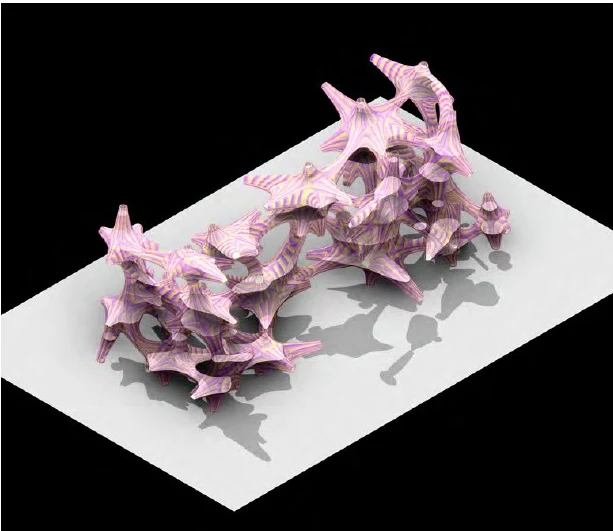
- 生命孔洞:共生棲地:以珊瑚骨骼與神經網絡為參照,用 Voronoi 演算生成空間網絡,再以 3D 列印呈現。
- 祥雲:從童年記憶中的窗花、雕花屏風出發,把光影與孔洞變成可以被個人辨認的空間。
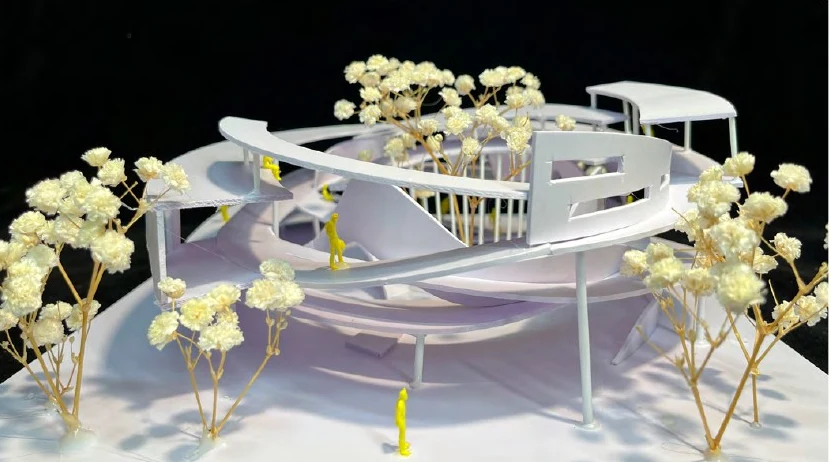
- 滑雪道:從自己參加滑雪比賽的經驗提出問題——非雪季如何維持訓練?——進而設計城市滑雪訓練基地,用螺旋結構讓教練與家長可以從各角度觀看。
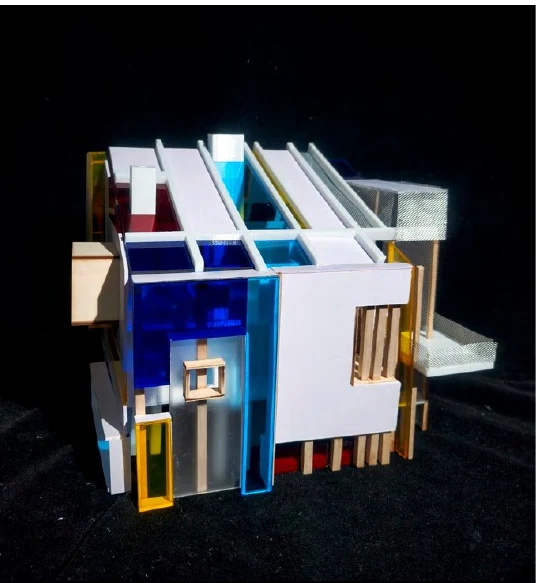
看完整作品:線與色之屋 →
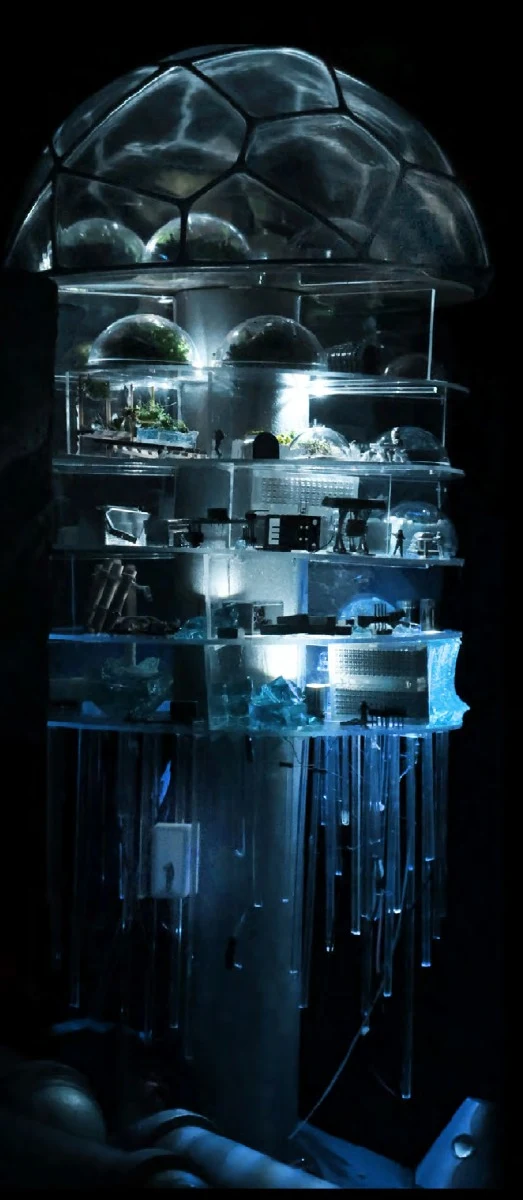
看完整作品:月球樞紐 →
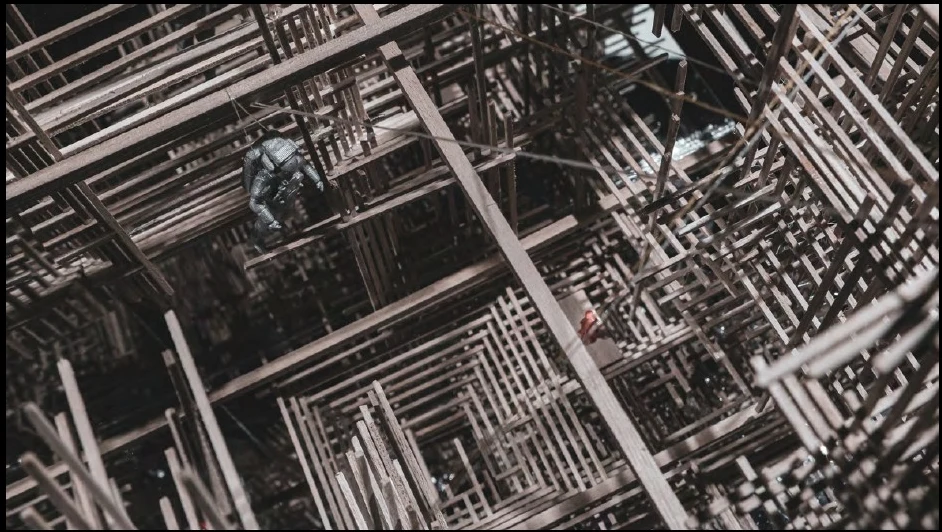
看完整作品:穿越第五維度 →
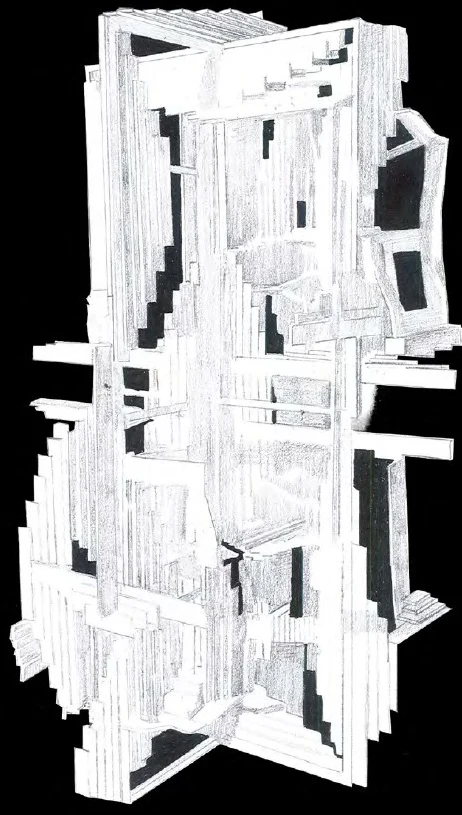
看完整作品:無限迴圈:記憶路徑 →
看完整作品:生命孔洞:共生棲地 →
看完整作品:滑雪道 →
另一件作品:看完整作品:祥雲 →。作品集最後還附了鋼筆、水彩、麥克筆繪畫與國畫作品,補足手繪與觀察能力。
總結這份作品集的共同結構:個人經驗或研究 → 明確問題 → 分析圖 → 空間轉譯 → 模型驗證。這正好對應官方要求的「每件作品不超過 100 字說明」——每個項目都說得出一句清楚的立論。
申請普林斯頓建築本科,作品集該怎麼準備?
把上面的官方要求翻譯成作品集策略,我的建議是:
- 每個項目都從一個問題出發:不是「我做了一個房子」,而是「我想回答什麼問題」。
- 把研究過程放進來:調研、分析、草圖、推演,讓評審看見你的思考路徑,而不只是結果。
- 回應五個面向:功能、基地與環境、社會意涵、技術、歷史理論——不必每個項目都面面俱到,但整本作品集要看得出你理解建築不只是造型。
- 媒材多元:手繪、模型、數位工具都可以,重點是媒材服務於論點。
- 文字要清楚:簡短、精準地說明你的立論,這本身就是官方重視的書面表達能力。
普林斯頓的建築本科,適合的是想把建築當成一種思考方式的人。如果你的作品集能證明你「會立論」,你就已經站在對的起跑點上。
今年我指导的一位学生拿到了普林斯顿大学建筑系 A.B. in Architecture(建筑学文学士)的录取。很多家长第一个问题是:「作品集是不是要画得很漂亮?」我的答案是:普林斯顿要你证明的不是「会做图」,而是「会立论」——你能不能提出一个问题、用研究和设计把它论证清楚。
普林斯顿的建筑本科(A.B. in Architecture)到底是什么学位?
根据普林斯顿建筑学院(School of Architecture)的官方说明,A.B. in Architecture 设在博雅教育(liberal arts)课程架构之中,属于预备专业(pre-professional)学位:它不直接满足建筑师执照要求,而是为之后攻读专业建筑硕士(M.Arch)打基础。
这一点决定了它看人的方式:它要的不是「已经很会画施工图」的学生,而是具备思考深度、能在人文、社会与技术之间创建连接的学生。
普林斯顿建筑系的设计课(Studio)在训练什么?
官方把设计课定位为「a primary pedagogical framework to rehearse modes of architectural thought and research」——演练建筑思考与研究方式的主要教学框架。也就是说,Studio 不是画图课,是思考与研究的排练场。
官方要求学生的 Studio 作品能展现对以下五个面向的理解:
- 功能与使用(program)
- 基地与环境(site / environment)
- 社会政治意涵(sociopolitical implications)
- 技术系统(technical systems)
- 历史与理论(history / theory)
课程内容涵盖建筑分析、建筑表现、运算与建造技术;使用的媒材包括手绘草图、数字制图、实体与数字模型、打印输出,以及在线与印刷媒体。
为什么说普林斯顿要的是「会立论」?
看它的独立研究要求就很清楚:
- 大三独立研究(Junior independent work):一篇约 30 页的论文。
- 大四毕业论文(Senior thesis):一整年、针对一个明确建筑主题、论证充分的研究;可以用图纸、模型、视频、摄影或电脑图像来呈现,最后以公开口头答辩收尾。
一个大学部建筑学位,从大三开始就要求写 30 页论文、做一整年的论证型研究并公开答辩——这说明它从申请阶段起,就在找能提出问题、组织论点、用设计去证明观点的人。作品集里只有漂亮的效果图,是不够的。
除了设计,普林斯顿还在意哪些能力?
官方说明里反复出现几个关键词:
- 环境正义(environmental justice):从社会、种族、政治、技术与科学等面向理解建筑的影响。
- 协作与清晰的口头、书面表达。
- 独立研究、参与学术辩论与领导力。
换句话说,你的作品集和文书要能让招生官看到:你关心建筑背后的人与社会,你能写、能说、能和别人一起做事。
普林斯顿建筑本科怎么申请?官方 Arts Supplement 要求一次看
以下为我在 2026-10-20 查核普林斯顿官方页面整理的重点(申请前请再次以官网为准):
- 学位是 A.B.,不是 B.Arch:普林斯顿建筑学院的大学部是四年制、以 liberal arts 为框架的预备专业教育,毕业取得 A.B. with a concentration in architecture,为研究所阶段的建筑或相关领域做准备(SoA 大学部说明)。
- 先申请大学,再补交作品:建筑作品是通过选填的 Optional Arts Supplement 提交;必须先向普林斯顿大学送出申请,才能在 Applicant Status Portal 上传(官方 Arts Supplement 页面)。主修建筑须先修 ARC 203、ARC 204 两门入门课。
- 最少 3 件作品,不设上限:媒材不限(建筑、设计、绘画、陶艺、雕塑、版画、摄影、木作等),不必每种都有;鼓励提交作品集,也接受单张上传。
- 每件作品附:不超过 100 字的说明、完成日期;若为课堂作业,再加 1–3 句的作业说明。
- 原创与诚信:合作作品须说明合作方式并标注所有参与者;任何 AI 的使用都须揭露并简述。
- 截止日:Single-Choice Early Action 为 11 月 6 日、Regular Decision 为 1 月 8 日、转学为 3 月 9 日(皆为申请者当地时间 23:59)。
普林斯顿建筑本科录取作品集实例解析
下面是我指导的一位学生、获普林斯顿建筑本科录取的作品集。它最值得学的不是技巧,而是每个项目都先有一个问题,再用分析、模型和图去论证。每件作品都可以点进作品墙看完整页面。
1. 从场地问题出发:把「没人停留的街」变成论点
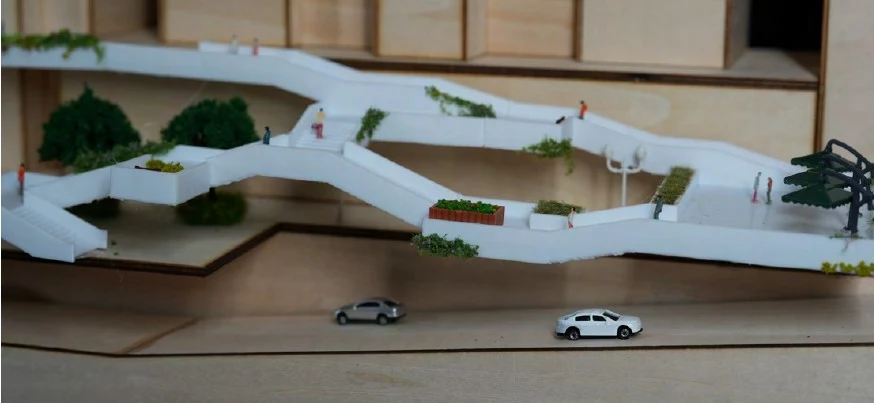
暑期项目从一条夹在建筑背立面之间的街道开始:作品集先用分析指出问题——东西两端高差达 3.5 公尺、午后大半被阴影屏蔽、没有店面、街道更像服务通道而不是连接,人只是经过、很少停留。设计再分成三层回应:高架步道、以行人与绿化为优先的地面层,以及地下车道。
看完整作品:分层街道 →
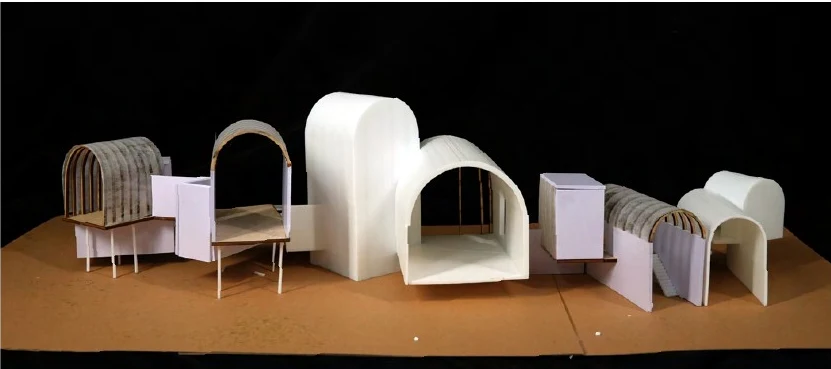
看完整作品:凝视之室 →
2. 立场先于造型:「不做新地标,而做调解者」
竞赛项目分析了旧金山 UN Plaza:位置关键、却是通道而非目的地。作品集用视线分析划分空间,并明确写出立场——在已有市政厅、歌剧院等地标的街区,这个设计不要成为新地标,而是让不同来由的人相遇的「调解者」。这就是我说的「立论」:先回答「为什么这样做」,造型才有依据。
3. 把研究转成空间:从绘画、电影到科学数据
其余作品示范了「研究 → 转译 → 模型」的完整路径:
- 线与色之屋:追踪分析 Mondrian《Broadway Boogie Woogie》系列,提取比例、实虚、线与流动的关系,再转成住宅的平面与剖面,最后做成实体模型。
- 月球枢纽:以 NASA 关于月球熔岩管与坑洞的研究为起点,探讨用月壤制成建材,构想含居住、实验室、能源与种植的模块化社区。
- 穿越第五维度:从电影《星际效应》的五维空间出发,先做 2D 抽象练习,再用木棒格架表现「时间的网格」、以镜面表现无限维度。
- 无限循环:记忆路径:每段楼梯代表一个「选择的节点」,外部规整的木框代表完整的自我,内部则是分岔而仍相连的路径。
- 生命孔洞:共生栖地:以珊瑚骨骼与神经网络为参照,用 Voronoi 演算生成空间网络,再以 3D 打印呈现。
- 祥云:从童年记忆中的窗花、雕花屏风出发,把光影与孔洞变成可以被个人辨认的空间。
- 滑雪道:从自己参加滑雪比赛的经验提出问题——非雪季如何维持训练?——进而设计城市滑雪训练基地,用螺旋结构让教练与家长可以从各角度观看。
看完整作品:线与色之屋 →
看完整作品:月球枢纽 →
看完整作品:穿越第五维度 →
看完整作品:无限循环:记忆路径 →
看完整作品:生命孔洞:共生栖地 →
看完整作品:滑雪道 →
另一件作品:看完整作品:祥云 →。作品集最后还附了钢笔、水彩、麦克笔绘画与国画作品,补足手绘与观察能力。
总结这份作品集的共同结构:个人经验或研究 → 明确问题 → 分析图 → 空间转译 → 模型验证。这正好对应官方要求的「每件作品不超过 100 字说明」——每个项目都说得出一句清楚的立论。
申请普林斯顿建筑本科,作品集该怎么准备?
把上面的官方要求翻译成作品集策略,我的建议是:
- 每个项目都从一个问题出发:不是「我做了一个房子」,而是「我想回答什么问题」。
- 把研究过程放进来:调研、分析、草图、推演,让评审看见你的思考路径,而不只是结果。
- 回应五个面向:功能、基地与环境、社会意涵、技术、历史理论——不必每个项目都面面俱到,但整本作品集要看得出你理解建筑不只是造型。
- 媒材多元:手绘、模型、数字工具都可以,重点是媒材服务于论点。
- 文本要清楚:简短、精准地说明你的立论,这本身就是官方重视的书面表达能力。
普林斯顿的建筑本科,适合的是想把建筑当成一种思考方式的人。如果你的作品集能证明你「会立论」,你就已经站在对的起跑点上。
This year, a student I mentored was admitted to the A.B. in Architecture (Bachelor of Arts in Architecture) at Princeton University. The first question many parents ask is: "Does the portfolio have to be beautifully drawn?" My answer is that what Princeton wants you to prove is that you can make an argument, not that you can produce drawings—whether you can pose a question and argue it clearly through research and design.
What degree is Princeton's undergraduate architecture (A.B. in Architecture), exactly?
According to the official description from Princeton's School of Architecture, the A.B. in Architecture sits within a liberal arts curriculum and is a pre-professional degree: it does not directly meet architect licensing requirements. It lays the foundation for later study toward a professional Master of Architecture (M.Arch).
That sets the kind of student it is looking for: someone with depth of thought who can connect the humanities, society, and technology, and not someone who is already highly skilled at construction drawings.
What does Princeton Architecture's design course (Studio) train?
The school defines the design course as "a primary pedagogical framework to rehearse modes of architectural thought and research"—a framework for rehearsing architectural thinking and research. Studio is not a drawing class. It is a rehearsal room for thinking and research.
Official guidance asks that a student's Studio work show an understanding of these five concerns:
- Function and use (program)
- Site and environment (site / environment)
- Sociopolitical implications (sociopolitical implications)
- Technical systems (technical systems)
- History and theory (history / theory)
The curriculum covers architectural analysis, architectural representation, computation, and construction technology. The media used include hand sketches, digital drawings, physical and digital models, printed output, and online and print media.
Why say that what Princeton wants is the ability to make an argument?
The independent-research requirements make it plain:
- Junior independent work: a paper of about 30 pages.
- Senior thesis: a full year of well-argued research on a clearly defined architectural topic. It may be presented through drawings, models, film, photography, or computer images, and it closes with a public oral defense.
An undergraduate architecture degree that, from junior year, requires a 30-page paper, a full year of argument-driven research, and a public defense is, from the application stage onward, looking for people who can pose a question, organize an argument, and use design to prove a point. Beautiful renderings alone are not enough in a portfolio.
Beyond design, what other abilities does Princeton care about?
A few keywords come up again and again in the official description:
- Environmental justice: understanding architecture's effects through social, racial, political, technical, and scientific lenses.
- Collaboration and clear oral and written expression.
- Independent research, taking part in academic debate, and leadership.
In other words, your portfolio and essays need to show an admissions officer that you care about the people and the society behind architecture, and that you can write, speak, and work with other people.
How do you apply to Princeton undergraduate architecture? The official Arts Supplement requirements at a glance
The points below are what I compiled from Princeton's official pages, checked on 2026-10-20 (please confirm again on the official site before you apply):
- The degree is an A.B., not a B.Arch: undergraduate study at Princeton's School of Architecture is a four-year pre-professional education framed by the liberal arts. Graduates receive an A.B. with a concentration in architecture, in preparation for graduate study in architecture or a related field (SoA undergraduate overview).
- Apply to the university first, then submit the work: architecture work is submitted through the optional Optional Arts Supplement. You must send an application to Princeton University before you can upload in the Applicant Status Portal (official Arts Supplement page). To concentrate in architecture, you must first take the two introductory courses ARC 203 and ARC 204.
- A minimum of 3 works, with no maximum: any medium is allowed (architecture, design, painting, ceramics, sculpture, printmaking, photography, woodworking, and so on), and you do not need one of each. A portfolio is encouraged, and single-image uploads are also accepted.
- With each work: a statement of no more than 100 words, and a completion date; if it is a class assignment, add 1–3 sentences describing the assignment.
- Originality and integrity: collaborative work must explain how the collaboration was done and credit every participant. Any use of AI must be disclosed and briefly described.
- Deadlines: Single-Choice Early Action is November 6, Regular Decision is January 8, and transfer is March 9 (all at 23:59 in the applicant's local time).
A reading of an admitted portfolio for Princeton undergraduate architecture
Below is the portfolio of a student I mentored who was admitted to Princeton undergraduate architecture. What is worth learning from it is not the technique. It is that every project starts with a question, then argues it through analysis, models, and drawings. Each work can be opened on the board for the full page.
1. Start from a site problem: turn "a street where no one stays" into an argument
The summer project begins with a street squeezed between the back elevations of buildings. The portfolio uses analysis to name the problem—the height difference between the east and west ends reaches 3.5 metres, most of the street is in shadow through the afternoon, there are no shopfronts, and the street feels more like a service passage than a connection. People only pass through, and they rarely stay. The design then answers in three layers: an elevated walkway, a ground level that puts pedestrians and planting first, and an underground roadway.
See the full project: The Layered Street →
See the full project: The Gaze Chamber →
2. A position before the form: "not a new landmark, but a mediator"
The competition project analyzes San Francisco's UN Plaza: the location is critical, yet it is a route through rather than a destination. The portfolio uses sightline analysis to divide the space, and it states a position outright—on a block that already has landmarks such as City Hall and the opera house, this design should not become a new landmark. It should be a "mediator" where people who arrive for different reasons can meet. That is what I mean by making an argument: answer "why do it this way" first, and the form then has a basis.
3. Turn research into space: from painting and film to scientific data
The remaining works show the full path of "research → translation → model":
- House of Lines and Colour: a close reading of Mondrian's Broadway Boogie Woogie series, drawing out the relationships of proportion, solid and void, line, and flow, then translating them into the plan and section of a house, and finally into a physical model.
- Lunar Nexus: starting from NASA research on lunar lava tubes and pits, it explores making building materials from lunar soil and proposes a modular community with housing, a laboratory, energy, and planting.
- Traversing the Fifth Dimension: starting from the five-dimensional space in the film Interstellar, it begins with a 2D abstract exercise, then uses a wooden-stick grid to represent "the grid of time" and mirrors to represent infinite dimensions.
- Infinite Loop: Memory Paths: each flight of stairs stands for a "node of choice". The regular wooden frame on the outside stands for a complete self, and the inside is a set of paths that branch and stay connected.
- Living Cavities: Symbiotic Habitat: taking coral skeletons and neural networks as references, it generates a spatial network with a Voronoi computation and presents it through 3D printing.
- Auspicious Clouds: starting from the paper window patterns and carved screens of childhood memory, it turns light, shadow, and openings into a space a person can recognize as their own.
- Ski Trail: drawing on the student's own experience competing in ski races, it asks a question—how do you keep training outside the snow season?—and then designs an urban ski-training base whose spiral structure lets coaches and parents watch from every angle.
See the full project: House of Lines and Colour →
See the full project: Lunar Nexus →
See the full project: Traversing the Fifth Dimension →
See the full project: Infinite Loop: Memory Paths →
See the full project: Living Cavities: Symbiotic Habitat →
See the full project: Ski Trail →
Another project: See the full project: Auspicious Clouds →. The portfolio also ends with pen, watercolor, and marker drawings and traditional Chinese painting, which fill out the hand drawing and the ability to observe.
The shared structure of this portfolio is: personal experience or research → a clear question → analytical drawings → spatial translation → verification in the model. That lines up with the official requirement of "no more than 100 words of description per work"—every project can state its argument in one clear sentence.
When you apply to Princeton undergraduate architecture, how should you prepare the portfolio?
Turning the official requirements above into a portfolio strategy, my advice is:
- Start every project from a question: not "I made a house", but "what question do I want to answer?"
- Bring the research process in: investigation, analysis, sketches, and the steps of working the idea out, so reviewers see the path of your thinking and not only the result.
- Respond to the five concerns: function, site and environment, social meaning, technology, and history and theory. No single project has to cover every one, but the portfolio as a whole should show that you understand architecture is more than form.
- Use more than one medium: hand drawing, models, and digital tools all belong. The medium should serve the argument.
- Write clearly: state your argument briefly and precisely. That is itself the written expression the school values.
Princeton undergraduate architecture suits people who want to treat architecture as a way of thinking. If your portfolio can prove that you can make an argument, you are already on the right starting line.
English summary
How do you build an architecture portfolio for Princeton? Princeton's undergraduate program leads to an A.B. with a concentration in architecture (not a B.Arch) within a liberal arts curriculum. Architecture work is submitted through the Optional Arts Supplement after applying to the University: a minimum of 3 samples in any medium, each with a description of no more than 100 words and a completion date; AI use must be disclosed. Deadlines (checked 2026-10-20): Nov. 6 (Single-Choice Early Action), Jan. 8 (Regular Decision). This Princeton architecture portfolio example, from a student admitted to Princeton, shows how every project starts from a clear question, then argues it through analysis, diagrams and physical models.
常見問題常见问题FAQ
普林斯頓 A.B. in Architecture 畢業可以直接考建築師執照嗎?普林斯顿 A.B. in Architecture 毕业可以直接考建筑师执照吗?Can you take the architect licensing exam directly after graduating with Princeton's A.B. in Architecture?
不能。官方說明它是預備專業(pre-professional)學位,不直接滿足執照要求,而是為之後攻讀專業建築碩士(M.Arch)做準備。
不能。官方说明它是预备专业(pre-professional)学位,不直接满足执照要求,而是为之后攻读专业建筑硕士(M.Arch)做准备。
No. The official description calls it a pre-professional degree. It does not directly meet licensing requirements. It prepares you to pursue a professional Master of Architecture (M.Arch) afterward.
普林斯頓建築本科的作品集最重要的是什麼?普林斯顿建筑本科的作品集最重要的是什么?What matters most in a portfolio for Princeton undergraduate architecture?
是展現思考與論證能力。官方把設計課定位為演練建築思考與研究的框架,作品要能體現對功能、基地與環境、社會政治意涵、技術系統與歷史理論的理解,而不只是好看的圖。
是展现思考与论证能力。官方把设计课定位为演练建筑思考与研究的框架,作品要能体现对功能、基地与环境、社会政治意涵、技术系统与历史理论的理解,而不只是好看的图。
Showing that you can think and argue. The school frames the design course as a framework for rehearsing architectural thought and research. The work should show an understanding of function, site and environment, sociopolitical implications, technical systems, and history and theory, and not only drawings that look good.
普林斯頓建築系大學部要寫論文嗎?普林斯顿建筑系大学部要写论文吗?Do undergraduates in Princeton's architecture department have to write a thesis?
要。大三有約 30 頁的獨立研究論文;大四是一整年的畢業論文研究,可用圖紙、模型、影片、攝影或電腦圖像呈現,最後須公開口頭答辯。
要。大三有约 30 页的独立研究论文;大四是一整年的毕业论文研究,可用图纸、模型、视频、摄影或电脑图像呈现,最后须公开口头答辩。
Yes. Junior year includes an independent research paper of about 30 pages. Senior year is a full year of thesis research, which may be presented through drawings, models, film, photography, or computer images, and it must close with a public oral defense.
普林斯頓建築本科的作品集可以用哪些媒材?普林斯顿建筑本科的作品集可以用哪些媒材?What media can a portfolio for Princeton undergraduate architecture use?
官方課程涵蓋手繪草圖、數位製圖、實體與數位模型、列印輸出及線上與印刷媒體。媒材本身不是重點,重點是用它清楚支撐你的論點。
官方课程涵盖手绘草图、数字制图、实体与数字模型、打印输出及在线与印刷媒体。媒材本身不是重点,重点是用它清楚支撑你的论点。
The official curriculum covers hand sketches, digital drawings, physical and digital models, printed output, and online and print media. The medium itself is not the point. The point is to use it so that it clearly supports your argument.
普林斯頓建築的 Arts Supplement 要交幾件作品?普林斯顿建筑的 Arts Supplement 要交几件作品?How many works does the Princeton Architecture Arts Supplement require?
官方要求最少 3 件、不設上限,每件附不超過 100 字的說明與完成日期;須先送出大學申請,再於 Applicant Status Portal 上傳(截至 2026-10-20 查核)。
官方要求最少 3 件、不设上限,每件附不超过 100 字的说明与完成日期;须先送出大学申请,再于 Applicant Status Portal 上传(截至 2026-10-20 查核)。
The official requirement is a minimum of 3 works, with no maximum. Each work needs a statement of no more than 100 words and a completion date. You must submit the university application first, then upload in the Applicant Status Portal (checked as of 2026-10-20).
訂閱新文章订阅新文章Subscribe
新文章會寄到這個信箱。新文章会寄到这个邮箱。New posts will be emailed to this address.
已訂閱。已订阅。Subscribed.暫時無法訂閱,請稍後再試。暂时无法订阅,请稍后再试。Could not subscribe. Please try again.相關文章相关文章Related posts
 康乃爾建築本科為什麼地位這麼穩?AAP 五年制 B.Arch. 優勢、和萊斯比較與申請門檻康乃尔建筑本科为什么地位这么稳?AAP 五年制 B.Arch. 优势、和莱斯比较与申请门槛Why Has Cornell Undergraduate Architecture Held Its Standing So Steadily? The AAP Five-Year B.Arch. Advantages, a Comparison with Rice, and the Admissions Bar康乃爾 AAP 建築本科強在哪?整理五年制 B.Arch.、NAAB 與 STEM 認證、羅馬與紐約學期、和萊斯的差別、2026 年最新申請門檻(SAT/ACT 必交、4 年數學),並以錄取作品對照 AAP 重視的七種特質。康乃尔 AAP 建筑本科强在哪?整理五年制 B.Arch.、NAAB 与 STEM 认证、罗马与纽约学期、和莱斯的差别、2026 年最新申请门槛(SAT/ACT 必交、4 年数学),并以录取作品对照 AAP 重视的七种特质。What makes Cornell AAP undergraduate architecture strong? This post gathers the five-year B.Arch., NAAB accreditation and STEM designation, the Rome and New York semesters, the differences from Rice, and the latest 2026 admissions requirements (SAT or ACT required, 4 years of mathematics), and sets admitted work against the seven qualities AAP values.
 看完這五個作品,你會明白名校想要的到底是什麼:康乃爾、UCL、雪城等錄取作品集解析看完这五个作品,你会明白名校想要的到底是什么:康乃尔、UCL、雪城等录取作品集解析Look through these five projects and you will see what top schools actually want: admitted portfolios from Cornell, UCL, Syracuse, and others五件獲康乃爾、賓大、UCL、AA、雪城、愛丁堡等校錄取的建築作品集作品逐一解析:崖邊之屋、脊椎博物館、豬場 AR 遊戲、漂浮紅樹林涼亭、X-重力,對照官方作品集要求,說明名校真正想看的是問題意識、轉譯能力與設計過程。五件获康乃尔、宾大、UCL、AA、雪城、爱丁堡等校录取的建筑作品集作品逐一解析:崖边之屋、脊椎博物馆、猪场 AR 游戏、漂浮红树林凉亭、X-重力,对照官方作品集要求,说明名校真正想看的是问题意识、转译能力与设计过程。Five architecture portfolio projects admitted to Cornell, Penn, UCL, the AA, Syracuse, Edinburgh, and other schools — The Cliffhouse, Spine Museum, a pig-farm AR game, Floating Mangrove Pavilion, and X-Gravity — are read one by one against official portfolio requirements. What top schools really want is a sense of the problem, the ability to translate, and a visible design process.
 賓大 MSD-PDD 房地產開發與設計碩士:2027 秋季申請要求、作品集與課程(2026 年 10 月官網查核)宾大 MSD-PDD 房地产开发与设计硕士:2027 秋季申请要求、作品集与课程(2026 年 10 月官网查核)Penn MSD-PDD (Property Development and Design): fall 2027 requirements, portfolio and curriculum (checked October 2026)對照賓大韋茨曼設計學院官網,整理一年制 MSD in Property Development and Design 的 2027 秋季申請重點:12 學分課程、1 月 6 日截止、作品集 20 頁/30 MB/至少 5 個獨立項目、寫作樣本、英語門檻與錄影面試。对照宾大韦茨曼设计学院官网,整理一年制 MSD in Property Development and Design 的 2027 秋季申请重点:12 学分课程、1 月 6 日截止、作品集 20 页/30 MB/至少 5 个独立项目、写作样本、英语门槛与录像面试。Checked against the Penn Weitzman School of Design website: fall 2027 essentials for the one-year MSD in Property Development and Design, covering the 12-credit curriculum, the 6 January deadline, the 20-page/30 MB portfolio with at least five solo projects, the writing sample, English scores and the video interview.