從帆船與海洋環保出發,RD 拿下康乃爾景觀建築:一本主線清楚的本科作品集怎麼做(2026 年 10 月官方查核)从帆船与海洋环保出发,RD 拿下康乃尔景观建筑:一本主线清楚的本科作品集怎么做(2026 年 10 月官方查核)From sailing to Cornell Landscape Architecture (BSLA): an ocean-themed undergraduate portfolio that won in RD (checked October 2026)
用微信掃描這張 QR code 即可分享。用微信扫描这张 QR code 即可分享。Scan this QR code with WeChat to share.
掃描或下載這張 QR code。扫描或下载这张 QR code。Scan or download this QR code.
一位從八年級就開始接觸建築的高中生,ED 沒有拿到結果、劍橋進了 pool 卻沒有學院接收,最後在 RD 輪拿到康乃爾大學 Bachelor of Science in Landscape Architecture(BSLA,景觀建築學士),並同時錄取萊斯 B.Arch、卡內基美隆 B.Arch、倫敦大學學院建築、港大 Design+、柏克萊建築等多所學校,最後選擇了康乃爾。
他的作品集幾乎都圍繞同一條主線:海洋環保。這條主線從他開帆船時看到的海面污染開始,一路發展成實驗模型、陶瓷珊瑚、堆肥系統,最後在 RD 前補上一個「真正的建築項目」。這篇整理他的申請過程與作品集策略,並對照康乃爾官網的景觀建築本科資訊。
2026 年 10 月重新查核:康乃爾 BSLA 的學院歸屬、認證、作品集規格與高中課程要求,均依康乃爾官網更新;送件前請再以官網最新公告為準。本文不列各校截止日與學費,請以各校官網為準。
康乃爾景觀建築本科(BSLA)重點一覽(官方資料)
| 項目 | 內容 |
|---|---|
| 所屬學院 | 農業與生命科學學院(CALS),不是建築藝術與規劃學院(AAP);屬 STEM 認定學程 |
| 學位性質 | 可通往執照的第一專業學位(license-qualifying, first professional degree),符合 LAAB、CLARB 與紐約州教育廳(NYSED)三個機構的要求 |
| 作品集 | 必交;共 10–12 件作品,每件附簡短說明(標題、尺寸、設計意圖、媒材),隨 BSLA 申請以數位方式提交,檔案總大小需小於 20 MB |
| 作品集可放的媒材 | 徒手畫、繪畫、攝影、平面設計與渲染圖、花園設計及其他創作;用來評估視覺思考與設計能力 |
| 高中課程 | 英文 4 年、數學 4 年(含 pre-calculus)、科學 3 年(含生物與化學,強烈建議物理),並強烈建議再多修 1 年科學 |
| 課程特色 | 以一連串設計工作室課為核心,師生一對一;鼓勵大三出國交換(如丹麥、新加坡、荷蘭) |
以上出自 康乃爾 CALS 景觀建築 BSLA 官方頁、CALS 景觀建築主修頁與康乃爾本科招生處 CALS 新生申請頁。要特別注意:同樣在康乃爾,建築(B.Arch.)在 AAP,需透過 AAP 的 SlideRoom 提交作品集並完成影片面試;景觀建築在 CALS,作品集規格與提交方式不同。兩者是不同學院、不同申請路徑,選專業前要先想清楚。想了解康乃爾建築本科的作品集,可讀如何做出一份康乃爾建築本科喜歡的作品集與康乃爾建築本科為什麼地位這麼穩。
申請季的起伏:ED 落空,RD 翻盤
他的第一封錄取來自英國雪菲爾大學,那時他還在趕其他學校的文書。開心沒多久,就收到提前申請的拒信;更讓他難過的是劍橋——被放進 pool,最後卻沒有學院接收。後來陸續收到喬治亞理工等學校的錄取,但當時心態不好,總覺得這些學校比不上被拒的那幾所,開始懷疑自己的能力。
轉折出現在 RD 前。他決定再做一個專門為 RD 準備的作品,結果在做模型的過程中,反而慢慢解開心結、沒那麼緊張了。RD 第一封結果是卡內基美隆的 B.Arch 錄取;之後萊斯 B.Arch 在常春藤放榜前一天出結果——這個學程收的人非常少,他又是 RD,原本做好被拒的準備,結果錄取了。隔天常春藤放榜,他先拿到柏克萊,接著打開康乃爾,看到 Congratulations。康乃爾一直是他的夢校之一,他 ED 沒有申康乃爾,原本有點後悔,最後以這種方式「再續前緣」。
他的心得很簡單:等結果時心態淡一點,反而順一點。申請的不確定性很大,與其每天焦慮,不如把精力放回作品本身。
作品集主線:從帆船上看見的海洋問題
他的作品集最早定下方向,是從一個海洋環保項目開始的。我們和他聊了很多他開帆船時看到的東西:海面上的污染、海洋生態的變化,以及他對這些問題的真實感受。指導老師很快看出這不只是一個「環保主題」,而是可以發展成整本作品集的主線。
其中一個關鍵作品是模擬海岸水位變化的實驗模型:我們反覆錄製多段影片,觀察潮汐空間中污染物如何堆積。這種「用實驗找規律」的做法,讓作品不只是好看,而是有研究過程可以說。
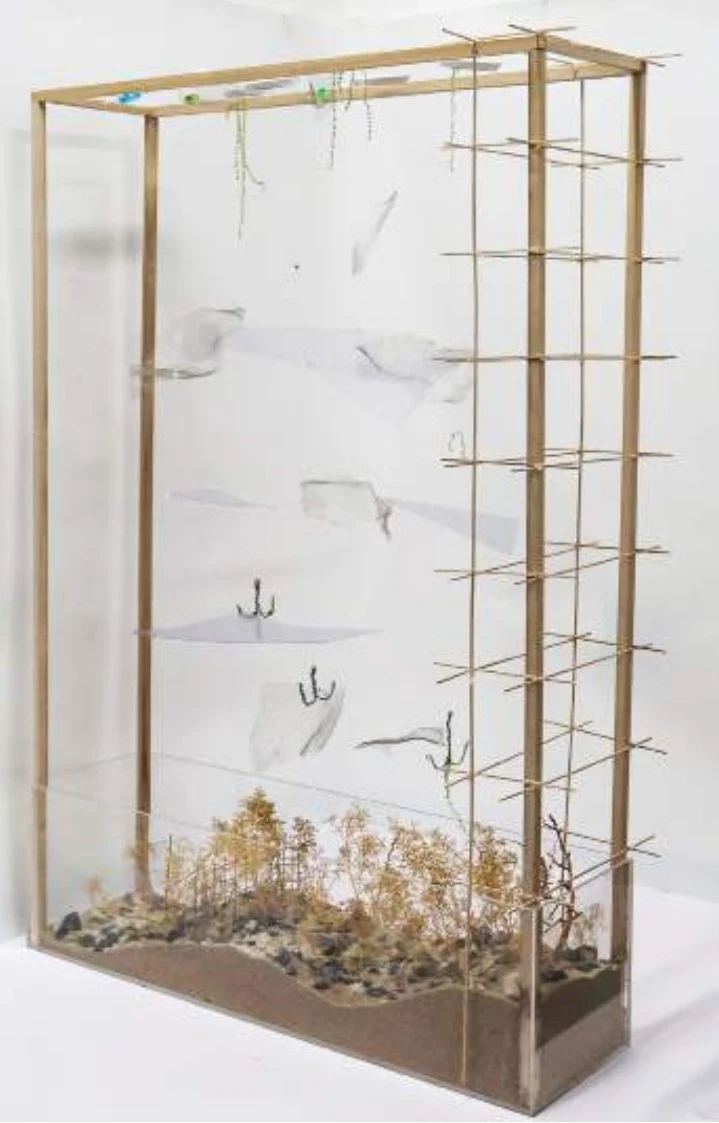
看完整作品:幽靈漁網 →
同一條主線上,他也用樹脂、貝殼與海灘撿來的珊瑚碎片,做出一片被過度開發的海岸切片;再用陶土捏塑出布滿小孔的珊瑚單元,作為海洋生物的棲所,並把它延伸成邀請其他人一起參與的珊瑚復育行動。
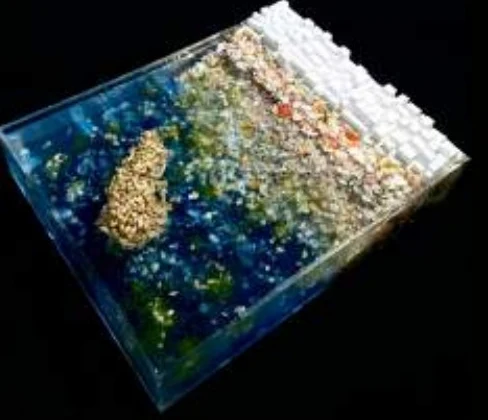
看完整作品:大亞灣生態模型 →
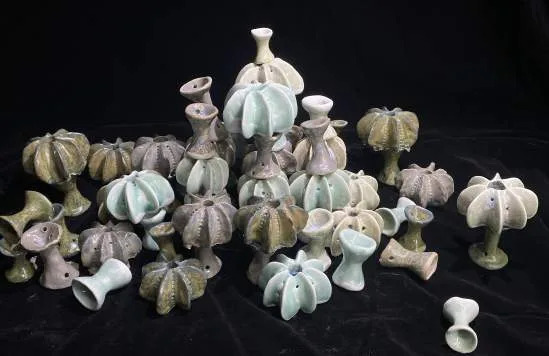
看完整作品:陶瓷珊瑚:集體的努力 →
補上活動短板:真實、難以複製的經歷
他自評在獎項上不算強,但活動經歷補上了一部分。最有代表性的是廚餘回收項目:很少國際學校學生願意真的去碰這種「吃力不討好」的事,但正因為如此,它和常見的紀錄片、刊物類活動拉開了距離——不精緻,但真實、很難被複製。這個項目從一個廚餘桶開始,先做成系統模型,最後做成可以運轉的機器。
看完整作品:從廚餘到土壤 →
他也在最後一個暑假參與鄉村實踐項目,從畫圖一路走到和工廠、老師、不同團隊溝通,推動一個 1:1 的可持續模型真正建造出來,並在上百人面前講解。這些經歷後來都成為文書裡的素材。
RD 前的關鍵一步:補一個「純建築」項目
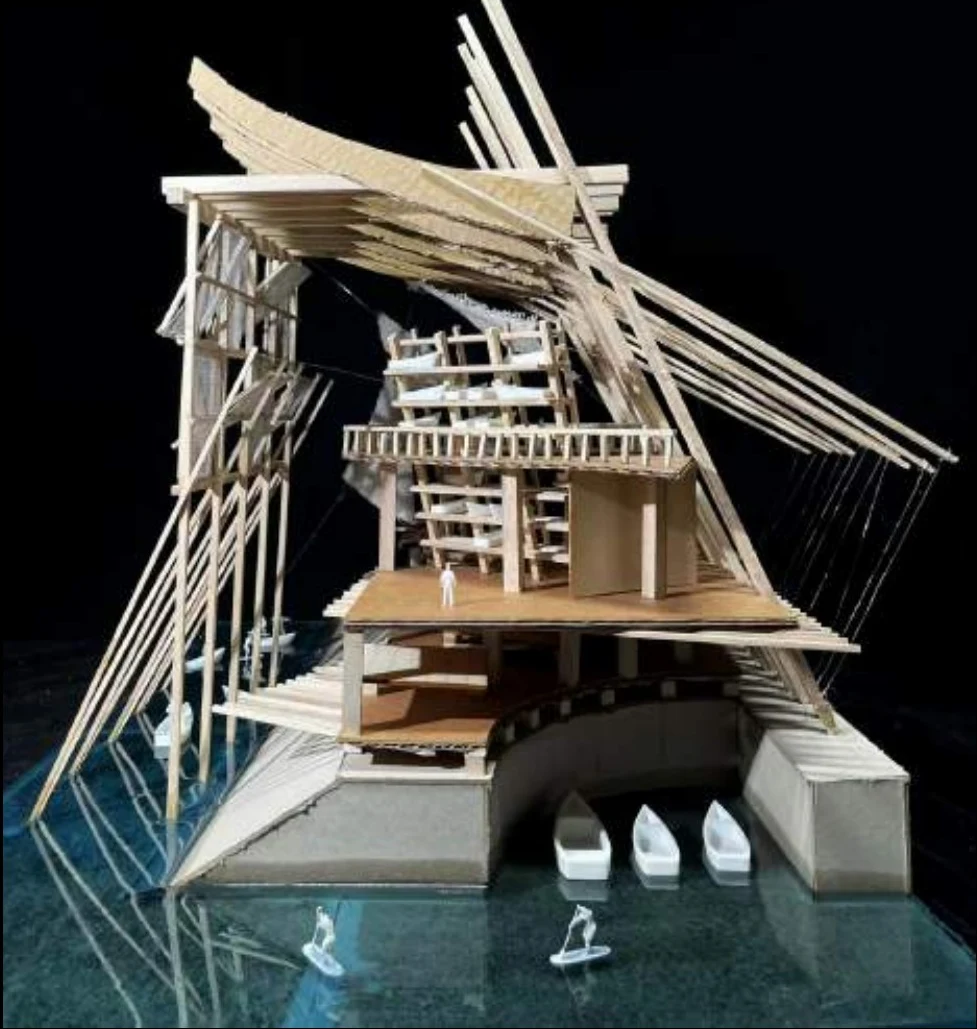
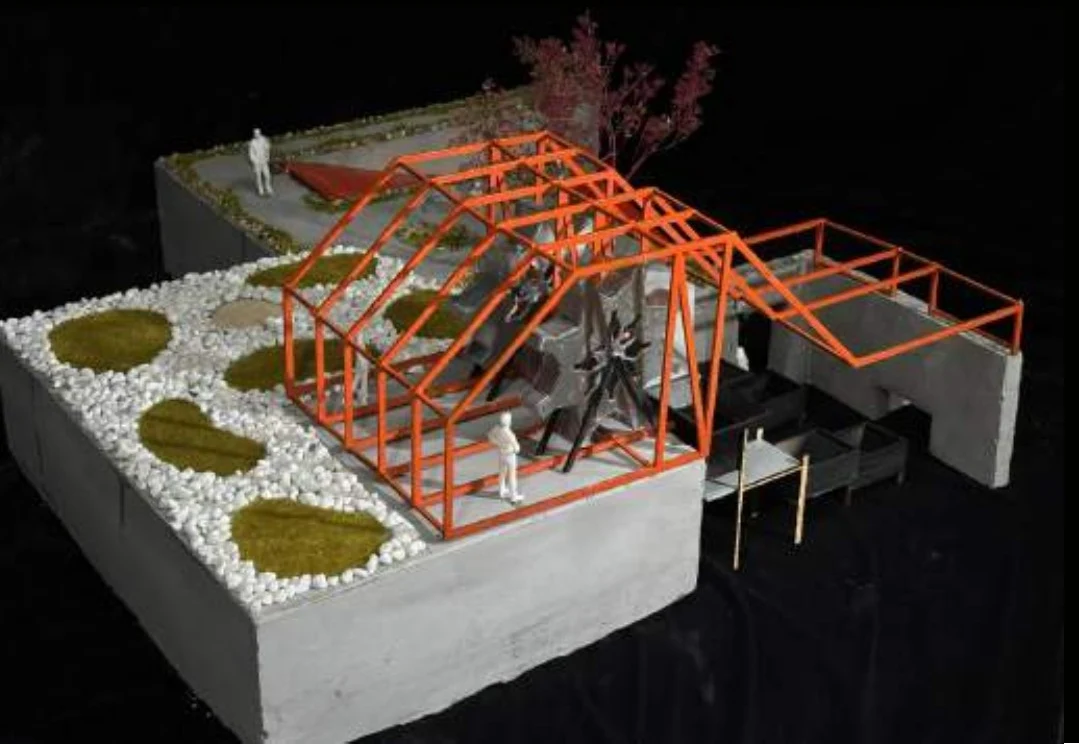
ED 沒有結果之後,他意識到作品集雖然主題線很明確,卻缺少一個更「純建築」的項目。於是他用 3–4 週,圍繞自己平常開帆船的基地,設計了一座船屋:思考能不能把環境科學和建築結合,讓建築不只是空間,也能參與海洋生態修復。
- 做工精細:大量切木條、切木板,用細木桿與交織接頭搭出整座結構。
- 接上主線:沒有把它做成孤立的建築練習,而是和前面的海洋環保作品連在一起,既補上建築專業度,又不脫離個人敘事。
- 接受意外:倒透明蠟做海水時底板有點變色,後來發現效果反而更好——海底本來就不是單一色調,而是複雜、混合、略帶渾濁的。
- 記錄過程:畫了大量草圖與手繪,完整呈現從想法、推敲到成型的過程。
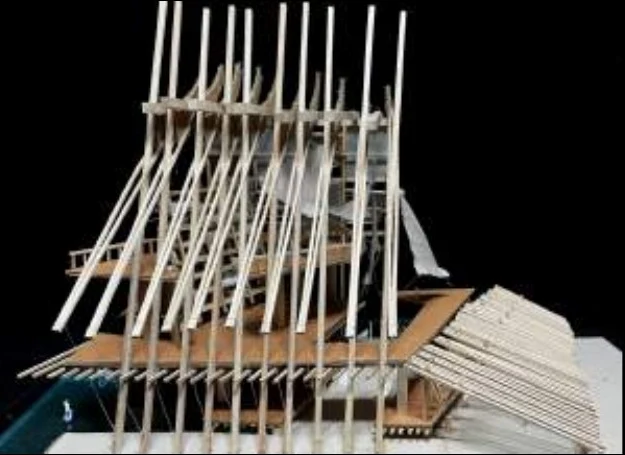
看完整作品:大亞灣船屋 →
這個項目也讓他確認了自己為什麼要學建築,英國 UCAS 個人陳述與美國的 Why Major 文書都寫到了這段經歷。對照康乃爾 BSLA 官網「用作品集評估視覺思考與設計能力」的說明,一條從觀察、實驗、材料到空間的完整主線,正是這種能力最好的證明。
他為什麼能被錄取?四個復盤重點
- 成績有基本盤:成績不一定是最亮眼的部分,但至少沒有拖後腿。
- 用活動補足獎項:廚餘回收、鄉村實踐這類真實投入的經歷,讓他和其他申請者拉開差距。
- 表達能力:萊斯的文書兩版就定稿,康乃爾的文書在截止前 7 天才開始寫,但他的英文表達能力在學校相對突出。
- 心態:美本申請本身有很大的不確定性,保持好心態,相信自己會去到最適合的學校。
給申請者的建議:在 11 年級暑假前找到你的「底牌」
他最想提醒後來者的是:申請季裡最該相信的,不是空泛的「自己」,而是你寫下來、做出來的東西。不管是 Activities List 還是文書,都要問自己:我寫的這些,和別人到底有什麼不一樣?它可以有點怪、不標準,但只要有特點,招生官就會記住你。
前提是不能完全交給運氣。他建議所有人在 11 年級暑假之前,想清楚自己的「超級底牌」是什麼——一個活動、一個項目、一段別人很難複製的經歷都可以。重點不是看起來多高級,而是它夠不夠硬、能不能在關鍵時刻撐住你。對他來說,那張底牌就是作品集。
寫在最後
從八年級第一次接觸建築到高三拿到康乃爾錄取,這位學生用了將近四年,把一個帆船少年對海洋的觀察,變成一本主線清楚、材料豐富、有實驗也有建築的作品集。我從 2017 年至今累積 12,000+ 小時設計教學與設計諮詢,最常提醒學生的是:作品集的主線要來自你真正關心的事,再用不同尺度與媒材把它推深;ED 沒有結果時,與其否定自己,不如冷靜找出作品集缺的那一塊,在 RD 前補上。想看更多錄取作品,可以讀看完這五個作品,你會明白名校想要的到底是什麼,或直接瀏覽作品牆。
一位从八年级就开始接触建筑的高中生,ED 没有拿到结果、剑桥进了 pool 却没有学院接收,最后在 RD 轮拿到康乃尔大学 Bachelor of Science in Landscape Architecture(BSLA,景观建筑学士),并同时录取莱斯 B.Arch、卡内基美隆 B.Arch、伦敦大学学院建筑、港大 Design+、柏克莱建筑等多所学校,最后选择了康乃尔。
他的作品集几乎都围绕同一条主线:海洋环保。这条主线从他开帆船时看到的海面污染开始,一路发展成实验模型、陶瓷珊瑚、堆肥系统,最后在 RD 前补上一个「真正的建筑项目」。这篇整理他的申请过程与作品集策略,并对照康乃尔官网的景观建筑本科信息。
2026 年 10 月重新查核:康乃尔 BSLA 的学院归属、认证、作品集规格与高中课程要求,均依康乃尔官网更新;送件前请再以官网最新公告为准。本文不列各校截止日与学费,请以各校官网为准。
康乃尔景观建筑本科(BSLA)重点一览(官方资料)
| 项目 | 内容 |
|---|---|
| 所属学院 | 农业与生命科学学院(CALS),不是建筑艺术与规划学院(AAP);属 STEM 认定学程 |
| 学位性质 | 可通往执照的第一专业学位(license-qualifying, first professional degree),符合 LAAB、CLARB 与纽约州教育厅(NYSED)三个机构的要求 |
| 作品集 | 必交;共 10–12 件作品,每件附简短说明(标题、尺寸、设计意图、媒材),随 BSLA 申请以数字方式提交,文件总大小需小于 20 MB |
| 作品集可放的媒材 | 徒手画、绘画、摄影、平面设计与渲染图、花园设计及其他创作;用来评估视觉思考与设计能力 |
| 高中课程 | 英文 4 年、数学 4 年(含 pre-calculus)、科学 3 年(含生物与化学,强烈建议物理),并强烈建议再多修 1 年科学 |
| 课程特色 | 以一连串设计工作室课为核心,师生一对一;鼓励大三出国交换(如丹麦、新加坡、荷兰) |
以上出自 康乃尔 CALS 景观建筑 BSLA 官方页、CALS 景观建筑主修页与康乃尔本科招生处 CALS 新生申请页。要特别注意:同样在康乃尔,建筑(B.Arch.)在 AAP,需通过 AAP 的 SlideRoom 提交作品集并完成视频面试;景观建筑在 CALS,作品集规格与提交方式不同。两者是不同学院、不同申请路径,选专业前要先想清楚。想了解康乃尔建筑本科的作品集,可读如何做出一份康乃尔建筑本科喜欢的作品集与康乃尔建筑本科为什么地位这么稳。
申请季的起伏:ED 落空,RD 翻盘
他的第一封录取来自英国雪菲尔大学,那时他还在赶其他学校的文书。开心没多久,就收到提前申请的拒信;更让他难过的是剑桥——被放进 pool,最后却没有学院接收。后来陆续收到乔治亚理工等学校的录取,但当时心态不好,总觉得这些学校比不上被拒的那几所,开始怀疑自己的能力。
转折出现在 RD 前。他决定再做一个专门为 RD 准备的作品,结果在做模型的过程中,反而慢慢解开心结、没那么紧张了。RD 第一封结果是卡内基美隆的 B.Arch 录取;之后莱斯 B.Arch 在常春藤放榜前一天出结果——这个学程收的人非常少,他又是 RD,原本做好被拒的准备,结果录取了。隔天常春藤放榜,他先拿到柏克莱,接着打开康乃尔,看到 Congratulations。康乃尔一直是他的梦校之一,他 ED 没有申康乃尔,原本有点后悔,最后以这种方式「再续前缘」。
他的心得很简单:等结果时心态淡一点,反而顺一点。申请的不确定性很大,与其每天焦虑,不如把精力放回作品本身。
作品集主线:从帆船上看见的海洋问题
他的作品集最早定下方向,是从一个海洋环保项目开始的。我们和他聊了很多他开帆船时看到的东西:海面上的污染、海洋生态的变化,以及他对这些问题的真实感受。指导老师很快看出这不只是一个「环保主题」,而是可以发展成整本作品集的主线。
其中一个关键作品是仿真海岸水位变化的实验模型:我们反复录制多段视频,观察潮汐空间中污染物如何堆积。这种「用实验找规律」的做法,让作品不只是好看,而是有研究过程可以说。
看完整作品:幽灵渔网 →
同一条主在线,他也用树脂、贝壳与海滩捡来的珊瑚碎片,做出一片被过度开发的海岸切片;再用陶土捏塑出布满小孔的珊瑚单元,作为海洋生物的栖所,并把它延伸成邀请其他人一起参与的珊瑚复育行动。
看完整作品:大亚湾生态模型 →
看完整作品:陶瓷珊瑚:集体的努力 →
补上活动短板:真实、难以拷贝的经历
他自评在奖项上不算强,但活动经历补上了一部分。最有代表性的是厨余回收项目:很少国际学校学生愿意真的去碰这种「吃力不讨好」的事,但正因为如此,它和常见的纪录片、刊物类活动拉开了距离——不精致,但真实、很难被拷贝。这个项目从一个厨余桶开始,先做成系统模型,最后做成可以运转的机器。
看完整作品:从厨余到土壤 →
他也在最后一个暑假参与乡村实践项目,从画图一路走到和工厂、老师、不同团队沟通,推动一个 1:1 的可持续模型真正建造出来,并在上百人面前讲解。这些经历后来都成为文书里的素材。
RD 前的关键一步:补一个「纯建筑」项目
ED 没有结果之后,他意识到作品集虽然主题线很明确,却缺少一个更「纯建筑」的项目。于是他用 3–4 周,围绕自己平常开帆船的基地,设计了一座船屋:思考能不能把环境科学和建筑结合,让建筑不只是空间,也能参与海洋生态修复。
- 做工精细:大量切木条、切木板,用细木杆与交织接头搭出整座结构。
- 接上主线:没有把它做成孤立的建筑练习,而是和前面的海洋环保作品连在一起,既补上建筑专业度,又不脱离个人叙事。
- 接受意外:倒透明蜡做海水时底板有点变色,后来发现效果反而更好——海底本来就不是单一色调,而是复杂、混合、略带浑浊的。
- 记录过程:画了大量草图与手绘,完整呈现从想法、推敲到成型的过程。
看完整作品:大亚湾船屋 →
这个项目也让他确认了自己为什么要学建筑,英国 UCAS 个人陈述与美国的 Why Major 文书都写到了这段经历。对照康乃尔 BSLA 官网「用作品集评估视觉思考与设计能力」的说明,一条从观察、实验、材料到空间的完整主线,正是这种能力最好的证明。
他为什么能被录取?四个复盘重点
- 成绩有基本盘:成绩不一定是最亮眼的部分,但至少没有拖后腿。
- 用活动补足奖项:厨余回收、乡村实践这类真实投入的经历,让他和其他申请者拉开差距。
- 表达能力:莱斯的文书两版就定稿,康乃尔的文书在截止前 7 天才开始写,但他的英文表达能力在学校相对突出。
- 心态:美本申请本身有很大的不确定性,保持好心态,相信自己会去到最适合的学校。
给申请者的建议:在 11 年级暑假前找到你的「底牌」
他最想提醒后来者的是:申请季里最该相信的,不是空泛的「自己」,而是你写下来、做出来的东西。不管是 Activities List 还是文书,都要问自己:我写的这些,和别人到底有什么不一样?它可以有点怪、不标准,但只要有特点,招生官就会记住你。
前提是不能完全交给运气。他建议所有人在 11 年级暑假之前,想清楚自己的「超级底牌」是什么——一个活动、一个项目、一段别人很难拷贝的经历都可以。重点不是看起来多高级,而是它够不够硬、能不能在关键时刻撑住你。对他来说,那张底牌就是作品集。
写在最后
从八年级第一次接触建筑到高三拿到康乃尔录取,这位学生用了将近四年,把一个帆船少年对海洋的观察,变成一本主线清楚、材料丰富、有实验也有建筑的作品集。我从 2017 年至今累积 12,000+ 小时设计教学与设计咨询,最常提醒学生的是:作品集的主线要来自你真正关心的事,再用不同尺度与媒材把它推深;ED 没有结果时,与其否定自己,不如冷静找出作品集缺的那一块,在 RD 前补上。想看更多录取作品,可以读看完这五个作品,你会明白名校想要的到底是什么,或直接浏览作品墙。
A high school student who first encountered architecture in eighth grade came out of ED without an offer, and at Cambridge he was placed in the pool but no college took him. In the RD round he was admitted to Cornell University’s Bachelor of Science in Landscape Architecture (BSLA), and at the same time to Rice B.Arch, Carnegie Mellon B.Arch, UCL Architecture, HKU Design+, UC Berkeley Architecture, and other schools. In the end he chose Cornell.
Almost his whole portfolio turns on one through-line: ocean conservation. It starts with the pollution he saw on the water while sailing, grows into experimental models, ceramic coral, and a composting system, and, before RD, adds a “real architecture project.” This post sets out his application process and portfolio strategy, set against Cornell’s official pages on the undergraduate landscape architecture degree.
Rechecked in October 2026: which college Cornell BSLA belongs to, its accreditation, the portfolio specifications, and the high school course requirements are all updated from Cornell’s website. Before you submit, take the latest notice on the official site as final. This article does not list each school’s deadlines or tuition. Use each school’s website.
Cornell undergraduate landscape architecture (BSLA) at a glance (official information)
| Topic | Details |
|---|---|
| College | College of Agriculture and Life Sciences (CALS), not the College of Architecture, Art, and Planning (AAP); a STEM-designated programme |
| Nature of the degree | A license-qualifying, first professional degree that meets the requirements of three bodies: LAAB, CLARB, and the New York State Education Department (NYSED) |
| Portfolio | Required; 10–12 works in total, each with a short note (title, dimensions, design intent, media), submitted digitally with the BSLA application; total file size must be less than 20 MB |
| Media the portfolio may include | Freehand drawing, painting, photography, graphic design and renderings, garden design, and other creative work; used to assess visual thinking and design ability |
| High school courses | 4 years of English, 4 years of mathematics (including pre-calculus), 3 years of science (including biology and chemistry, with physics strongly recommended), and 1 further year of science is strongly recommended |
| Curriculum | Centered on a sequence of design studios, with one-to-one teaching; exchange study abroad in the third year is encouraged (for example Denmark, Singapore, and the Netherlands) |
The above is drawn from the Cornell CALS Landscape Architecture BSLA page, the CALS landscape architecture major page, and the Cornell undergraduate admissions page for first-year CALS applicants. One distinction matters: also at Cornell, architecture (B.Arch.) is in AAP and requires a portfolio submitted through AAP’s SlideRoom plus a video interview; landscape architecture is in CALS, and the portfolio specifications and the submission method are different. They are different colleges and different application paths, so think it through before you choose a major. To understand the undergraduate architecture portfolio at Cornell, read How to make a portfolio that Cornell’s undergraduate architecture likes and Why Cornell’s undergraduate architecture holds its standing so steadily.
The swings of application season: ED falls through, RD turns it around
His first offer came from the University of Sheffield in the UK, while he was still rushing essays for other schools. The pleasure did not last. Rejection letters from his early applications arrived, and what hurt more was Cambridge: he had been placed in the pool, and in the end no college took him. Offers from Georgia Tech and other schools came in after that, but his frame of mind was poor. He kept feeling those schools did not measure up to the ones that had rejected him, and he began to doubt his own ability.
The turn came before RD. He decided to make one more work prepared specifically for RD, and while he was building the model the knot slowly came undone and he grew less anxious. The first RD result was an offer from Carnegie Mellon’s B.Arch. Rice B.Arch then released its result the day before the Ivy League decisions: this programme admits very few people, and he was applying RD, so he had prepared himself for a rejection. He was admitted. The next day the Ivy League decisions came out. He first got UC Berkeley, then opened Cornell and saw Congratulations. Cornell had always been one of his dream schools. He had not applied to Cornell ED and had regretted that a little, and this was how that connection was renewed.
His takeaway is simple: while you wait for results, a lighter frame of mind makes things go more smoothly. Admission is highly uncertain. Put the energy back into the work itself instead of spending every day anxious.
The portfolio through-line: ocean problems seen from a sailboat
The portfolio’s direction was set early, starting from an ocean-conservation project. We talked with him at length about what he saw while sailing: pollution on the surface of the sea, changes in marine ecology, and what he actually felt about these problems. The instructor quickly saw that this was not only an “environmental theme,” but a through-line that could grow into the whole portfolio.
One key work is an experimental model that simulates changing water levels along the coast: we recorded clip after clip, watching how pollutants accumulate in the tidal space. This way of “finding patterns through experiment” means the work is not only good to look at. There is a research process to talk about.
See the full project: The Ghost Net →
On the same through-line, he also used resin, shells, and coral fragments picked up on the beach to make a section of an overdeveloped coast. He then pinched clay into coral units full of small holes, as habitat for marine life, and extended that into a reef-restoration effort that invites other people to take part.
See the full project: Daya Bay Eco-model →
See the full project: Ceramic Coral: A Collective Effort →
Filling the gap in activities: real experiences that are hard to copy
By his own account he was not strong on awards, but his activities made up part of that. The clearest example is a kitchen-waste recycling project. Few students at international schools are willing to take on this kind of thankless work, and that is exactly why it stands apart from the usual documentaries and publications. It is not polished, but it is real and hard to copy. The project started with one kitchen-waste bin, became a system model, and ended as a machine that could run.
See the full project: Scraps to Soil →
In his last summer he also joined a rural practice project, moving from drawing all the way to talking with the factory, teachers, and different teams, pushing a 1:1 sustainability model until it was actually built, and presenting it to an audience of more than a hundred. These experiences later became material for his essays.
The key step before RD: add a “purely architectural” project
After ED produced no result, he realized that although the portfolio’s thematic line was clear, it lacked a more “purely architectural” project. So he spent 3–4 weeks designing a boathouse around the base where he usually sailed, asking whether environmental science and architecture could be combined so that a building would be more than space and could also take part in restoring marine ecology.
- Fine craft: he cut a great many wooden strips and boards, and built the whole structure from thin wooden rods and interwoven joints.
- Tied to the through-line: he did not make it an isolated architecture exercise. He connected it to the earlier ocean-conservation works, adding architectural rigor without leaving his personal narrative.
- Accept the accident: when he poured clear wax for the seawater, the base discolored slightly, and he later found the effect was better. The seabed is not a single tone. It is complex, mixed, and a little turbid.
- Record the process: he made a large number of sketches and hand drawings, showing the full path from the idea, through working it out, to the finished form.
See the full project: The Daya Bay Boathouse →
This project also confirmed for him why he wanted to study architecture. Both his UK UCAS personal statement and his US Why Major essay wrote about this experience. Set against the Cornell BSLA website’s note that the portfolio is used “to assess visual thinking and design ability,” a complete through-line from observation, experiment, and material to space is the best evidence of that ability.
Why was he admitted? Four points from the review
- A solid academic base: the grades were not necessarily the brightest part, but they did not hold him back.
- Activities made up for awards: real commitments such as kitchen-waste recycling and rural practice set him apart from other applicants.
- Ability to write: the Rice essays were finished in two drafts, and he started the Cornell essays only 7 days before the deadline, but his English expression stood out at his school.
- Mindset: US undergraduate admission itself is highly uncertain. Keep a steady mindset, and trust that you will end up at the school that suits you.
Advice for applicants: find your “ace” before the summer of 11th grade
What he most wants later applicants to hear is this: in application season, the thing to trust is not a vague “self,” but what you have written down and made. Whether it is the Activities List or the essays, ask yourself: how is what I have written actually different from other people’s? It can be a little odd and off the standard pattern. If it has a character of its own, an admissions officer will remember you.
That only holds if you do not leave the whole thing to luck. He suggests that everyone, before the summer of 11th grade, work out what their “strongest card” is. An activity, a project, or an experience other people would find hard to copy will do. What matters is not how impressive it looks, but whether it is solid enough to hold you up when it counts. For him, that card was the portfolio.
In closing
From a first encounter with architecture in eighth grade to a Cornell offer in his senior year, this student spent nearly four years turning a young sailor’s observations of the ocean into a portfolio with a clear through-line, rich materials, experiments, and architecture. From 2017 to today I have accumulated 12,000+ hours of design teaching and design consulting. What I remind students of most often is this: a portfolio’s through-line should come from something you truly care about, and then you push it deeper through different scales and media. When ED brings no result, calmly find the piece the portfolio is missing and fill it in before RD, rather than writing yourself off. To see more admitted work, read Read these five works and you will see what top schools actually want, or browse the project wall.
English summary
A case study of a high-school student who, after an unsuccessful early round and a Cambridge pool without placement, was admitted in Regular Decision to Cornell University's Bachelor of Science in Landscape Architecture (BSLA), alongside B.Arch offers from Rice and Carnegie Mellon and offers from UCL, HKU Design+ and UC Berkeley, and chose Cornell. Facts were cross-checked against Cornell CALS and Cornell undergraduate admissions pages in October 2026: the BSLA is a STEM-designated, license-qualifying first professional degree housed in the College of Agriculture and Life Sciences, complying with LAAB, CLARB and NYSED; applicants submit a digital portfolio of 10-12 captioned pieces under 20 MB, while Cornell's B.Arch is in AAP and uses SlideRoom plus a video interview. The post explains an ocean-conservation portfolio thread that grew from sailing: a tide experiment tank model, a resin coral shoreline model, ceramic coral reef pieces, a kitchen-waste compost system and, added before RD, a wooden-rod boathouse for a sailing base that filled the gap of a pure architecture project.
常見問題常见问题FAQ
康乃爾景觀建築本科(BSLA)屬於哪個學院?康乃尔景观建筑本科(BSLA)属于哪个学院?Which college is Cornell’s undergraduate landscape architecture degree (BSLA) in?
屬於農業與生命科學學院(CALS),不是建築藝術與規劃學院(AAP)。BSLA 是 STEM 認定、可通往執照的第一專業學位,符合 LAAB、CLARB 與紐約州教育廳的要求。
属于农业与生命科学学院(CALS),不是建筑艺术与规划学院(AAP)。BSLA 是 STEM 认定、可通往执照的第一专业学位,符合 LAAB、CLARB 与纽约州教育厅的要求。
It is in the College of Agriculture and Life Sciences (CALS), not the College of Architecture, Art, and Planning (AAP). BSLA is a STEM-designated, license-qualifying first professional degree that meets the requirements of LAAB, CLARB, and the New York State Education Department.
康乃爾 BSLA 作品集有什麼要求?康乃尔 BSLA 作品集有什么要求?What are the portfolio requirements for Cornell BSLA?
共 10–12 件作品,每件附簡短說明(標題、尺寸、設計意圖、媒材),隨 BSLA 申請以數位方式提交,總檔案小於 20 MB;可放徒手畫、繪畫、攝影、平面設計、渲染圖、花園設計等,用來評估視覺思考與設計能力。
共 10–12 件作品,每件附简短说明(标题、尺寸、设计意图、媒材),随 BSLA 申请以数字方式提交,总文件小于 20 MB;可放徒手画、绘画、摄影、平面设计、渲染图、花园设计等,用来评估视觉思考与设计能力。
10–12 works, each with a short note (title, dimensions, design intent, and media), submitted digitally with the BSLA application, with a total file size of less than 20 MB. The portfolio may include freehand drawing, painting, photography, graphic design, renderings, garden design, and similar work, and is used to assess visual thinking and design ability.
申請康乃爾景觀建築和建築 B.Arch. 有什麼不同?申请康乃尔景观建筑和建筑 B.Arch. 有什么不同?How does applying to Cornell landscape architecture differ from applying to the architecture B.Arch.?
景觀建築在 CALS,作品集依 CALS 規定提交;建築 B.Arch. 在 AAP,需透過 AAP 的 SlideRoom 提交作品集並完成影片面試。兩者學院、課程與申請路徑都不同。
景观建筑在 CALS,作品集依 CALS 规定提交;建筑 B.Arch. 在 AAP,需通过 AAP 的 SlideRoom 提交作品集并完成视频面试。两者学院、课程与申请路径都不同。
Landscape architecture is in CALS, and the portfolio is submitted under CALS rules. The architecture B.Arch. is in AAP, and you must submit a portfolio through AAP’s SlideRoom and complete a video interview. The two differ in college, curriculum, and application path.
康乃爾 BSLA 對高中課程有什麼要求?康乃尔 BSLA 对高中课程有什么要求?What high school course requirements does Cornell BSLA list?
官網列出英文 4 年、數學 4 年(含 pre-calculus)、科學 3 年(含生物與化學,強烈建議物理),並強烈建議再多修 1 年科學。
官网列出英文 4 年、数学 4 年(含 pre-calculus)、科学 3 年(含生物与化学,强烈建议物理),并强烈建议再多修 1 年科学。
The website lists 4 years of English, 4 years of mathematics (including pre-calculus), and 3 years of science (including biology and chemistry, with physics strongly recommended), and strongly recommends 1 further year of science.
ED 沒錄取,RD 前還能怎麼補強作品集?ED 没录取,RD 前还能怎么补强作品集?If ED does not lead to an offer, how can you still strengthen the portfolio before RD?
冷靜找出作品集缺的那一塊。這個案例的主線很清楚,但缺少「純建築」項目,於是用 3–4 週做了一個與主線相連的船屋設計,補上建築專業度,又不脫離個人敘事。
冷静找出作品集缺的那一块。这个案例的主线很清楚,但缺少「纯建筑」项目,于是用 3–4 周做了一个与主线相连的船屋设计,补上建筑专业度,又不脱离个人叙事。
Calmly find the piece the portfolio is missing. In this case the through-line was clear, but a “purely architectural” project was missing, so he spent 3–4 weeks on a boathouse design connected to that through-line, adding architectural rigor without leaving the personal narrative.
訂閱新文章订阅新文章Subscribe
新文章會寄到這個信箱。新文章会寄到这个邮箱。New posts will be emailed to this address.
已訂閱。已订阅。Subscribed.暫時無法訂閱,請稍後再試。暂时无法订阅,请稍后再试。Could not subscribe. Please try again.相關文章相关文章Related posts
 建築作品集怎麼選方向?主題 Driven、尺度 Scale、技術 Skills、目的 Goal 四個維度,怎麼組合成一個項目建筑作品集怎么选方向?主题 Driven、尺度 Scale、技术 Skills、目的 Goal 四个维度,怎么组合成一个项目How do you choose a direction for an architecture portfolio? Combining theme (Driven), scale, skills and goal into one project作品集不要先從「我有哪些好看的圖」倒過來排,而要先選定主題(Driven)、尺度(Scale)、技術(Skills)與目的(Goal),再組合成一個說得清楚的項目。本文依教學簡報〈作品集準備及選擇方向〉整理這四個維度,並說明簡報如何用一個項目示範組合方法。簡報中的學生案例只寫錄取學校與作品方向,不具名。作品集不要先从「我有哪些好看的图」倒过来排,而要先选定主题(Driven)、尺度(Scale)、技术(Skills)与目的(Goal),再组合成一个说得清楚的项目。本文依教学简报〈作品集准备及选择方向〉整理这四个维度,并说明简报如何用一个项目示范组合方法。简报中的学生案例只写录取学校与作品方向,不具名。Do not build a portfolio by lining up your best-looking drawings and working backwards. Choose a theme (Driven), a scale, the skills to make visible, and a goal, then combine them into a project you can explain. This article follows the teaching deck “Portfolio preparation and choosing a direction,” including the deck’s worked example of how to combine the four dimensions. Student cases are anonymous: only the schools listed on the slide and the direction of the work are given.
 錄取卡內基美隆建築本科的作品集:她把橘子、身體、植物與記憶都搭成了空間(2026 年 10 月官方查核)录取卡内基美隆建筑本科的作品集:她把橘子、身体、植物与记忆都搭成了空间(2026 年 10 月官方查核)A Carnegie Mellon architecture portfolio: how one admitted student built oranges, the body, plants and memory into space (checked October 2026)一份錄取卡內基美隆(CMU)建築本科的作品集,如何對應官網列出的好奇心、空間推理、綜合能力與「動手製作的慾望」?拆解橘子涼亭、生長的支架、灰姑娘等作品,並對照 CMU 官網:10 件作品、經 SlideRoom 提交,ED 11 月 2 日、RD 1 月 8 日截止。一份录取卡内基美隆(CMU)建筑本科的作品集,如何对应官网列出的好奇心、空间推理、综合能力与「动手制作的欲望」?拆解橘子凉亭、生长的支架、灰姑娘等作品,并对照 CMU 官网:10 件作品、经 SlideRoom 提交,ED 11 月 2 日、RD 1 月 8 日截止。How does a portfolio admitted to Carnegie Mellon (CMU) undergraduate architecture meet the curiosity, spatial reasoning, ability to synthesize, and "desire to make" named on the official site? It unpacks the orange pavilion, A Scaffold of Growth, Cinderella, and other works, set against the CMU site: 10 works, submitted through SlideRoom, with Early Decision due November 2 and Regular Decision due January 8.
 4 份作品集都錄取康乃爾建築本科:他們把生活經驗「轉譯」成空間(2026 年 10 月官方查核)4 份作品集都录取康乃尔建筑本科:他们把生活经验「转译」成空间(2026 年 10 月官方查核)Four portfolios, four Cornell B.Arch offers: how admitted students translated everyday experience into space (checked October 2026)四份風格完全不同的作品集都錄取康乃爾 B.Arch:繪畫與陶瓷、計算設計、遊戲敘事、生態行動。拆解它們的共同點——從個人經驗出發、保留過程證據、多媒材、價值方向具體,並對照康乃爾 AAP 官網:作品集 15–20 張、每項目最多 2 張,ED 11 月 1 日、RD 1 月 2 日截止,加 3 分鐘影片面試。四份风格完全不同的作品集都录取康乃尔 B.Arch:绘画与陶瓷、计算设计、游戏叙事、生态行动。拆解它们的共同点——从个人经验出发、保留过程证据、多媒材、价值方向具体,并对照康乃尔 AAP 官网:作品集 15–20 张、每项目最多 2 张,ED 11 月 1 日、RD 1 月 2 日截止,加 3 分钟视频面试。Four portfolios in completely different styles were admitted to the Cornell B.Arch: painting and ceramics, computational design, game narrative, and ecological action. They share a start in personal experience, process kept as evidence, multiple media, and a concrete direction of values, set against the Cornell AAP site: 15–20 images, at most 2 per project, Early Decision due November 1, Regular Decision due January 2, and a 3-minute video interview.