看完這五個作品,你會明白名校想要的到底是什麼:康乃爾、UCL、雪城等錄取作品集解析看完这五个作品,你会明白名校想要的到底是什么:康乃尔、UCL、雪城等录取作品集解析Look through these five projects and you will see what top schools actually want: admitted portfolios from Cornell, UCL, Syracuse, and others
用微信掃描這張 QR code 即可分享。用微信扫描这张 QR code 即可分享。Scan this QR code with WeChat to share.
掃描或下載這張 QR code。扫描或下载这张 QR code。Scan or download this QR code.
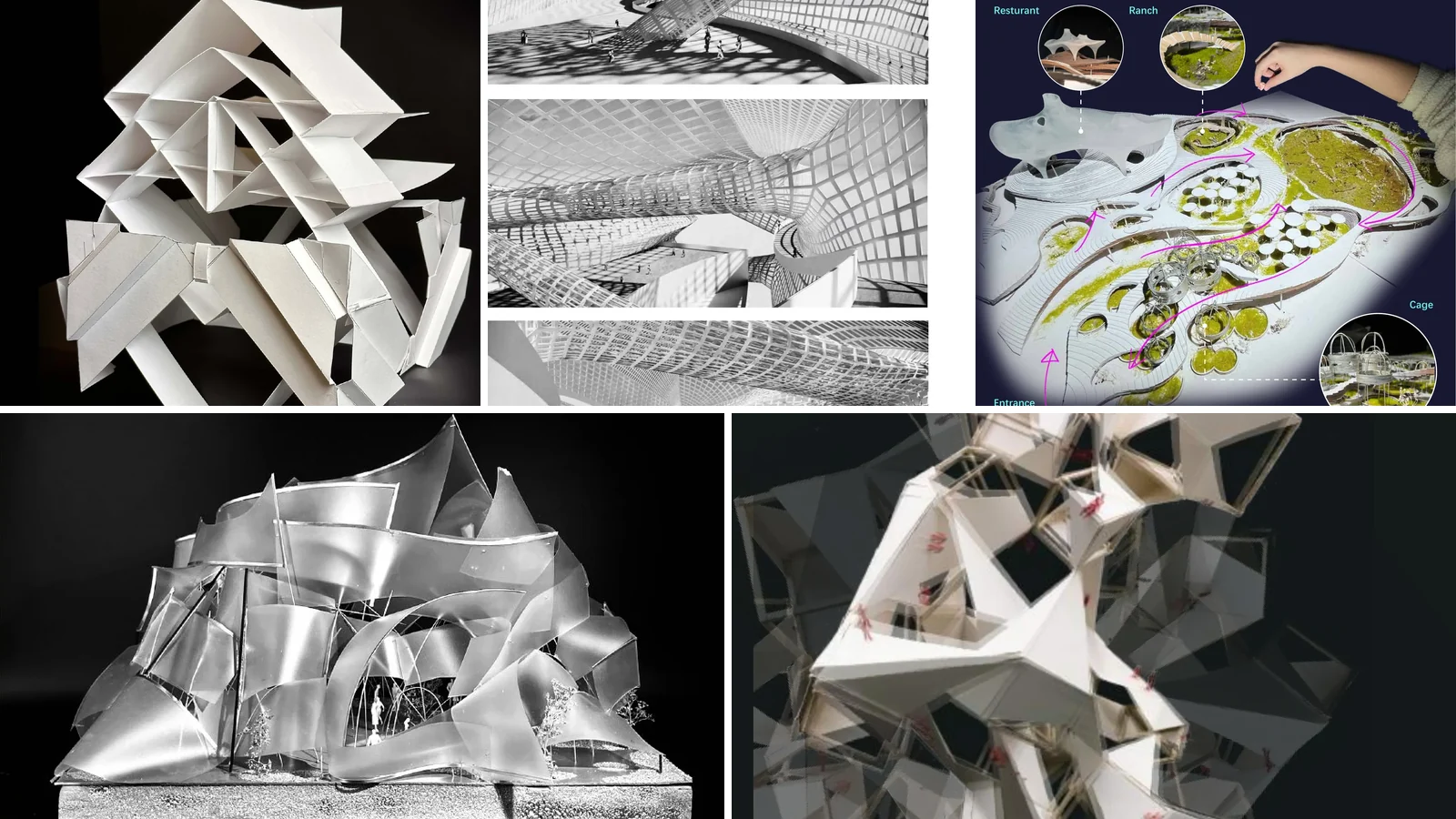
常有家長和學生問我:「名校到底想看什麼樣的作品集?」與其講抽象的原則,不如直接看作品。這篇挑了五件我指導過、拿到頂尖院校錄取的作品——錄取學校包括康乃爾、賓州大學、UCL、AA 建築聯盟學院、雪城大學、愛丁堡大學等。五件作品的題目完全不同:一座崖邊的紙構房子、一座從脊椎動態長出來的博物館、一個讓人扮演豬的 AR 遊戲、一座漂浮在紅樹林上的涼亭、一組掙脫重力的立方體。但它們被錄取的理由,其實是同一件事。
名校在作品集裡到底想看什麼?先看官方怎麼說
我在 2026 年 10 月重新查核了幾所學校的官方說明,用字不同,但方向高度一致:
- 康乃爾 AAP:建築招生頁列出七種它重視的特質(Expressive Designers、Creative Thinkers、Spatial Changemakers、Cultural Innovators、Rigorous Makers、Empathic Individuals、Broad Thinkers),申請者具備「一項或多項」即可。
- UCL Bartlett(大學部):官方作品集 FAQ說,他們想看你「創造性、知性與三維思考」的能力,以及從一個想法出發、把它發展下去的能力;過程、草圖、甚至失敗的嘗試都可以放;作品也不必全是建築。
- 雪城大學 Syracuse Architecture(B.Arch.):作品集要求頁寫明以技巧、紀律與創造力評估,建議 12–15 件作品中至少 8 件是寫生觀察;照著照片、雜誌或名作臨摹的作品不算強項,軟體操作也不是評分重點。
翻成白話就是:名校不是在找「最會做模型的人」,而是在找「有自己的問題、而且能把問題做成空間的人」。下面五件作品,正好是五種不同的示範。
五個錄取作品逐一解析
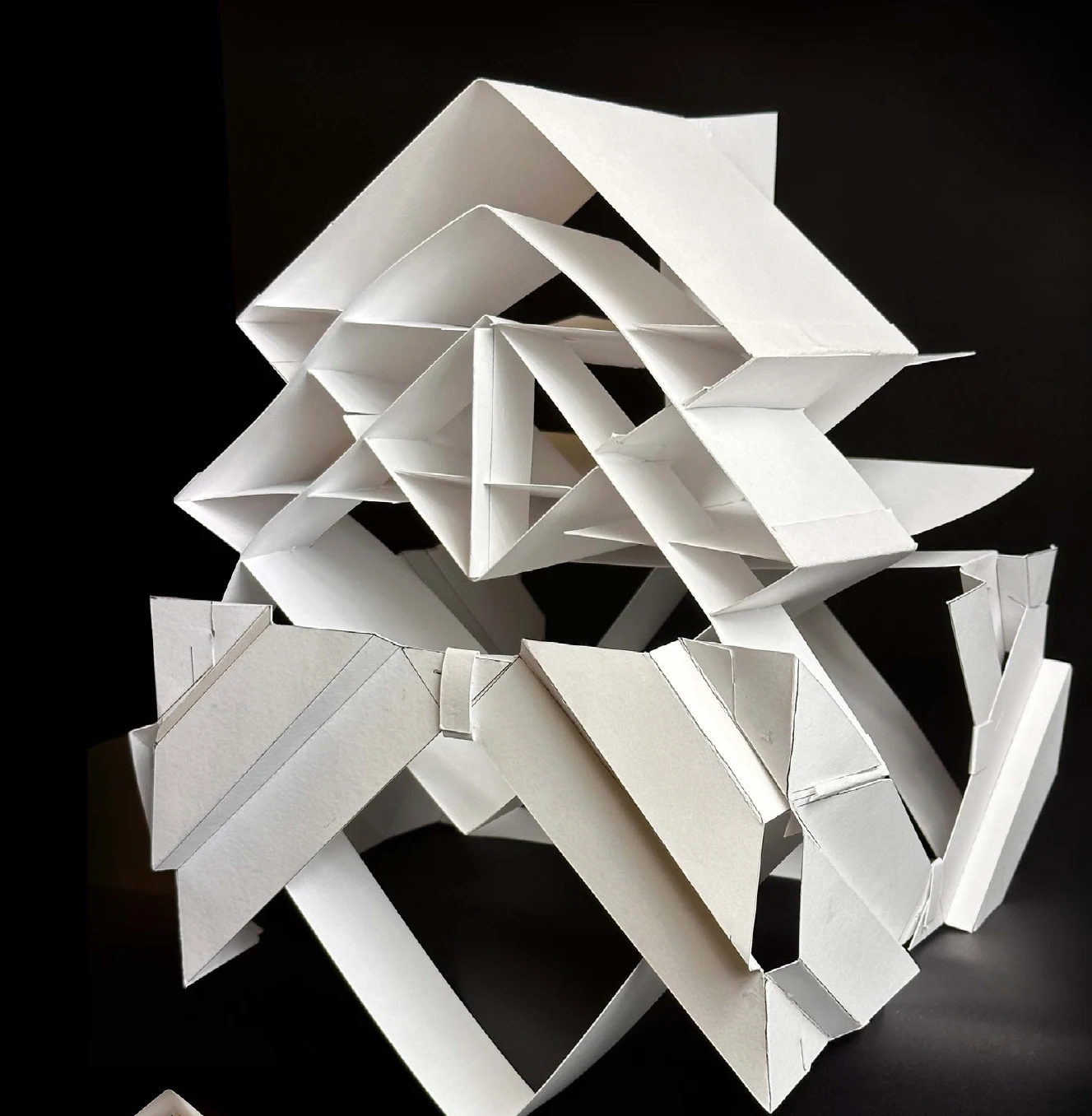
1. 崖邊之屋:把構造問題當成設計主題
這位學生先拆解經典的懸崖住宅案例,再把自己過去做過的牆面圖案研究帶進來,並參考日本榫卯的接合邏輯。最有意思的是材料上的決定:用紙片互相插接取代膠水,靠幾何穿插讓結構自己站穩,正立面的方形單元一層層錯開、探出崖邊,讓一棟靜態的房子看起來在流動。
它成功的原因不是「靈感很多」,而是實地觀察、傳統工藝和過去的練習,全部服務於同一個核心概念:一棟不靠膠水、靠接合站起來的房子。這正對應康乃爾說的 Rigorous Makers。
看完整作品:崖邊之屋 →
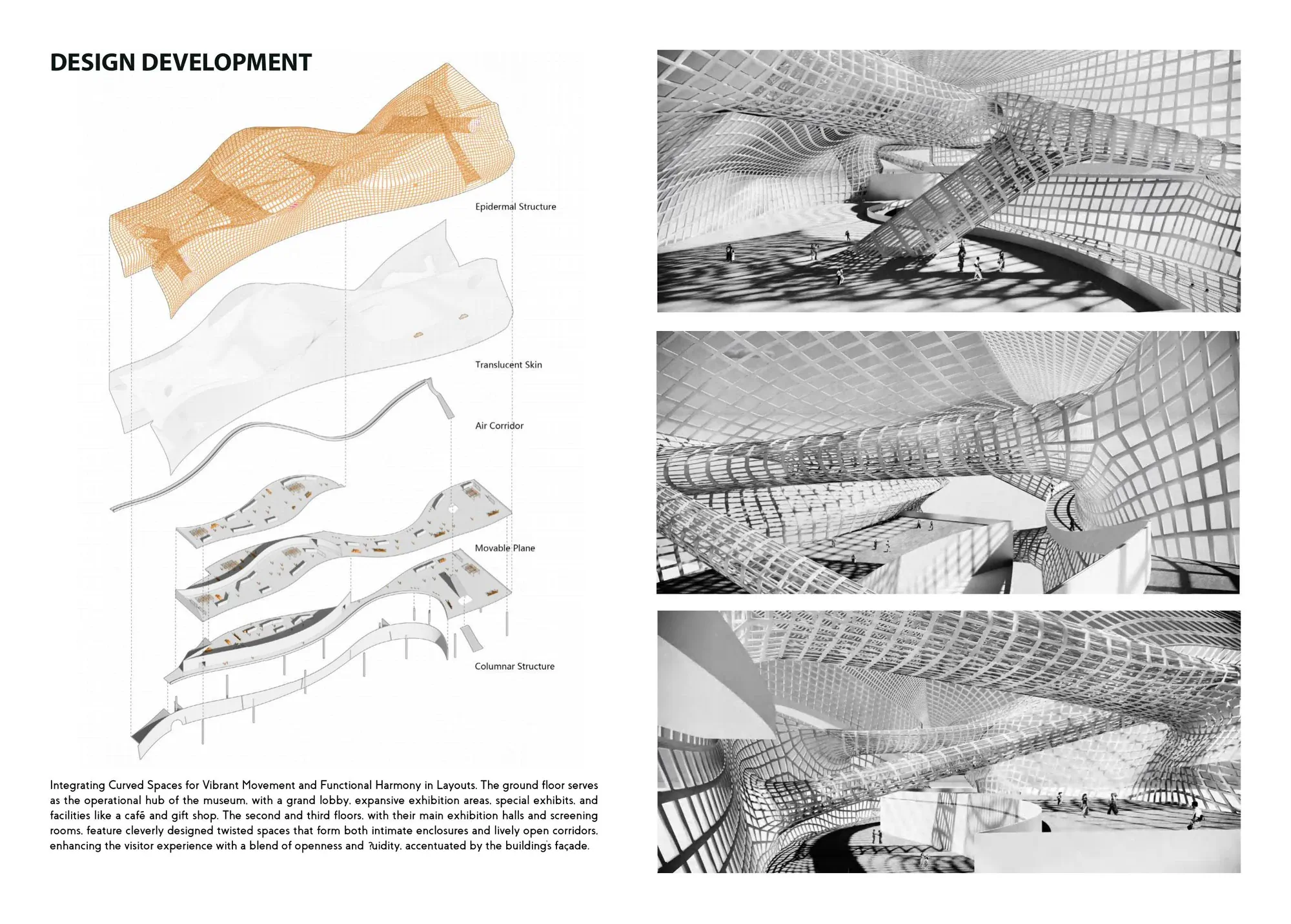
2. 脊椎博物館:從身體的動態長出空間
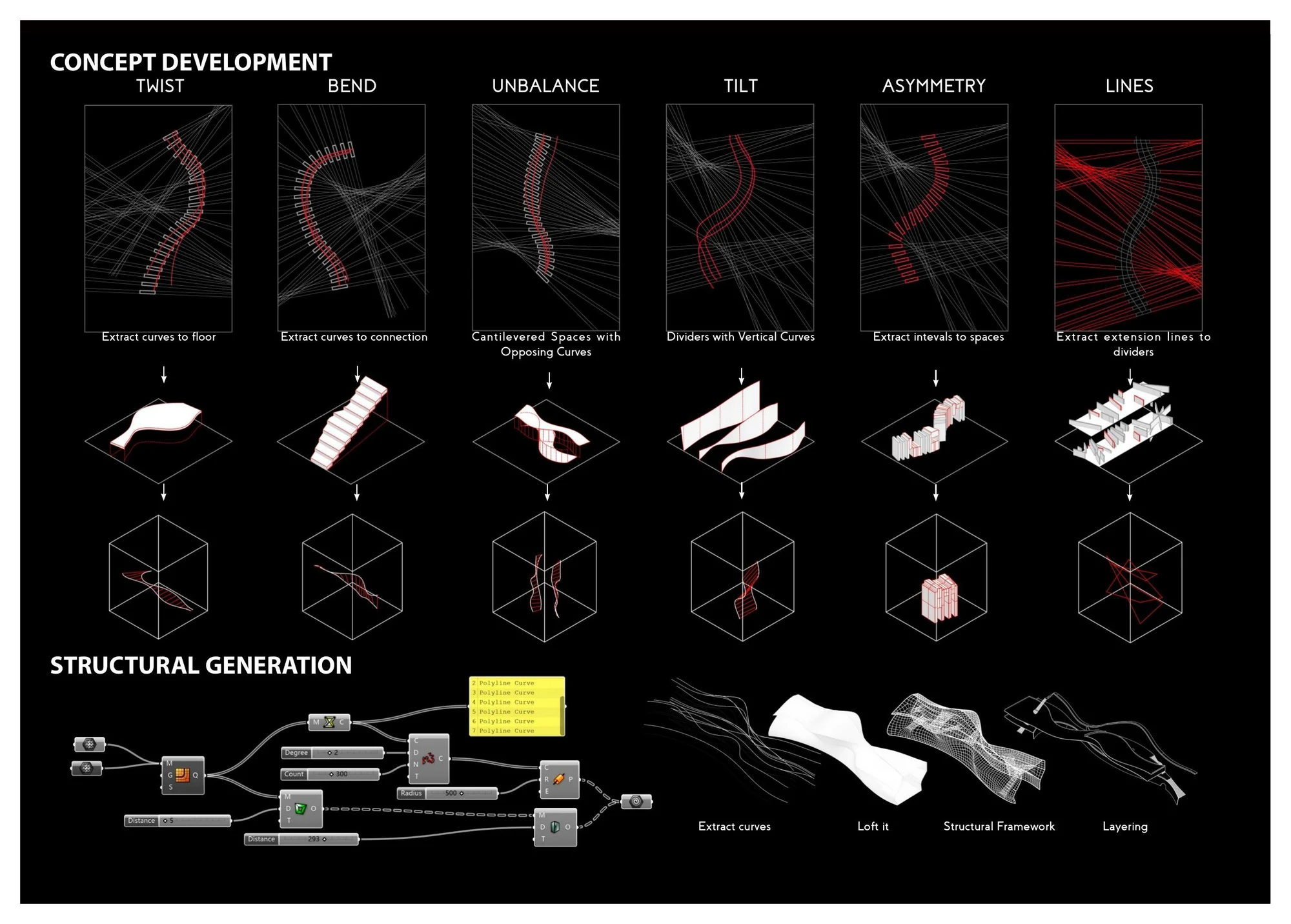
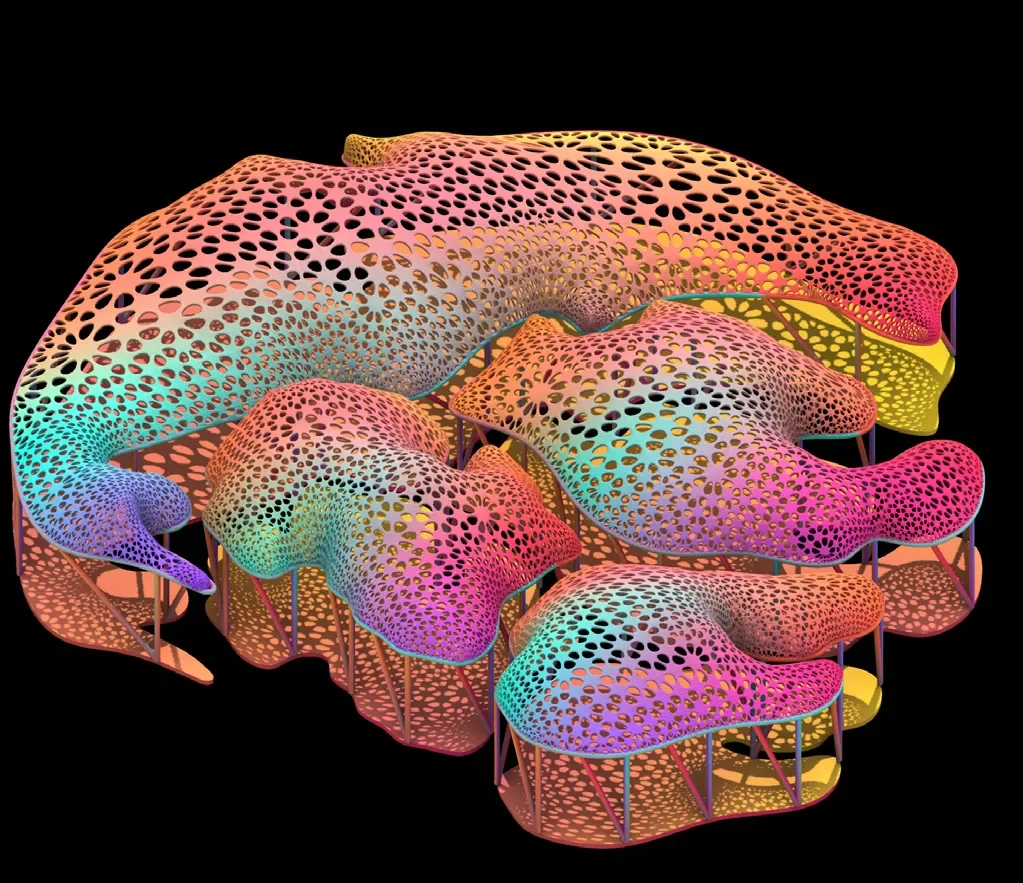
這件作品從一個很個人的關注出發——脊椎的健康與姿態。學生先研究脊椎扭轉、彎曲、側傾等動作,把它們整理成空間操作(扭、彎、失衡、傾斜、不對稱),再用參數化工具生成有韻律的樓板與牆面。基地選在澳門,配合旅遊城市的屬性安排展區,讓私密與開放的空間交錯;數位模型和實體模型並行,讓「脊椎線條變成空間」的過程一目了然。
它示範的是跨領域研究如何轉成設計語言:不是畫一個像脊椎的造型,而是把身體的運動邏輯變成空間的生成規則。
看完整作品:脊椎博物館 →
3. 豬場:用一個 AR 遊戲讓人站到豬那一邊
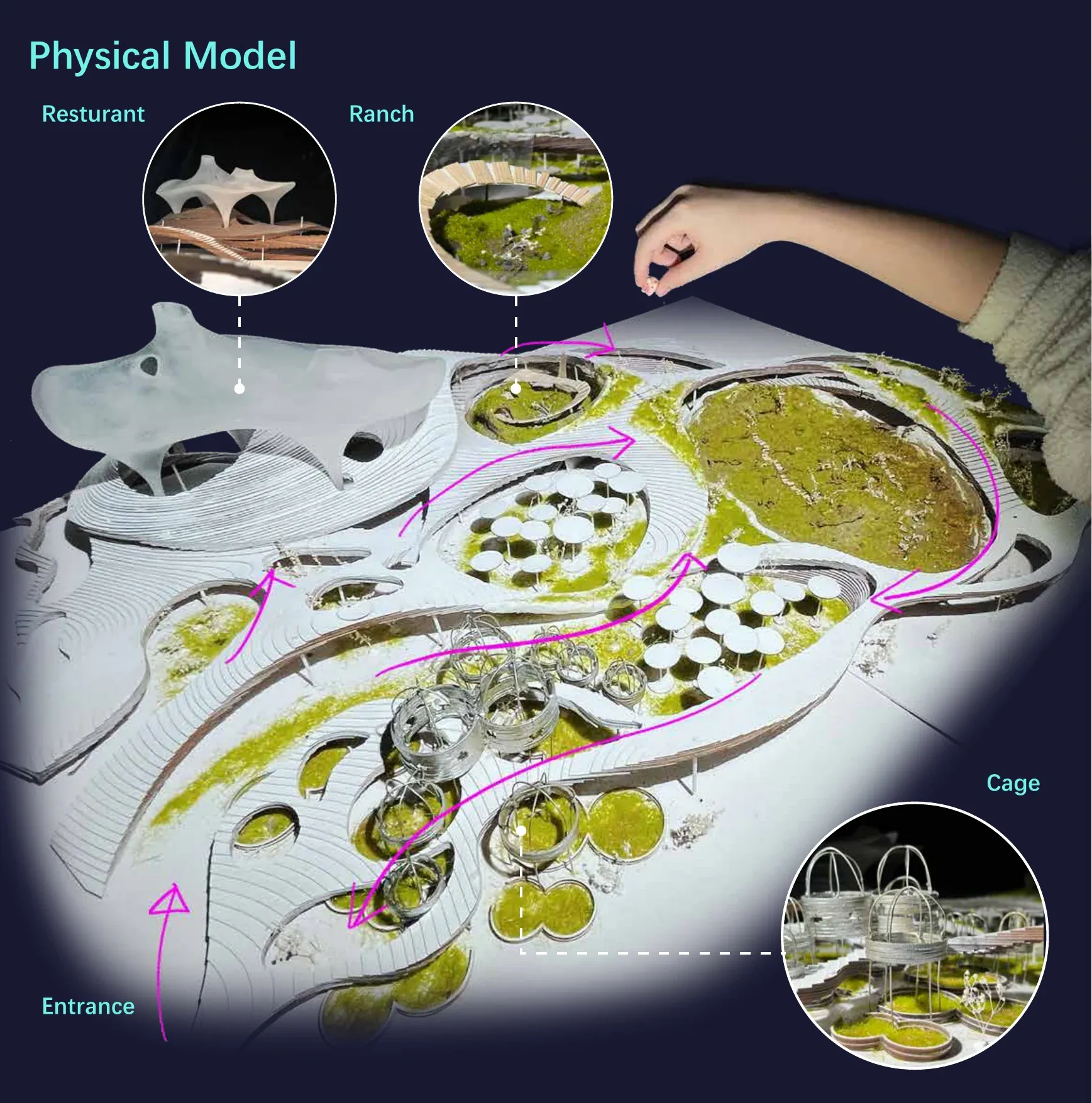
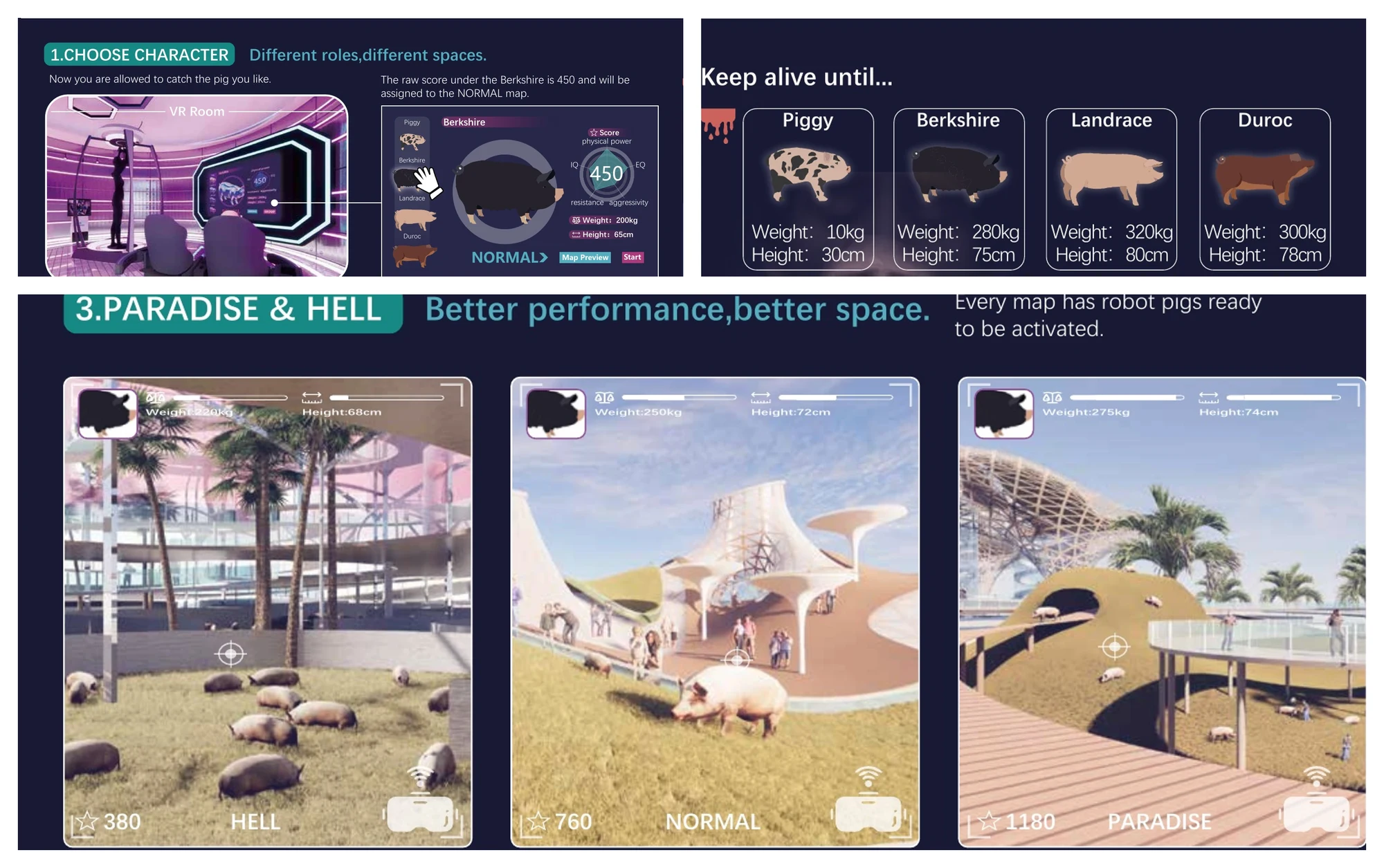
這是一件碩士申請作品,題目是人與動物的不平等。學生沒有用理論說教,而是設計了一座莊園和一個 AR 遊戲:訪客扮演一頭豬,靠討好人類賺分數、換取更好的生存空間,卻終究逃不過被吃掉的命運——分數最後還能在莊園餐廳兌換豬肉。實體模型把餐廳、牧場、籠舍和動線串成一條體驗路徑。
它說明了一件事:作品集不一定要是「一棟建築」。只要你能把一個價值問題轉成可體驗的空間與規則,遊戲、裝置、場景都可以是建築思考。UCL Bartlett 的大學部作品集 FAQ 也明說:作品不必全是建築。
看完整作品:豬場——站在豬這一邊的莊園遊戲 →
4. 漂浮紅樹林涼亭:從《湖濱散記》走到紅樹林
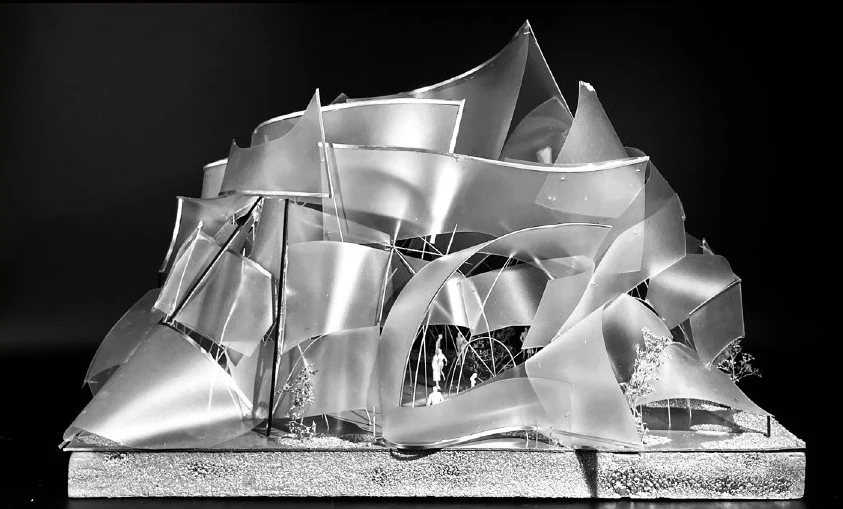
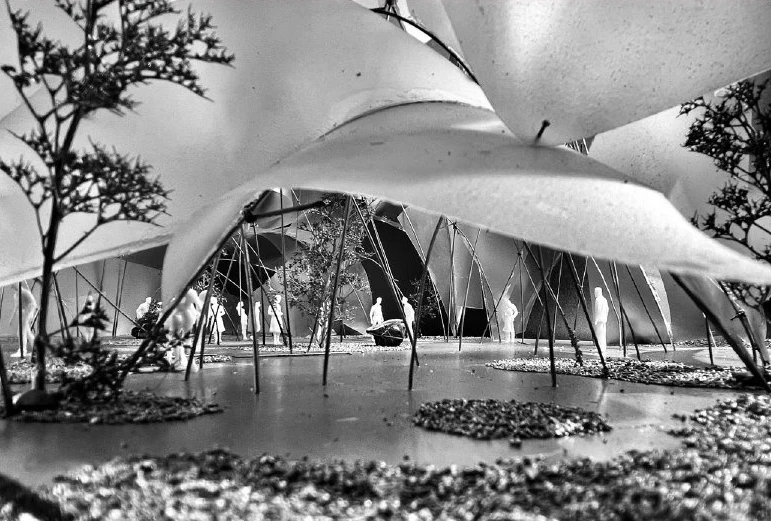
人和自然,是依存還是共生?這位學生的起點是一本書——梭羅的《湖濱散記》(Walden)。他把這個哲學問題帶到紅樹林做實地觀察:鬆軟的泥沙、定期漲退的海水、瀕危鳥類的棲地,都成了設計必須回答的「生態考題」。最後的建築用細鐵絲當柱、像樹林一樣輕輕落地,霧面的曲面屋頂漂浮在紅樹林之上,盡量不打擾底下的生態。
從哲學提問 → 生態調查 → 設計落地,三步環環相扣,這就是名校最認的「設計者思維」,也對應康乃爾的 Empathic Individuals 與 Broad Thinkers。
看完整作品:漂浮紅樹林涼亭 →
5. X-重力:一個看展的瞬間,變成一套形式實驗
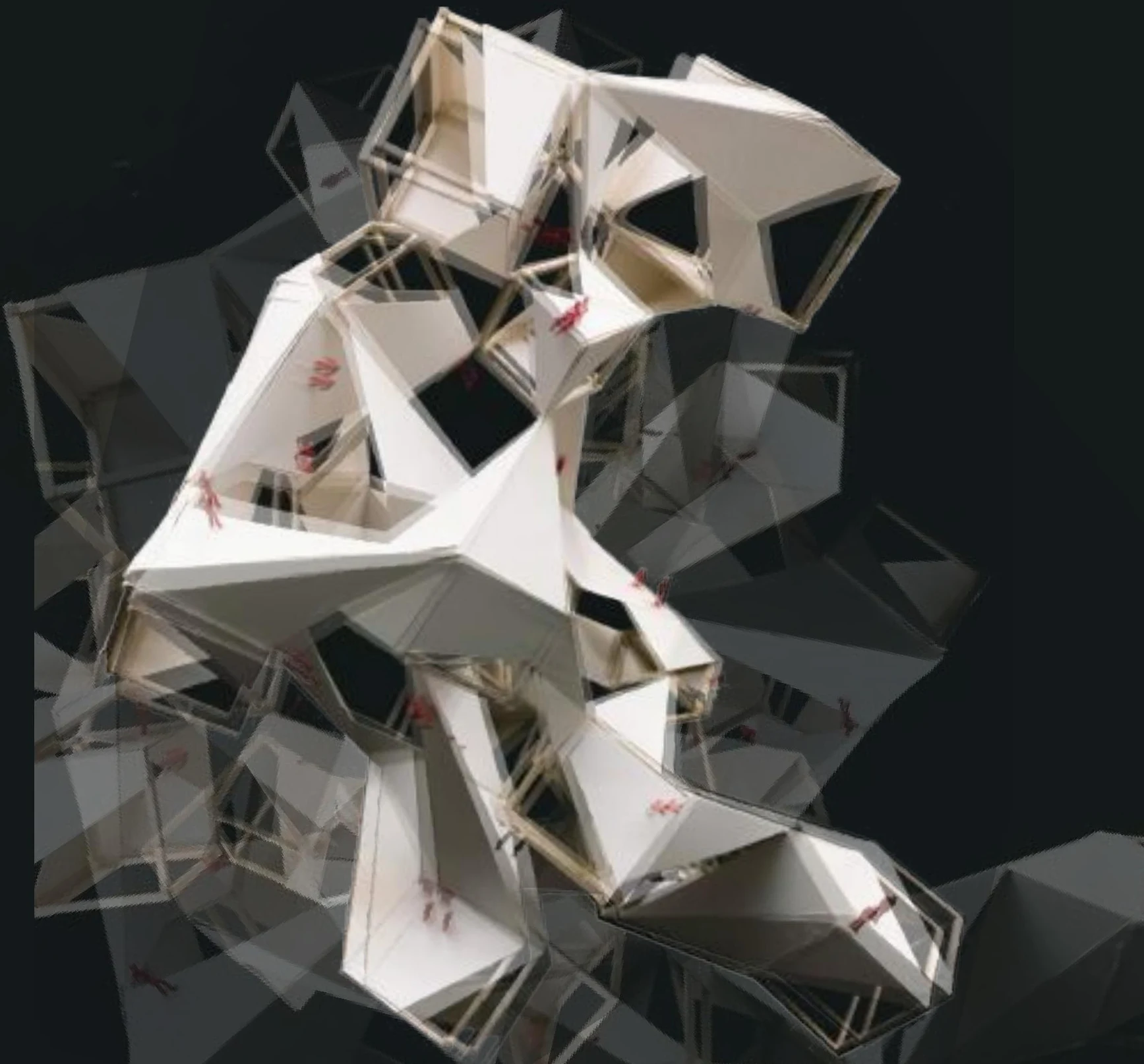
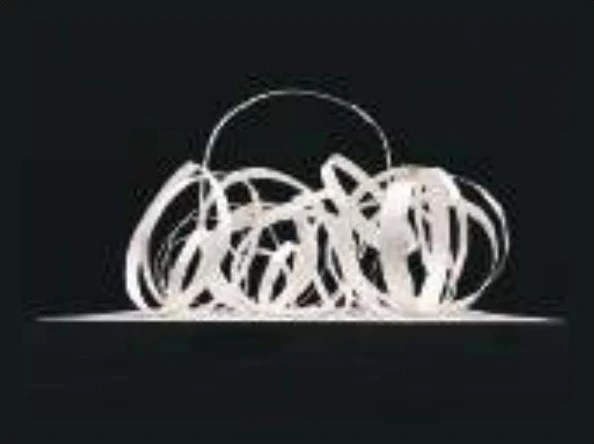
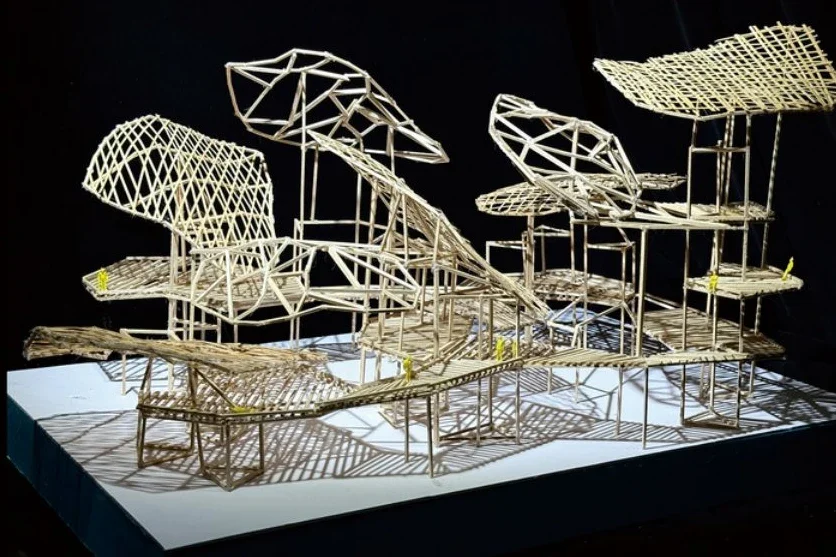
這件作品的起點很單純:學生幾年前看展時,被一件作品裡「反重力」的動態感打動。他沒有停在「喜歡」,而是開始做實驗——先用迴圈與旋轉的研究找到節奏,再把大小不一的立方體用木條錯位連接、部分覆上紙面,堆疊成一團像是飄浮起來的量體。模型沒有複雜裝飾,卻把「掙脫重力」直接放到你眼前。
它的價值在思考方式:不靠昂貴材料或複雜技術,只靠打破對重力的常規認知,用最簡潔的手段傳遞一個鮮明的主張。
看完整作品:X-重力 →
五個作品的共同點:名校想要的三件事
1. 先有問題,才有形式。五件作品各自從一個問題出發:房子能不能不用膠水站起來?身體的動態能不能變成空間?人能不能站在豬的角度?建築能不能不打擾紅樹林?重力能不能被「看起來」打破?問題清楚,作品就有主軸。
2. 把個人的關注「轉譯」成設計語言。一本書、一次看展、對身體或動物的在意——這些看起來「不像設計」的起點,經過研究和轉譯,才是最有辨識度的作品集素材。
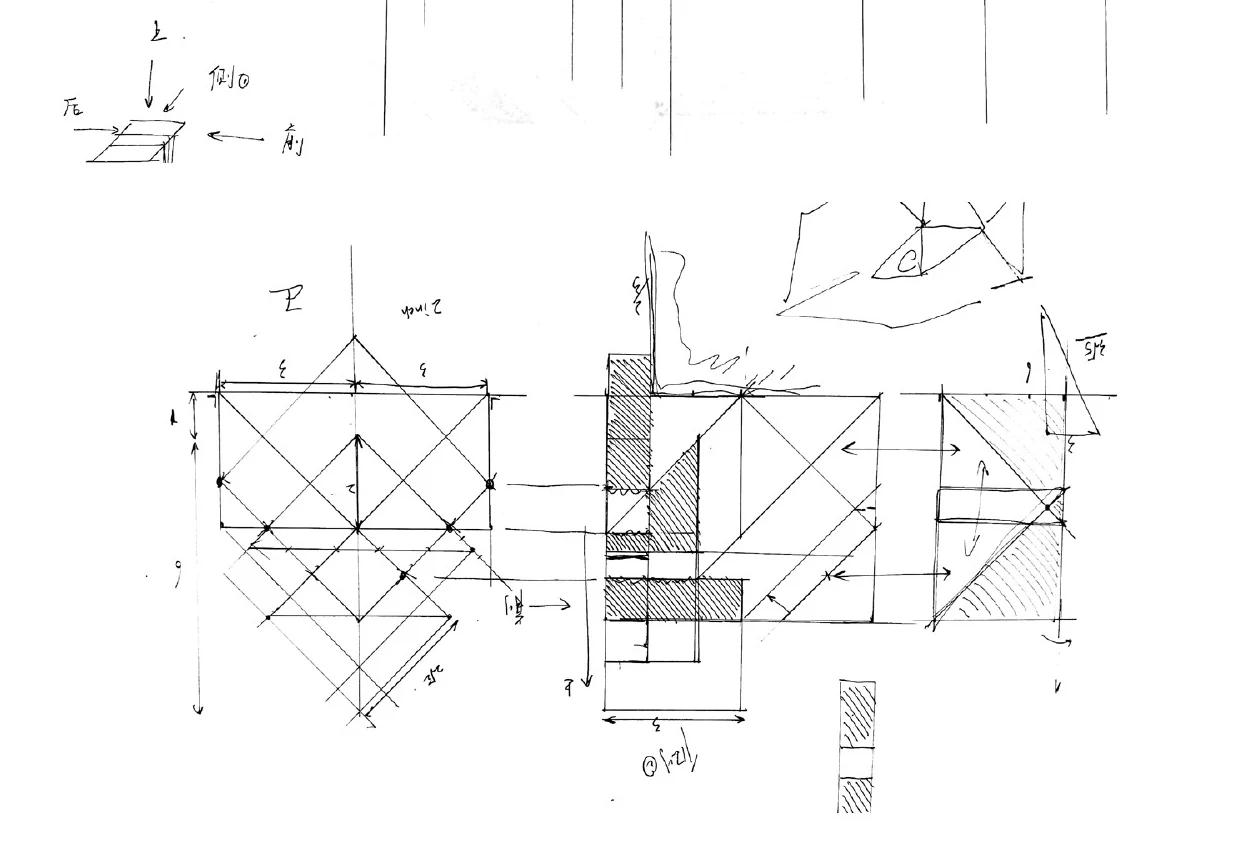
3. 讓過程被看見。節點草圖、動作分析、遊戲規則、迴圈研究——評審要看的是你怎麼想、怎麼試、怎麼修正,而不只是一張漂亮的成品照。UCL 甚至明說,失敗的嘗試也可以放。
我怎麼陪學生找到作品集主題?
這幾年帶學生,我最常做的不是「教他們做設計」,而是先聽。很多好題目藏在學生自己都沒當回事的地方:一次觀展的觸動、一本讓他想很久的書、對動物權益的憤憤不平、對家鄉地貌的眷戀。我的工作是比學生更早聽見這些興趣,再提供嚴謹的研究框架和跨領域工具,幫他把個人敘事、哲學思考和情感關懷,轉成只屬於他的設計語言。
我不替學生設計。最好的作品集,是一個「人」的展開——它記錄的不是技巧的堆疊,而是思考如何演進、觀念如何成形。名校最後認可的,也正是這份還沒被馴化的想像力、有深度的思考,以及作品背後那個清晰、有主張的人。
想申請名校,作品集可以從哪裡開始?
- 列出你真正在意的三件事(不限於建築),挑一件追問到底:它背後的問題是什麼?
- 先研究、再造型:用觀察、閱讀、實地調查或實驗模型,把問題拆清楚。
- 保留過程:草圖、失敗的模型、迭代照片都要拍、都要存。
- 對照目標學校的要求:例如雪城要大量寫生、康乃爾要影片面試、UCL 大學部只收 10 頁 PDF——同一套作品,要依學校重新剪裁。
想看單一學校的細節,可以讀我整理的康乃爾建築本科作品集怎麼做、康乃爾建築本科為什麼地位這麼穩,以及普林斯頓建築本科錄取解析。更多學生作品,請看作品牆。
本文依 2026 年 10 月官方資料更新。
常有家长和学生问我:「名校到底想看什么样的作品集?」与其讲抽象的原则,不如直接看作品。这篇挑了五件我指导过、拿到顶尖院校录取的作品——录取学校包括康乃尔、宾州大学、UCL、AA 建筑联盟学院、雪城大学、爱丁堡大学等。五件作品的题目完全不同:一座崖边的纸构房子、一座从脊椎动态长出来的博物馆、一个让人扮演猪的 AR 游戏、一座漂浮在红树林上的凉亭、一组挣脱重力的立方体。但它们被录取的理由,其实是同一件事。
名校在作品集里到底想看什么?先看官方怎么说
我在 2026 年 10 月重新查核了几所学校的官方说明,用字不同,但方向高度一致:
- 康乃尔 AAP:建筑招生页列出七种它重视的特质(Expressive Designers、Creative Thinkers、Spatial Changemakers、Cultural Innovators、Rigorous Makers、Empathic Individuals、Broad Thinkers),申请者具备「一项或多项」即可。
- UCL Bartlett(大学部):官方作品集 FAQ说,他们想看你「创造性、知性与三维思考」的能力,以及从一个想法出发、把它发展下去的能力;过程、草图、甚至失败的尝试都可以放;作品也不必全是建筑。
- 雪城大学 Syracuse Architecture(B.Arch.):作品集要求页写明以技巧、纪律与创造力评估,建议 12–15 件作品中至少 8 件是写生观察;照着照片、杂志或名作临摹的作品不算强项,软件操作也不是评分重点。
翻成白话就是:名校不是在找「最会做模型的人」,而是在找「有自己的问题、而且能把问题做成空间的人」。下面五件作品,正好是五种不同的示范。
五个录取作品逐一解析
1. 崖边之屋:把构造问题当成设计主题
这位学生先拆解经典的悬崖住宅案例,再把自己过去做过的墙面图案研究带进来,并参考日本榫卯的接合逻辑。最有意思的是材料上的决定:用纸片互相插接取代胶水,靠几何穿插让结构自己站稳,正立面的方形单元一层层错开、探出崖边,让一栋静态的房子看起来在流动。
它成功的原因不是「灵感很多」,而是实地观察、传统工艺和过去的练习,全部服务于同一个核心概念:一栋不靠胶水、靠接合站起来的房子。这正对应康乃尔说的 Rigorous Makers。
看完整作品:崖边之屋 →
2. 脊椎博物馆:从身体的动态长出空间
这件作品从一个很个人的关注出发——脊椎的健康与姿态。学生先研究脊椎扭转、弯曲、侧倾等动作,把它们整理成空间操作(扭、弯、失衡、倾斜、不对称),再用参数化工具生成有韵律的楼板与墙面。基地选在澳门,配合旅游城市的属性安排展区,让私密与开放的空间交错;数字模型和实体模型并行,让「脊椎线条变成空间」的过程一目了然。
它示范的是跨领域研究如何转成设计语言:不是画一个像脊椎的造型,而是把身体的运动逻辑变成空间的生成规则。
看完整作品:脊椎博物馆 →
3. 猪场:用一个 AR 游戏让人站到猪那一边
这是一件硕士申请作品,题目是人与动物的不平等。学生没有用理论说教,而是设计了一座庄园和一个 AR 游戏:访客扮演一头猪,靠讨好人类赚分数、换取更好的生存空间,却终究逃不过被吃掉的命运——分数最后还能在庄园餐厅兑换猪肉。实体模型把餐厅、牧场、笼舍和动线串成一条体验路径。
它说明了一件事:作品集不一定要是「一栋建筑」。只要你能把一个价值问题转成可体验的空间与规则,游戏、装置、场景都可以是建筑思考。UCL Bartlett 的大学部作品集 FAQ 也明说:作品不必全是建筑。
看完整作品:猪场——站在猪这一边的庄园游戏 →
4. 漂浮红树林凉亭:从《湖滨散记》走到红树林
人和自然,是依存还是共生?这位学生的起点是一本书——梭罗的《湖滨散记》(Walden)。他把这个哲学问题带到红树林做实地观察:松软的泥沙、定期涨退的海水、濒危鸟类的栖地,都成了设计必须回答的「生态考题」。最后的建筑用细铁丝当柱、像树林一样轻轻落地,雾面的曲面屋顶漂浮在红树林之上,尽量不打扰底下的生态。
从哲学提问 → 生态调查 → 设计落地,三步环环相扣,这就是名校最认的「设计者思维」,也对应康乃尔的 Empathic Individuals 与 Broad Thinkers。
看完整作品:漂浮红树林凉亭 →
5. X-重力:一个看展的瞬间,变成一套形式实验
这件作品的起点很单纯:学生几年前看展时,被一件作品里「反重力」的动态感打动。他没有停在「喜欢」,而是开始做实验——先用循环与旋转的研究找到节奏,再把大小不一的立方体用木条错位连接、部分复上纸面,堆栈成一团像是飘浮起来的量体。模型没有复杂装饰,却把「挣脱重力」直接放到你眼前。
它的价值在思考方式:不靠昂贵材料或复杂技术,只靠打破对重力的常规认知,用最简洁的手段传递一个鲜明的主张。
看完整作品:X-重力 →
五个作品的共同点:名校想要的三件事
1. 先有问题,才有形式。五件作品各自从一个问题出发:房子能不能不用胶水站起来?身体的动态能不能变成空间?人能不能站在猪的角度?建筑能不能不打扰红树林?重力能不能被「看起来」打破?问题清楚,作品就有主轴。
2. 把个人的关注「转译」成设计语言。一本书、一次看展、对身体或动物的在意——这些看起来「不像设计」的起点,经过研究和转译,才是最有辨识度的作品集素材。
3. 让过程被看见。节点草图、动作分析、游戏规则、循环研究——评审要看的是你怎么想、怎么试、怎么修正,而不只是一张漂亮的成品照。UCL 甚至明说,失败的尝试也可以放。
我怎么陪学生找到作品集主题?
这几年带学生,我最常做的不是「教他们做设计」,而是先听。很多好题目藏在学生自己都没当回事的地方:一次观展的触动、一本让他想很久的书、对动物权益的愤愤不平、对家乡地貌的眷恋。我的工作是比学生更早听见这些兴趣,再提供严谨的研究框架和跨领域工具,帮他把个人叙事、哲学思考和情感关怀,转成只属于他的设计语言。
我不替学生设计。最好的作品集,是一个「人」的展开——它记录的不是技巧的堆栈,而是思考如何演进、观念如何成形。名校最后认可的,也正是这份还没被驯化的想像力、有深度的思考,以及作品背后那个清晰、有主张的人。
想申请名校,作品集可以从哪里开始?
- 列出你真正在意的三件事(不限于建筑),挑一件追问到底:它背后的问题是什么?
- 先研究、再造型:用观察、阅读、实地调查或实验模型,把问题拆清楚。
- 保留过程:草图、失败的模型、迭代照片都要拍、都要存。
- 对照目标学校的要求:例如雪城要大量写生、康乃尔要视频面试、UCL 大学部只收 10 页 PDF——同一套作品,要依学校重新剪裁。
想看单一学校的细节,可以读我整理的康乃尔建筑本科作品集怎么做、康乃尔建筑本科为什么地位这么稳,以及普林斯顿建筑本科录取解析。更多学生作品,请看作品墙。
本文依 2026 年 10 月官方资料更新。
Parents and students often ask me, “What kind of portfolio do top schools actually want to see?” Rather than talking through abstract principles, it is better to look at the work. This post takes five projects I mentored that earned offers from leading schools — Cornell, the University of Pennsylvania, UCL, the Architectural Association (AA), Syracuse University, the University of Edinburgh, and others. The five subjects could not be more different: a paper house on a cliff edge, a museum grown from the movement of a spine, an AR game in which you play a pig, a pavilion floating over a mangrove, and a set of cubes that slip free of gravity. The reason they were admitted is, in fact, the same thing.
What do top schools actually want to see in a portfolio? Start with what they say officially
In October 2026 I checked the official guidance from several schools again. The wording differs, but the direction is highly consistent:
- Cornell AAP: the architecture admissions page lists seven qualities it values (Expressive Designers, Creative Thinkers, Spatial Changemakers, Cultural Innovators, Rigorous Makers, Empathic Individuals, Broad Thinkers). An applicant needs only “one or more” of them.
- UCL Bartlett (undergraduate): the official portfolio FAQ says they want to see your capacity for “creative, intellectual, and three-dimensional thinking,” and your ability to start from one idea and develop it; process, sketches, and even failed attempts can be included; the work does not all have to be architecture.
- Syracuse University, Syracuse Architecture (B.Arch.): the portfolio requirements page states that applicants are assessed on skill, discipline, and creativity. Of the suggested 12–15 works, at least 8 should be observational drawings. Work copied from photographs, magazines, or celebrated pieces is not a strength, and software skill is not a focus of the scoring.
In plain words: top schools are not looking for “the person who is best at making models.” They are looking for “someone who has a question of their own, and who can turn that question into space.” The five projects below are five different demonstrations of exactly that.
Five admitted projects, read one by one
1. The Cliffhouse: treating a problem of construction as the design theme
This student first took apart classic cliff-house precedents, then brought in earlier research on wall patterns, and drew on the joining logic of Japanese mortise-and-tenon. The most interesting decision is the material: paper sheets slotted into one another, in place of glue. Interlocking geometry lets the structure stand on its own. Square units on the front elevation offset layer by layer and reach out past the cliff edge, so a static house looks as if it is flowing.
The reason it succeeds is not that there is “a lot of inspiration.” Field observation, traditional craft, and earlier exercises all serve one core concept: a house that stands by its joints, not by glue. That is what Cornell calls Rigorous Makers.
See the full project: The Cliffhouse →
2. Spine Museum: space grown from the movement of the body
This project starts from a deeply personal concern — the health and posture of the spine. The student first studied movements of the spine such as twisting, bending, and leaning to the side, sorted them into spatial operations (twist, bend, imbalance, tilt, asymmetry), and then used parametric tools to generate floor plates and walls with a rhythm. The site is in Macau. The exhibition areas are arranged for a city of tourism, so private and open spaces interleave. Digital models and physical models run side by side, so the process by which “the line of the spine becomes space” is easy to read.
What it demonstrates is how research across fields becomes a design language: not drawing a shape that looks like a spine, but turning the logic of bodily movement into the rules that generate the space.
See the full project: Spine Museum →
3. Pig Farm: an AR game that puts you on the pig’s side
This is a project for a master’s application. The subject is inequality between humans and animals. The student does not lecture with theory, and instead designs a manor and an AR game: the visitor plays a pig, earns points by pleasing humans, and trades them for a better space in which to live, yet cannot in the end escape being eaten — and the points can finally be redeemed for pork in the manor’s restaurant. A physical model threads the restaurant, the pasture, the pens, and the circulation into one path of experience.
It makes one thing clear: a portfolio does not have to be “a building.” If you can turn a question of values into space and rules that someone can experience, a game, an installation, or a setting can be architectural thinking. The undergraduate portfolio FAQ at UCL Bartlett says the same thing outright: the work does not all have to be architecture.
See the full project: Pig Farm — A Manor Game from the Pig’s Side →
4. Floating Mangrove Pavilion: from Walden to the mangrove
Are humans and nature dependent on each other, or do they live in symbiosis? This student’s starting point was a book — Thoreau’s Walden. That philosophical question was taken to a mangrove for field observation: soft silt and sand, seawater that rises and falls on a cycle, and habitat for endangered birds all became “ecological questions” the design had to answer. The final building uses thin wire as columns and meets the ground lightly, like a stand of trees. A frosted curved roof floats above the mangrove, disturbing the ecology underneath as little as possible.
From a philosophical question → an ecological survey → a resolved design, the three steps lock together. This is the “designer’s thinking” that top schools recognise most readily, and it corresponds to Cornell’s Empathic Individuals and Broad Thinkers.
See the full project: Floating Mangrove Pavilion →
5. X-Gravity: a moment at an exhibition becomes a formal experiment
The starting point is simple. A few years ago, at an exhibition, the student was struck by a sense of “anti-gravity” movement inside one work. The student did not stop at “I like this,” and began to experiment — first finding a rhythm through studies of loops and rotation, then connecting cubes of different sizes with wooden sticks set out of alignment, covering some faces with paper, and stacking them into a mass that seems to float. The model has no elaborate ornament, yet it puts “breaking free of gravity” directly in front of you.
Its value is in the way of thinking: not expensive materials or complicated technique, only a break with the usual understanding of gravity, using the simplest means to carry a sharp claim.
See the full project: X-Gravity →
What the five projects share: three things top schools want
1. A question first, and only then a form. Each of the five projects starts from a question. Can a house stand up without glue? Can the movement of a body become space? Can a person take the pig’s point of view? Can a building leave a mangrove undisturbed? Can gravity be broken “in appearance”? When the question is clear, the project has a through-line.
2. “Translate” a personal concern into a design language. A book, a visit to an exhibition, care for the body or for animals — starting points that do not look like “design” — become, after research and translation, the most recognisable material a portfolio can hold.
3. Let the process be seen. Joint sketches, movement analysis, the rules of a game, loop studies — reviewers want to see how you think, how you try, and how you revise, not only a polished photograph of the finished piece. UCL even says outright that failed attempts can be included.
How do I help students find a portfolio theme?
In the years I have spent with students, what I do most often is not “teach them how to design.” It is to listen first. Many good subjects hide in places the students themselves never take seriously: the jolt of seeing an exhibition, a book that kept them thinking for a long time, anger about animal rights, attachment to the landscape of home. My work is to hear those interests sooner than the student does, then offer a rigorous frame for research and tools from other fields, and help turn a personal narrative, philosophical thinking, and emotional concern into a design language that belongs to that student alone.
I do not design for my students. The best portfolio is a “person” unfolding — it records not a stack of technique, but how thinking develops and how an idea takes shape. What a top school recognises in the end is exactly that untamed imagination, thinking with depth, and, behind the work, a person who is clear and has a claim to make.
If you want to apply to a top school, where can a portfolio start?
- List three things you genuinely care about (not limited to architecture), pick one, and follow it to the end: what is the question behind it?
- Research first, then give it a form: use observation, reading, site investigation, or experimental models to take the question apart until it is clear.
- Keep the process: sketches, failed models, and photographs of iterations all need to be shot and all need to be saved.
- Set the work against the target school’s requirements: Syracuse wants a great deal of observational drawing, Cornell wants a video interview, and UCL undergraduate accepts only a 10-page PDF — the same body of work has to be recut for each school.
For the detail on a single school, you can read what I have put together on how to make a Cornell undergraduate architecture portfolio, why Cornell undergraduate architecture holds its standing so steadily, and a reading of admission to Princeton undergraduate architecture. For more student work, see the work wall.
This article was updated from official sources in October 2026.
English summary
What do top architecture schools really want to see in a portfolio? This post walks through five works by students I mentored that earned offers from Cornell (B.Arch ED), Penn, UCL, the AA, Syracuse, Edinburgh and others: a cliffside house of slotted paper with no glue, a Macau museum generated from the movements of the spine, an AR game in which visitors play a pig, a pavilion floating on wire columns above a mangrove forest, and a cluster of cubes that seems to escape gravity. Checked against official guidance (2026-10-21) — Cornell AAP's seven applicant attributes, UCL Bartlett's emphasis on developing an idea and showing process (including failed attempts), and Syracuse's call for 12–15 works with at least eight observational drawings — the common thread is clear: start from your own question, translate personal concerns into spatial language, and make the process visible.
常見問題常见问题FAQ
名校建築作品集最看重什麼?名校建筑作品集最看重什么?What do top architecture schools value most in a portfolio?
看重的是問題意識、把個人關注轉成空間語言的能力,以及可見的設計過程,而不是技巧或軟體操作。康乃爾 AAP 列出七種重視的特質,UCL Bartlett 看你從一個想法發展下去的能力,雪城則以技巧、紀律與創造力評估。
看重的是问题意识、把个人关注转成空间语言的能力,以及可见的设计过程,而不是技巧或软件操作。康乃尔 AAP 列出七种重视的特质,UCL Bartlett 看你从一个想法发展下去的能力,雪城则以技巧、纪律与创造力评估。
They value a sense of the problem, the ability to turn a personal concern into spatial language, and a visible design process, rather than technique or software skill. Cornell AAP lists seven qualities it values. UCL Bartlett looks at your ability to develop onward from one idea. Syracuse assesses skill, discipline, and creativity.
建築作品集一定要放建築設計嗎?建筑作品集一定要放建筑设计吗?Does an architecture portfolio have to include architectural design?
不一定。UCL Bartlett 官方說明作品不必全是建築,可以是繪畫、模型、攝影、遊戲、裝置等;本文的「豬場」就是以 AR 遊戲加實體模型,在碩士申請中獲 UCL 與 AA 等校錄取。
不一定。UCL Bartlett 官方说明作品不必全是建筑,可以是绘画、模型、摄影、游戏、装置等;本文的「猪场」就是以 AR 游戏加实体模型,在硕士申请中获 UCL 与 AA 等校录取。
Not necessarily. UCL Bartlett’s official guidance says the work does not all have to be architecture; it can be painting, models, photography, games, installations, and so on. “Pig Farm” in this article is an AR game plus a physical model, and in a master’s application it was admitted to UCL, the AA, and other schools.
作品集可以放過程和失敗的嘗試嗎?作品集可以放过程和失败的尝试吗?Can a portfolio include process and failed attempts?
可以,而且建議放。UCL Bartlett 明確表示歡迎從最初靈感、草圖到失敗嘗試的過程;節點草圖、動作分析、迭代模型都能讓評審看見你的思考方式。
可以,而且建议放。UCL Bartlett 明确表示欢迎从最初灵感、草图到失败尝试的过程;节点草图、动作分析、迭代模型都能让评审看见你的思考方式。
Yes, and it is worth including them. UCL Bartlett states clearly that the process is welcome, from the first inspiration and sketches through to failed attempts. Joint sketches, movement analysis, and iterative models all let reviewers see how you think.
雪城大學建築本科作品集要放幾件?雪城大学建筑本科作品集要放几件?How many pieces should an undergraduate architecture portfolio for Syracuse University include?
官方建議 12–15 件近期最好的作品,其中至少 8 件為寫生觀察作品,並附一段對建築興趣的簡短說明;每件標註媒材、課內或自主、原尺寸與一兩句說明(2026-10-21 查核)。
官方建议 12–15 件近期最好的作品,其中至少 8 件为写生观察作品,并附一段对建筑兴趣的简短说明;每件标注媒材、课内或自主、原尺寸与一两句说明(2026-10-21 查核)。
The official suggestion is 12–15 of the best recent works, at least 8 of them observational drawings, together with a short statement of interest in architecture. Each piece should be labelled with the medium, whether it was made in class or independently, the original dimensions, and one or two sentences of description (checked 2026-10-21).
作品集主題要怎麼找?作品集主题要怎么找?How do you find a theme for a portfolio?
從自己真正在意的事開始,例如一本書、一次看展、對身體或動物的關注,追問背後的問題,再用觀察、研究和實驗模型把問題轉成空間。
从自己真正在意的事开始,例如一本书、一次看展、对身体或动物的关注,追问背后的问题,再用观察、研究和实验模型把问题转成空间。
Start from something you genuinely care about — a book, a visit to an exhibition, attention to the body or to animals — follow the question behind it, then use observation, research, and experimental models to turn that question into space.
訂閱新文章订阅新文章Subscribe
新文章會寄到這個信箱。新文章会寄到这个邮箱。New posts will be emailed to this address.
已訂閱。已订阅。Subscribed.暫時無法訂閱,請稍後再試。暂时无法订阅,请稍后再试。Could not subscribe. Please try again.相關文章相关文章Related posts
 建築作品集怎麼選方向?主題 Driven、尺度 Scale、技術 Skills、目的 Goal 四個維度,怎麼組合成一個項目建筑作品集怎么选方向?主题 Driven、尺度 Scale、技术 Skills、目的 Goal 四个维度,怎么组合成一个项目How do you choose a direction for an architecture portfolio? Combining theme (Driven), scale, skills and goal into one project作品集不要先從「我有哪些好看的圖」倒過來排,而要先選定主題(Driven)、尺度(Scale)、技術(Skills)與目的(Goal),再組合成一個說得清楚的項目。本文依教學簡報〈作品集準備及選擇方向〉整理這四個維度,並說明簡報如何用一個項目示範組合方法。簡報中的學生案例只寫錄取學校與作品方向,不具名。作品集不要先从「我有哪些好看的图」倒过来排,而要先选定主题(Driven)、尺度(Scale)、技术(Skills)与目的(Goal),再组合成一个说得清楚的项目。本文依教学简报〈作品集准备及选择方向〉整理这四个维度,并说明简报如何用一个项目示范组合方法。简报中的学生案例只写录取学校与作品方向,不具名。Do not build a portfolio by lining up your best-looking drawings and working backwards. Choose a theme (Driven), a scale, the skills to make visible, and a goal, then combine them into a project you can explain. This article follows the teaching deck “Portfolio preparation and choosing a direction,” including the deck’s worked example of how to combine the four dimensions. Student cases are anonymous: only the schools listed on the slide and the direction of the work are given.
 錄取卡內基美隆建築本科的作品集:她把橘子、身體、植物與記憶都搭成了空間(2026 年 10 月官方查核)录取卡内基美隆建筑本科的作品集:她把橘子、身体、植物与记忆都搭成了空间(2026 年 10 月官方查核)A Carnegie Mellon architecture portfolio: how one admitted student built oranges, the body, plants and memory into space (checked October 2026)一份錄取卡內基美隆(CMU)建築本科的作品集,如何對應官網列出的好奇心、空間推理、綜合能力與「動手製作的慾望」?拆解橘子涼亭、生長的支架、灰姑娘等作品,並對照 CMU 官網:10 件作品、經 SlideRoom 提交,ED 11 月 2 日、RD 1 月 8 日截止。一份录取卡内基美隆(CMU)建筑本科的作品集,如何对应官网列出的好奇心、空间推理、综合能力与「动手制作的欲望」?拆解橘子凉亭、生长的支架、灰姑娘等作品,并对照 CMU 官网:10 件作品、经 SlideRoom 提交,ED 11 月 2 日、RD 1 月 8 日截止。How does a portfolio admitted to Carnegie Mellon (CMU) undergraduate architecture meet the curiosity, spatial reasoning, ability to synthesize, and "desire to make" named on the official site? It unpacks the orange pavilion, A Scaffold of Growth, Cinderella, and other works, set against the CMU site: 10 works, submitted through SlideRoom, with Early Decision due November 2 and Regular Decision due January 8.
 4 份作品集都錄取康乃爾建築本科:他們把生活經驗「轉譯」成空間(2026 年 10 月官方查核)4 份作品集都录取康乃尔建筑本科:他们把生活经验「转译」成空间(2026 年 10 月官方查核)Four portfolios, four Cornell B.Arch offers: how admitted students translated everyday experience into space (checked October 2026)四份風格完全不同的作品集都錄取康乃爾 B.Arch:繪畫與陶瓷、計算設計、遊戲敘事、生態行動。拆解它們的共同點——從個人經驗出發、保留過程證據、多媒材、價值方向具體,並對照康乃爾 AAP 官網:作品集 15–20 張、每項目最多 2 張,ED 11 月 1 日、RD 1 月 2 日截止,加 3 分鐘影片面試。四份风格完全不同的作品集都录取康乃尔 B.Arch:绘画与陶瓷、计算设计、游戏叙事、生态行动。拆解它们的共同点——从个人经验出发、保留过程证据、多媒材、价值方向具体,并对照康乃尔 AAP 官网:作品集 15–20 张、每项目最多 2 张,ED 11 月 1 日、RD 1 月 2 日截止,加 3 分钟视频面试。Four portfolios in completely different styles were admitted to the Cornell B.Arch: painting and ceramics, computational design, game narrative, and ecological action. They share a start in personal experience, process kept as evidence, multiple media, and a concrete direction of values, set against the Cornell AAP site: 15–20 images, at most 2 per project, Early Decision due November 1, Regular Decision due January 2, and a 3-minute video interview.