ED 錄取萊斯建築 B.Arch:用一堆舊衣服回應快時尚,一本主線一致的本科作品集怎麼做(2026 年 10 月官方查核)ED 录取莱斯建筑 B.Arch:用一堆旧衣服回应快时尚,一本主线一致的本科作品集怎么做(2026 年 10 月官方查核)Rice Architecture B.Arch by Early Decision: a sustainability portfolio built from secondhand clothes (checked October 2026)
用微信掃描這張 QR code 即可分享。用微信扫描这张 QR code 即可分享。Scan this QR code with WeChat to share.
掃描或下載這張 QR code。扫描或下载这张 QR code。Scan or download this QR code.
一位美國高中、修 AP 課程的學生,從 10 年級暑假前開始準備作品集,最後以 Early Decision(ED)錄取她的第一志願:萊斯大學(Rice University)建築學院的 Bachelor of Architecture。她的成績不是最突出的,作品集也曾經一度顯得「散」和「亂」;最後讓她拿到錄取的,是一條從成績、活動、作品集到文書都互相印證的主線。
這篇整理她的選校理由、作品集策略與給學弟妹的建議,並對照萊斯大學官網的 ED 規則、作品集規格與建築申請文書題目。萊斯建築的學制與 Preceptorship 完整介紹,請見萊斯大學建築本科值得申請嗎?。
2026 年 10 月重新查核:ED 截止與放榜時間、作品集規格、補充文書題目、學院規模與 Preceptorship,均依萊斯大學招生辦公室與建築學院官網更新;送件前請再以官網最新公告為準。本文不列學費與語言分數,請以官網為準。
萊斯建築本科 ED 申請重點一覽(官方資料)
| 項目 | 內容 |
|---|---|
| ED 性質 | 具約束力(binding),適合把萊斯當第一志願的學生;可同時申請其他學校的非約束性計畫,但被萊斯錄取後須撤回其他申請,並在期限內繳交入學訂金確認 |
| ED 截止與放榜 | ED I:11 月 1 日截止、12 月中旬前放榜;ED II:1 月 4 日截止、1 月下旬前放榜 |
| 作品集 | 建築申請者必交,透過 Rice Admission Student Portal 上傳;單一 PDF、以姓名命名、上限 15 MB;橫向 A4 或 Letter、圖片 150~300 dpi;首頁為姓名封面,內容最多 10 頁(不含封面) |
| 作品集取向 | 展現創作潛力,不要求以建築為主題、也不要求專業水準;可放素描、繪畫、攝影、模型等;不鼓勵機械製圖或電腦製圖;每件作品標註標題、媒材、年份與情境(獨立或團體、課堂、暑期課程等) |
| 建築補充文書 | 兩題各 250 字:為什麼決心學建築、哪些經歷讓你選擇萊斯建築學院;描述一棟讓你印象深刻的建築、場所或城市,以及它如何影響你對建築的理解 |
| 學院規模 | 34 位教師、12 位職員,本科生 131 人、研究生 62 人 |
| Preceptorship | 1968 年正式成立,安排在 B.Arch. 第 4 與第 5 年之間;在學院遴選的頂尖事務所實習至少 9 個月並支領具競爭力的薪資;大四需以作品集申請第五年課程 |
以上出自萊斯大學國際生本科申請頁、萊斯建築學院概覽頁、萊斯建築本科頁與Preceptorship 官方頁。要特別注意:ED 是有約束力的,一旦錄取就要撤回其他學校的申請,所以只有在你確定萊斯就是第一志願時才適合用 ED。
為什麼是萊斯?她的選校理由
她曾在四個國家生活,很早就感受到空間如何改變人的情緒、行為與安全感。比起只關注某一個尺度,她更想在「從材料到結構、從光線到動線、從個體到社區」的綜合系統裡做判斷與取捨,所以建築從高中開始就是她的第一選擇。
她在 11 年級暑假第一次認識萊斯,最打動她的有三點:
- 小規模、高密度的 studio 教學:全院本科生只有一百多人,代表更密集的討論與更直接的教授回饋。
- 一年的 Preceptorship 帶薪實習:在越來越重視真實項目經驗的建築業,她很看重這種把學習與實踐綁在一起的培養方式。
- Residential college 住宿學院制度:她重視一個彼此連結、互相支持的學生社區;這也正是萊斯申請文書會問到的主題之一。
她在 12 月中旬收到 ED 錄取——和官網寫的「ED I 於 12 月中旬前放榜」一致。那天她以為會提早放榜,提前一小時起床守在信箱前,點開信的瞬間直接哭了出來。
錄取關鍵:所有材料在同一條主線上
她自己的復盤是:能拿到錄取,關鍵不是某一個單點優勢,而是成績、活動、作品集與文書都盡量扎實,並且在同一條主線上保持一致。她做的項目、參加的活動、作品集的表達方式,以及文書裡的思考方向互相印證,招生官看到的就不是零散的標籤,而是一個有清楚興趣起點、有真實行動、也有持續成長軌跡的人。
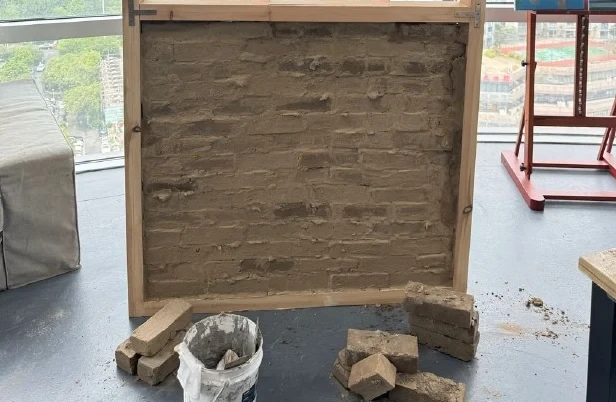
她的作品集圍繞兩個核心主題:可持續性,以及空間如何影響人的情緒與行為。每個項目都從現實問題出發,把社會議題轉譯成空間語言或材料語言,而不是停留在概念層面。例如用回收咖啡渣壓製磚塊、再延伸成社區空間的材料研究:
看完整作品:咖啡渣磚 →
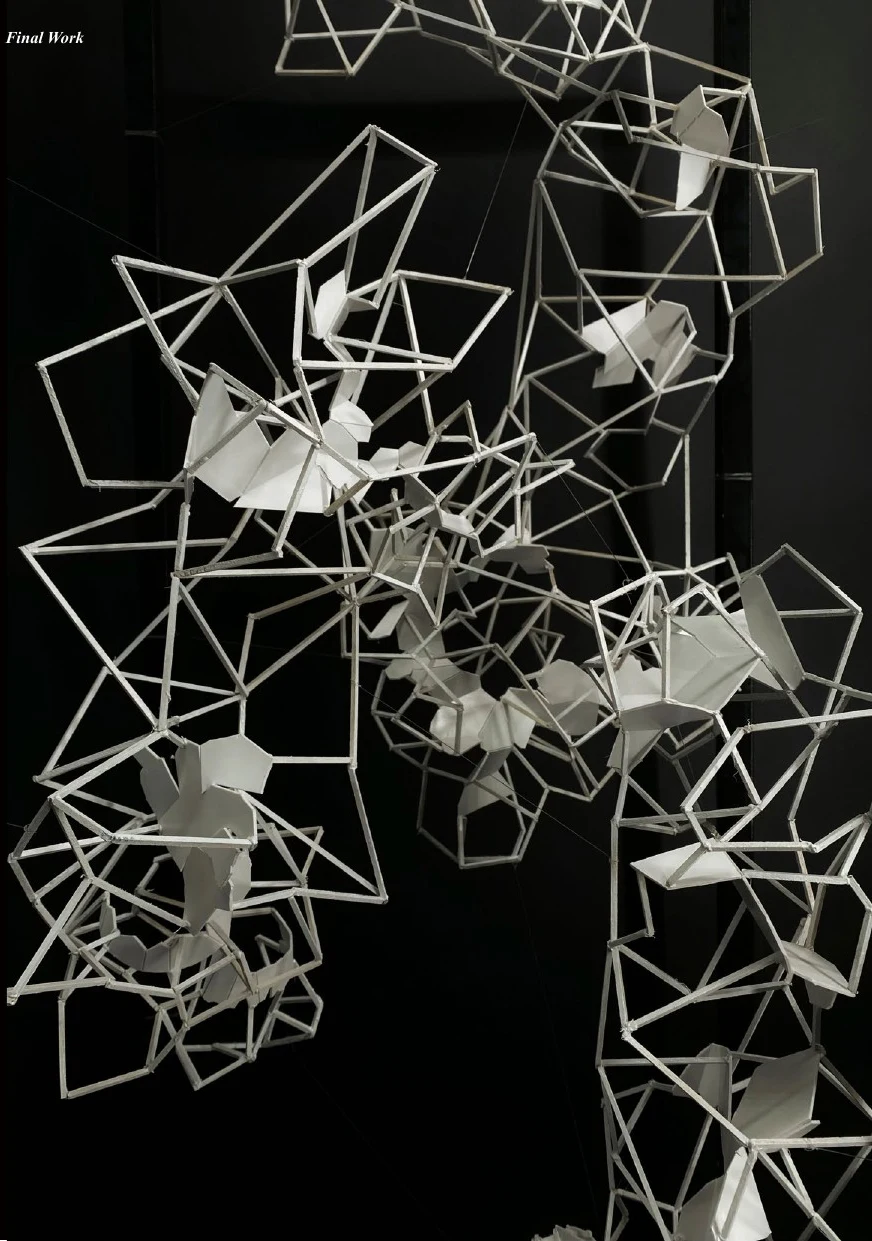
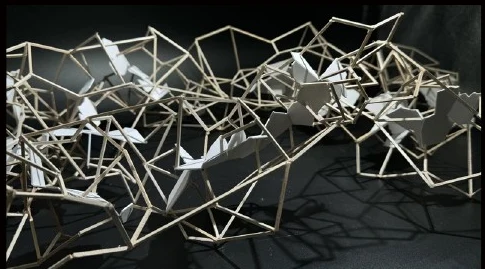
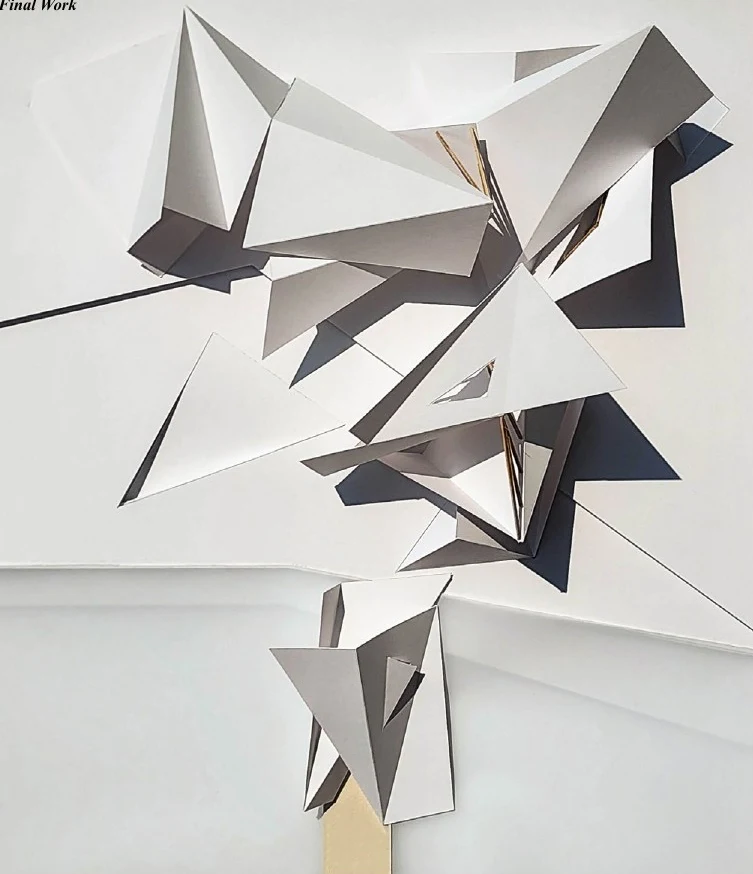
另一條線則是情緒與空間:她用懸吊的椴木夾板與折疊 PVC 片,討論「禁錮感」如何讓空間收緊;也用折疊、剝離的紙平面,把一片湖畔坡地變成由路徑與遮蔽構成的地景。
看完整作品:苦難之屋 →
看完整作品:平面中的通道 →
最重要的作品:用一堆舊衣服回應快時尚
她最喜歡的作品是〈Threads of Excess〉(過量之線)。這個項目回應快時尚帶來的過度消費:人們不斷被潮流推著走,買了許多並不真正需要的衣服。她希望用一種直觀、帶有壓迫感的空間形式,讓人在身體層面感受到「過量」,而不只是在文字上理解。
- 材料本身就是概念:她從學校社區收集大量二手衣物與鞋盒作為主要材料,讓作品直接建立在真實的消費循環之中,也逼自己挑戰更大尺度的製作與結構組織。
- 從小草模開始:先做小尺度草模、完成初版,再一路深化。
- 用規則收斂「散」和「亂」:最大的困難是整體配色的統一,以及衣物與結構如何形成合理的堆疊邏輯。解法是先建立配色規則,再用結構邏輯限制堆疊方式,經過多輪試擺與調整,讓作品既有強烈的視覺衝擊,也有清楚的內在邏輯。
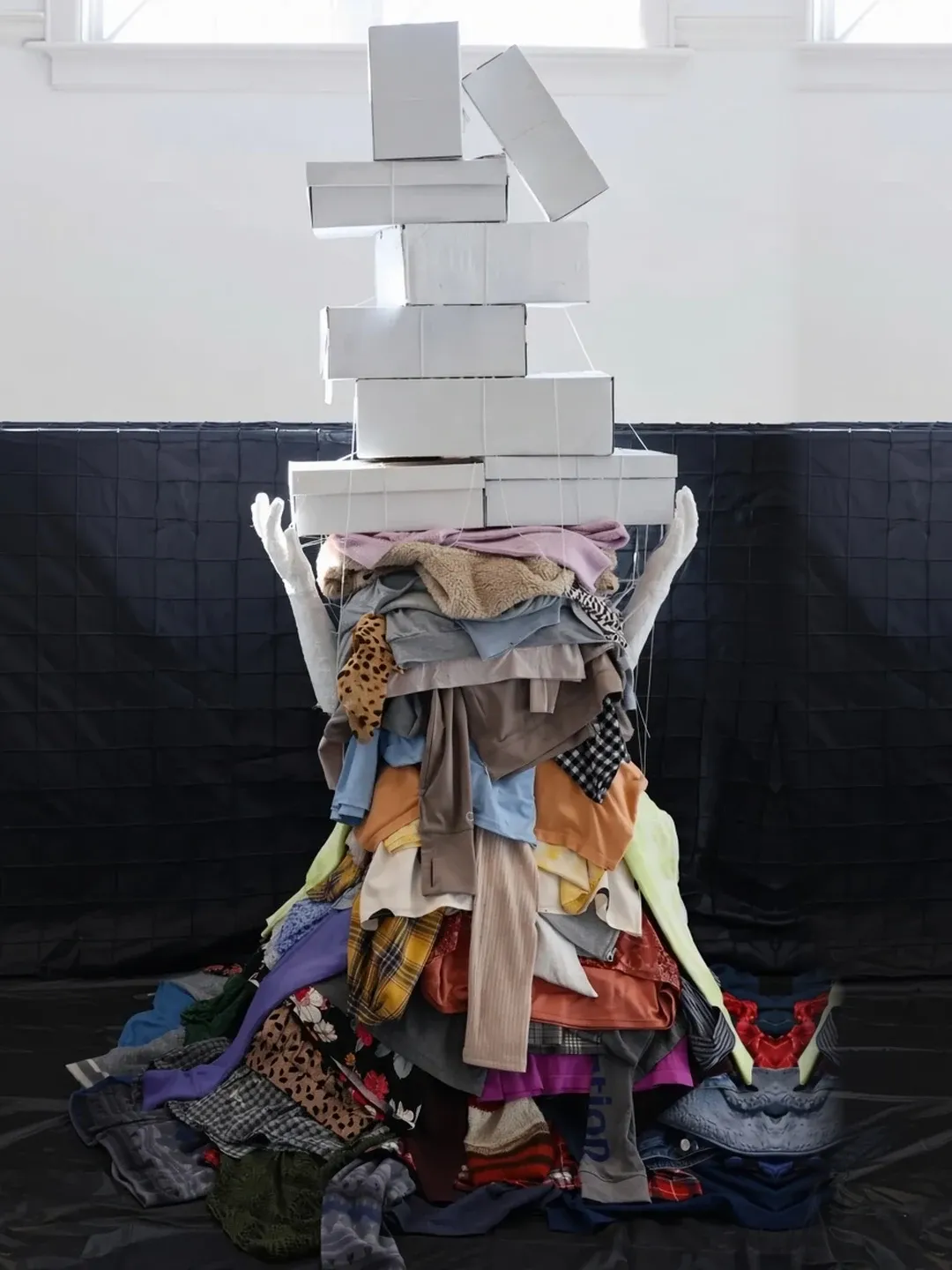
看完整作品:過量之線 →
對她來說,這個作品代表了她想成為的建築師:用深思熟慮的設計與低成本、容易取得的材料,把抽象的社會問題轉化成可以被真實體驗的空間,最後回到「人」的需求。這也正好對上萊斯官網的作品集取向——不要求建築主題或專業水準,而是看創作潛力。一件用舊衣服做的大型裝置,只要問題清楚、過程可說,就是很有說服力的作品。
同一條可持續主線上,她還做了一座收集冰川融水、以可觀看的層疊水槽淨化的展廊(見融冰邊緣),把環保從「被討論」變成「被使用」;以及一件用鐵絲與拾得物件組成、色彩飽滿的集合裝置:
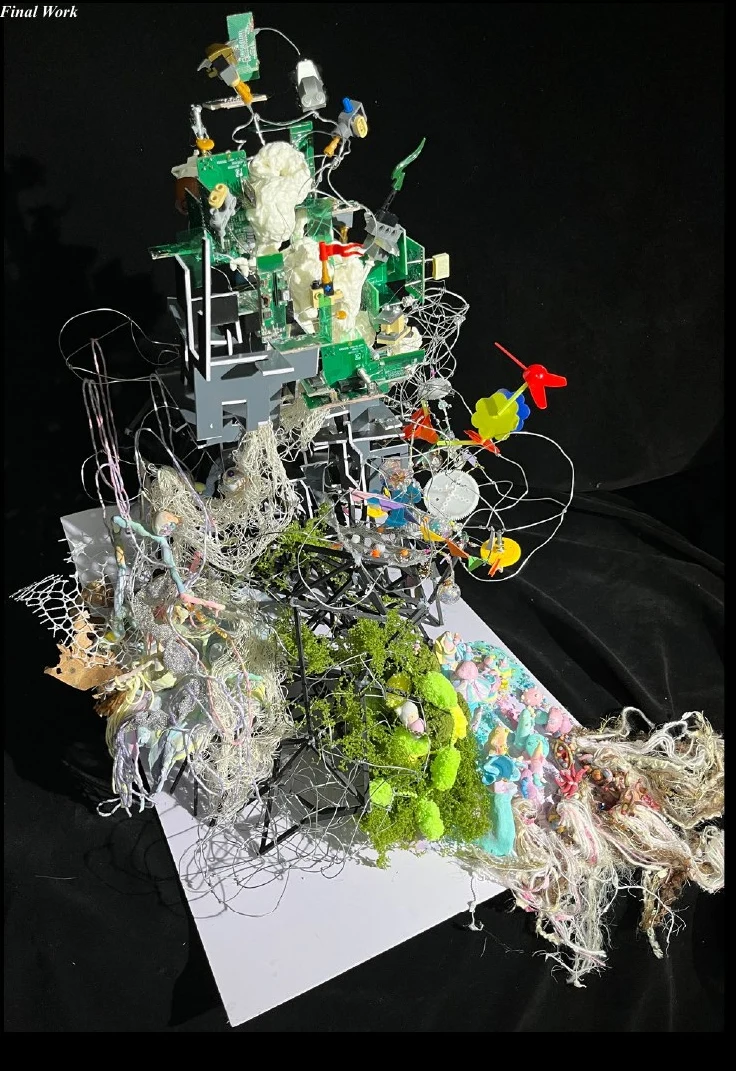
看完整作品:惰性世界 →
從「無措」到穩定節奏
她坦言整個作品集過程都帶著一種「無措感」,尤其在看過很多高品質作品之後,很清楚自己和頂尖學校之間的差距。最難的是兩個階段:項目方向剛確定時,以及中後期要把概念落到形式與表達時——想法很多,卻不知道怎麼收斂。
轉折是建立起穩定的工作節奏之後:先把問題拆成具體任務、把邏輯鏈梳理完整,再用模型反覆驗證,帶著階段成果去討論、快速拿到回饋並修正。她住得離工作室很遠,但幾乎每個假期都回來集中製作,回到學校後也維持每週固定的線上課程推進進度。
給申請者的四個建議
- GPA 穩住:作品再強,成績始終是基本門檻。
- 作品集越早開始越好:她在 10 年級暑假前就開始接觸作品集,把時間線拉長,作品才能逐步成熟,也避免在申請前的暑假被動趕工。
- 學會和焦慮共處:和同學比較幾乎無法避免,但每個人的節奏不同;重點是清楚自己的短板,讓壓力推動進步,而不是被壓垮。
- 選校看項目本身,文書寫出連續性:真正了解學校的建築項目,而不是只看排名;文書不是羅列經歷,而是讓招生官讀到一個真實、立體、有連續性的人,並把作品集裡的項目和建築相關的課外活動串成完整的個人敘事。萊斯的兩題建築文書(為什麼學建築、哪棟建築或城市打動你)正好是串起這條主線的地方。
寫在最後
認識這位學生兩年多,她的起跑點並不算特別高,但非常自驅、懂得自我要求:每個假期都第一個回到工作室,申請前還親自飛去美國訪校,向正在萊斯就讀的學長請教學校風氣與申請細節。我從 2017 年至今累積 12,000+ 小時設計教學與設計諮詢,最常提醒學生的是 Thinking by Making——用動手引發思考,讓材料與模型替你把問題想清楚。萊斯的作品集只有 10 頁,與其塞滿技法練習,不如像她一樣,放幾件從真實問題出發、能看出「怎麼想、怎麼試、怎麼改」的作品。想看更多錄取案例,可以讀從帆船與海洋環保出發,RD 拿下康乃爾景觀建築、看完這五個作品,你會明白名校想要的到底是什麼,或直接瀏覽作品牆。
一位美国高中、修 AP 课程的学生,从 10 年级暑假前开始准备作品集,最后以 Early Decision(ED)录取她的第一志愿:莱斯大学(Rice University)建筑学院的 Bachelor of Architecture。她的成绩不是最突出的,作品集也曾经一度显得「散」和「乱」;最后让她拿到录取的,是一条从成绩、活动、作品集到文书都互相印证的主线。
这篇整理她的选校理由、作品集策略与给学弟妹的建议,并对照莱斯大学官网的 ED 规则、作品集规格与建筑申请文书题目。莱斯建筑的学制与 Preceptorship 完整介绍,请见莱斯大学建筑本科值得申请吗?。
2026 年 10 月重新查核:ED 截止与放榜时间、作品集规格、补充文书题目、学院规模与 Preceptorship,均依莱斯大学招生办公室与建筑学院官网更新;送件前请再以官网最新公告为准。本文不列学费与语言分数,请以官网为准。
莱斯建筑本科 ED 申请重点一览(官方资料)
| 项目 | 内容 |
|---|---|
| ED 性质 | 具约束力(binding),适合把莱斯当第一志愿的学生;可同时申请其他学校的非约束性计划,但被莱斯录取后须撤回其他申请,并在期限内缴交入学订金确认 |
| ED 截止与放榜 | ED I:11 月 1 日截止、12 月中旬前放榜;ED II:1 月 4 日截止、1 月下旬前放榜 |
| 作品集 | 建筑申请者必交,通过 Rice Admission Student Portal 上传;单一 PDF、以姓名命名、上限 15 MB;横向 A4 或 Letter、图片 150~300 dpi;首页为姓名封面,内容最多 10 页(不含封面) |
| 作品集取向 | 展现创作潜力,不要求以建筑为主题、也不要求专业水准;可放素描、绘画、摄影、模型等;不鼓励机械制图或电脑制图;每件作品标注标题、媒材、年份与情境(独立或团体、课堂、暑期课程等) |
| 建筑补充文书 | 两题各 250 字:为什么决心学建筑、哪些经历让你选择莱斯建筑学院;描述一栋让你印象深刻的建筑、场所或城市,以及它如何影响你对建筑的理解 |
| 学院规模 | 34 位教师、12 位职员,本科生 131 人、研究生 62 人 |
| Preceptorship | 1968 年正式成立,安排在 B.Arch. 第 4 与第 5 年之间;在学院遴选的顶尖事务所实习至少 9 个月并支领具竞争力的薪资;大四需以作品集申请第五年课程 |
以上出自莱斯大学国际生本科申请页、莱斯建筑学院概览页、莱斯建筑本科页与Preceptorship 官方页。要特别注意:ED 是有约束力的,一旦录取就要撤回其他学校的申请,所以只有在你确定莱斯就是第一志愿时才适合用 ED。
为什么是莱斯?她的选校理由
她曾在四个国家生活,很早就感受到空间如何改变人的情绪、行为与安全感。比起只关注某一个尺度,她更想在「从材料到结构、从光线到动线、从个体到社区」的综合系统里做判断与取舍,所以建筑从高中开始就是她的第一选择。
她在 11 年级暑假第一次认识莱斯,最打动她的有三点:
- 小规模、高密度的 studio 教学:全院本科生只有一百多人,代表更密集的讨论与更直接的教授回馈。
- 一年的 Preceptorship 带薪实习:在越来越重视真实项目经验的建筑业,她很看重这种把学习与实践绑在一起的培养方式。
- Residential college 住宿学院制度:她重视一个彼此连接、互相支持的学生社区;这也正是莱斯申请文书会问到的主题之一。
她在 12 月中旬收到 ED 录取——和官网写的「ED I 于 12 月中旬前放榜」一致。那天她以为会提早放榜,提前一小时起床守在信箱前,点开信的瞬间直接哭了出来。
录取关键:所有材料在同一条主在线
她自己的复盘是:能拿到录取,关键不是某一个单点优势,而是成绩、活动、作品集与文书都尽量扎实,并且在同一条主在线保持一致。她做的项目、参加的活动、作品集的表达方式,以及文书里的思考方向互相印证,招生官看到的就不是零散的标签,而是一个有清楚兴趣起点、有真实行动、也有持续成长轨迹的人。
她的作品集围绕两个核心主题:可持续性,以及空间如何影响人的情绪与行为。每个项目都从现实问题出发,把社会议题转译成空间语言或材料语言,而不是停留在概念层面。例如用回收咖啡渣压制砖块、再延伸成社区空间的材料研究:
看完整作品:咖啡渣砖 →
另一条线则是情绪与空间:她用悬吊的椴木夹板与折叠 PVC 片,讨论「禁锢感」如何让空间收紧;也用折叠、剥离的纸平面,把一片湖畔坡地变成由路径与屏蔽构成的地景。
看完整作品:苦难之屋 →
看完整作品:平面中的通道 →
最重要的作品:用一堆旧衣服回应快时尚
她最喜欢的作品是〈Threads of Excess〉(过量之线)。这个项目回应快时尚带来的过度消费:人们不断被潮流推着走,买了许多并不真正需要的衣服。她希望用一种直观、带有压迫感的空间形式,让人在身体层面感受到「过量」,而不只是在文本上理解。
- 材料本身就是概念:她从学校社区收集大量二手衣物与鞋盒作为主要材料,让作品直接创建在真实的消费循环之中,也逼自己挑战更大尺度的制作与结构组织。
- 从小草模开始:先做小尺度草模、完成初版,再一路深化。
- 用规则收敛「散」和「乱」:最大的困难是整体配色的统一,以及衣物与结构如何形成合理的堆栈逻辑。解法是先创建配色规则,再用结构逻辑限制堆栈方式,经过多轮试摆与调整,让作品既有强烈的视觉冲击,也有清楚的内在逻辑。
看完整作品:过量之线 →
对她来说,这个作品代表了她想成为的建筑师:用深思熟虑的设计与低成本、容易取得的材料,把抽象的社会问题转化成可以被真实体验的空间,最后回到「人」的需求。这也正好对上莱斯官网的作品集取向——不要求建筑主题或专业水准,而是看创作潜力。一件用旧衣服做的大型装置,只要问题清楚、过程可说,就是很有说服力的作品。
同一条可持续主在线,她还做了一座收集冰川融水、以可观看的层叠水槽净化的展廊(见融冰边缘),把环保从「被讨论」变成「被使用」;以及一件用铁丝与拾得对象组成、色彩饱满的集合装置:
看完整作品:惰性世界 →
从「无措」到稳定节奏
她坦言整个作品集过程都带着一种「无措感」,尤其在看过很多高品质作品之后,很清楚自己和顶尖学校之间的差距。最难的是两个阶段:项目方向刚确定时,以及中后期要把概念落到形式与表达时——想法很多,却不知道怎么收敛。
转折是创建起稳定的工作节奏之后:先把问题拆成具体任务、把逻辑链梳理完整,再用模型反复验证,带着阶段成果去讨论、快速拿到回馈并修正。她住得离工作室很远,但几乎每个假期都回来集中制作,回到学校后也维持每周固定的在线课程推进进度。
给申请者的四个建议
- GPA 稳住:作品再强,成绩始终是基本门槛。
- 作品集越早开始越好:她在 10 年级暑假前就开始接触作品集,把时间线拉长,作品才能逐步成熟,也避免在申请前的暑假被动赶工。
- 学会和焦虑共处:和同学比较几乎无法避免,但每个人的节奏不同;重点是清楚自己的短板,让压力推动进步,而不是被压垮。
- 选校看项目本身,文书写出连续性:真正了解学校的建筑项目,而不是只看排名;文书不是罗列经历,而是让招生官读到一个真实、立体、有连续性的人,并把作品集里的项目和建筑相关的课外活动串成完整的个人叙事。莱斯的两题建筑文书(为什么学建筑、哪栋建筑或城市打动你)正好是串起这条主线的地方。
写在最后
认识这位学生两年多,她的起跑点并不算特别高,但非常自驱、懂得自我要求:每个假期都第一个回到工作室,申请前还亲自飞去美国访校,向正在莱斯就读的学长请教学校风气与申请细节。我从 2017 年至今累积 12,000+ 小时设计教学与设计咨询,最常提醒学生的是 Thinking by Making——用动手引发思考,让材料与模型替你把问题想清楚。莱斯的作品集只有 10 页,与其塞满技法练习,不如像她一样,放几件从真实问题出发、能看出「怎么想、怎么试、怎么改」的作品。想看更多录取案例,可以读从帆船与海洋环保出发,RD 拿下康乃尔景观建筑、看完这五个作品,你会明白名校想要的到底是什么,或直接浏览作品墙。
A student at a US high school, taking AP courses, began preparing her portfolio before the summer of 10th grade and was admitted by Early Decision (ED) to her first choice: the Bachelor of Architecture at Rice University’s School of Architecture. Her grades were not the strongest, and the portfolio at one point looked “scattered” and “messy.” What won her the offer was a through-line on which the grades, the activities, the portfolio, and the essays all confirmed one another.
This post sets out her reasons for choosing the school, her portfolio strategy, and her advice for younger students, set against the ED rules, portfolio specifications, and architecture application essay prompts on Rice’s website. For a full account of Rice Architecture’s degree structure and the Preceptorship, see Is Rice University’s undergraduate architecture worth applying to?.
Rechecked in October 2026: ED deadlines and decision dates, portfolio specifications, supplement essay prompts, the size of the school, and the Preceptorship are all updated from the Rice University admission office and the School of Architecture website. Before you submit, take the latest notice on the official site as final. This article does not list tuition or language scores. Use the official website.
Rice undergraduate architecture ED application at a glance (official information)
| Topic | Details |
|---|---|
| Nature of ED | Binding, for students who treat Rice as their first choice. You may apply at the same time to non-binding plans at other schools, but if Rice admits you, you must withdraw your other applications and pay the enrollment deposit by the deadline to confirm |
| ED deadlines and decisions | ED I: deadline November 1, decisions by mid-December; ED II: deadline January 4, decisions by late January |
| Portfolio | Required of architecture applicants, uploaded through the Rice Admission Student Portal; a single PDF, named with your name, maximum 15 MB; landscape A4 or Letter, images at 150–300 dpi; the first page is a cover with your name, and the content is at most 10 pages (not including the cover) |
| Portfolio approach | Shows creative potential, and does not require an architecture theme or a professional standard; sketches, paintings, photography, models, and similar work may be included; mechanical drawings and computer drawings are discouraged; label each work with a title, media, year, and context (independent or group, a class, a summer course, and so on) |
| Architecture supplement essays | Two prompts of 250 words each: why you are determined to study architecture, and which experiences led you to choose the Rice School of Architecture; describe a building, place, or city that left a strong impression, and how it affected your understanding of architecture |
| Size of the school | 34 faculty, 12 staff, 131 undergraduates, and 62 graduate students |
| Preceptorship | Formally established in 1968, placed between year 4 and year 5 of the B.Arch.; an internship of at least 9 months at a leading firm selected by the school, paid a competitive salary; in the fourth year, students must apply to the fifth-year curriculum with a portfolio |
The above comes from the Rice University international undergraduate application page, the Rice School of Architecture overview page, the Rice undergraduate architecture page, and the official Preceptorship page. One point matters: ED is binding. Once you are admitted, you must withdraw your applications to other schools, so ED fits only when you are sure Rice is your first choice.
Why Rice? Her reasons for choosing the school
She has lived in four countries and, from early on, felt how space changes a person’s emotions, behavior, and sense of safety. More than focusing on a single scale, she wanted to judge and choose inside an integrated system “from material to structure, from light to circulation, from the individual to the community,” so from high school on, architecture has been her first choice.
She first got to know Rice in the summer of 11th grade. Three things moved her most:
- Small-scale, high-density studio teaching: the whole school has only a hundred-plus undergraduates, which means denser discussion and more direct feedback from professors.
- A one-year paid Preceptorship internship: in a profession that cares more and more about real project experience, she valued this way of training, which binds learning and practice together.
- The residential college system: she values a student community that is connected and mutually supportive. This is also one of the themes Rice’s application essays ask about.
She received her ED offer in mid-December, consistent with the website’s line that “ED I decisions are released by mid-December.” That day she thought the decisions might come out early. She got up an hour early and waited at her inbox, and the moment she opened the letter she burst into tears.
The key to the offer: every part on the same through-line
Her own review is this: the offer did not come from one single advantage. The grades, activities, portfolio, and essays were each made as solid as she could make them, and kept consistent on the same through-line. The projects she made, the activities she joined, the way the portfolio speaks, and the direction of thought in the essays confirm one another. What an admissions officer sees is not a scatter of labels, but a person with a clear starting point of interest, real action, and a continuing path of growth.
Her portfolio turns on two core themes: sustainability, and how space affects a person’s emotions and behavior. Every project starts from a real problem and translates a social issue into spatial language or material language, rather than staying at the level of a concept. One example is a material study that presses recycled coffee grounds into bricks and then extends them into a community space:
See the full project: Coffee-ground Brick →
The other line is emotion and space. With suspended basswood plywood and folded PVC sheets, she discusses how a “sense of confinement” tightens space. With folded and peeled paper planes, she turns a lakeside slope into a landscape of paths and shelter.
See the full project: Misery House →
See the full project: Passage in Planes →
The most important work: answering fast fashion with a pile of old clothes
Her favorite work is Threads of Excess. The project responds to the overconsumption that fast fashion produces: people are continually pushed along by trends and buy many clothes they do not truly need. She wanted a direct, oppressive spatial form so that people would feel “excess” in the body, and not only understand it in words.
- The material itself is the concept: she collected a large amount of secondhand clothes and shoeboxes from the school community as the main materials, so the work sits directly inside a real cycle of consumption, and so she had to challenge herself at a larger scale of making and structural organization.
- Start from a small study model: she made a small-scale study model first, finished a first version, and then kept developing it.
- Use rules to pull in the “scatter” and the “mess”: the hardest part was unifying the overall color, and finding a reasonable stacking logic between the clothes and the structure. The way through was to set color rules first, then use structural logic to limit how things stacked. After many rounds of trial placement and adjustment, the work had a strong visual impact and a clear internal logic.
See the full project: Threads of Excess →
For her, this work stands for the architect she wants to become: with carefully considered design and low-cost, easy-to-find materials, turn an abstract social problem into a space that can actually be experienced, and come back at the end to what people need. This also lines up with the portfolio approach on Rice’s website — it does not ask for an architecture theme or a professional standard, and it looks at creative potential. A large installation made from old clothes, when the problem is clear and the process can be told, is a very persuasive work.
On the same sustainability through-line, she also made a gallery that collects glacial meltwater and purifies it in a stack of tanks you can watch (see Edge of Thaw), turning environmental care from “something discussed” into “something used”; and a richly colored assemblage of wire and found objects:
See the full project: The Inert World →
From feeling at a loss to a steady rhythm
She is frank that the whole portfolio process carried a feeling of being at a loss, especially after she had seen a lot of high-quality work and could see clearly the gap between herself and the top schools. Two stages were the hardest: when a project’s direction had just been set, and the middle-to-late stage, when the concept had to land in form and presentation. She had many ideas and did not know how to bring them in.
The turn came after she built a steady working rhythm: break the problem into concrete tasks, sort the chain of logic out fully, then test it again and again with models, take each stage’s result into discussion, get feedback quickly, and revise. She lived far from the studio, but almost every holiday she came back to make work intensively, and after she returned to school she kept a fixed online class each week to move the work forward.
Four pieces of advice for applicants
- Hold the GPA steady: however strong the work is, grades remain the basic threshold.
- Start the portfolio as early as you can: she began working with a portfolio before the summer of 10th grade. A longer timeline lets the work mature step by step, and keeps the summer before applications from turning into a forced rush.
- Learn to live with the anxiety: comparing yourself with classmates is almost impossible to avoid, but everyone’s pace is different. Know your own weak points, and let the pressure push you forward instead of crushing you.
- Choose a school by its projects, and write continuity into the essays: really understand a school’s architecture projects, not only its ranking. An essay is not a list of experiences. It lets an admissions officer read a real, rounded person with continuity, and it strings the projects in the portfolio together with architecture-related extracurriculars into a complete personal narrative. Rice’s two architecture essays (why study architecture, and which building or city moved you) are exactly where that through-line gets tied together.
In closing
I have known this student for more than two years. Her starting point was not especially high, but she is strongly self-driven and knows how to demand things of herself: every holiday she was the first one back in the studio, and before applying she flew to the United States herself to visit the school and ask a senior student then at Rice about the culture and the details of applying. From 2017 to today I have accumulated 12,000+ hours of design teaching and design consulting. What I remind students of most often is Thinking by Making — use making to spark thinking, and let materials and models think the problem through for you. Rice’s portfolio is only 10 pages. Like her, put in a few works that start from a real problem and show “how you thought, how you tried, and how you changed it,” rather than packing the pages with technique exercises. To see more admitted cases, read From sailing and ocean conservation to Cornell Landscape Architecture in RD, Read these five works and you will see what top schools actually want, or browse the project wall.
English summary
A case study of a US high-school student (AP curriculum) admitted by Early Decision to her first choice, the Bachelor of Architecture at Rice University's School of Architecture. Facts were cross-checked against Rice admission and Rice School of Architecture pages in October 2026: Early Decision is binding; ED I closes November 1 with decisions by mid-December, ED II closes January 4 with decisions by late January; architecture applicants upload a single PDF portfolio of up to 10 pages plus a title page, 15 MB maximum, which should show creative potential and need not be architectural or professional, with mechanical or computer drafting discouraged; two 250-word architecture essays are required. The school has 34 faculty, 131 undergraduate and 62 graduate students, and a Preceptorship of at least nine paid months between the fourth and fifth years. The post explains a portfolio thread of sustainability and how space shapes emotion and behaviour: a large installation of secondhand clothes and shoeboxes responding to fast fashion, coffee-ground bricks, a suspended basswood and PVC frame, a folded-paper landscape and a wire assemblage, with grades, activities, portfolio and essays reinforcing one narrative.
常見問題常见问题FAQ
萊斯大學的 Early Decision 有約束力嗎?什麼時候放榜?莱斯大学的 Early Decision 有约束力吗?什么时候放榜?Is Rice University’s Early Decision binding? When are decisions released?
有。萊斯 ED 是具約束力的計畫,可同時申請其他學校的非約束性計畫,但被萊斯錄取後必須撤回其他申請。ED I 於 11 月 1 日截止、12 月中旬前放榜;ED II 於 1 月 4 日截止、1 月下旬前放榜。
有。莱斯 ED 是具约束力的计划,可同时申请其他学校的非约束性计划,但被莱斯录取后必须撤回其他申请。ED I 于 11 月 1 日截止、12 月中旬前放榜;ED II 于 1 月 4 日截止、1 月下旬前放榜。
Yes. Rice ED is a binding plan. You may apply at the same time to non-binding plans at other schools, but if Rice admits you, you must withdraw your other applications. ED I closes on November 1, with decisions by mid-December. ED II closes on January 4, with decisions by late January.
萊斯建築作品集有什麼規格?莱斯建筑作品集有什么规格?What are the specifications for the Rice Architecture portfolio?
透過 Rice Admission Student Portal 上傳單一 PDF,以姓名命名、上限 15 MB;橫向 A4 或 Letter、圖片 150~300 dpi;首頁為姓名封面,內容最多 10 頁(不含封面)。每件作品標註標題、媒材、年份與製作情境。
通过 Rice Admission Student Portal 上传单一 PDF,以姓名命名、上限 15 MB;横向 A4 或 Letter、图片 150~300 dpi;首页为姓名封面,内容最多 10 页(不含封面)。每件作品标注标题、媒材、年份与制作情境。
Upload a single PDF through the Rice Admission Student Portal, named with your name, with a maximum of 15 MB. Use landscape A4 or Letter, with images at 150–300 dpi. The first page is a cover with your name, and the content is at most 10 pages (not including the cover). Label each work with a title, media, year, and the context in which it was made.
萊斯建築作品集一定要放建築作品嗎?莱斯建筑作品集一定要放建筑作品吗?Does the Rice Architecture portfolio have to include architecture work?
不一定。官網說作品集用來展現創作潛力,不要求以建築為主題、也不要求專業水準,可放素描、繪畫、攝影、模型等;建築或設計作品可以放,但不鼓勵機械製圖或電腦製圖。
不一定。官网说作品集用来展现创作潜力,不要求以建筑为主题、也不要求专业水准,可放素描、绘画、摄影、模型等;建筑或设计作品可以放,但不鼓励机械制图或电脑制图。
Not necessarily. The website says the portfolio is used to show creative potential. It does not require an architecture theme, and it does not require a professional standard. Sketches, paintings, photography, models, and similar work may be included. Architecture or design work may be included, but mechanical drawings and computer drawings are discouraged.
萊斯建築申請要寫哪些補充文書?莱斯建筑申请要写哪些补充文书?Which supplement essays does a Rice Architecture application require?
除了萊斯共同的補充文書外,建築申請者另有兩題各 250 字:為什麼決心學建築、哪些經歷讓你選擇萊斯建築學院;以及描述一棟讓你印象深刻的建築、場所或城市,並反思它如何影響你對建築的理解。
除了莱斯共同的补充文书外,建筑申请者另有两题各 250 字:为什么决心学建筑、哪些经历让你选择莱斯建筑学院;以及描述一栋让你印象深刻的建筑、场所或城市,并反思它如何影响你对建筑的理解。
Besides Rice’s shared supplement essays, architecture applicants have two further prompts of 250 words each: why you are determined to study architecture, and which experiences led you to choose the Rice School of Architecture; and describe a building, place, or city that left a strong impression, and reflect on how it affected your understanding of architecture.
成績不是最突出,怎麼讓作品集更有說服力?成绩不是最突出,怎么让作品集更有说服力?If your grades are not the strongest, how do you make the portfolio more persuasive?
讓成績、活動、作品集與文書在同一條主線上互相印證。這個案例以可持續性與「空間如何影響情緒」為主線,每個項目都從現實問題出發,例如用二手衣物做大型裝置回應快時尚,並用配色規則與結構邏輯把作品從「散」收斂到清楚。
让成绩、活动、作品集与文书在同一条主在线互相印证。这个案例以可持续性与「空间如何影响情绪」为主线,每个项目都从现实问题出发,例如用二手衣物做大型装置回应快时尚,并用配色规则与结构逻辑把作品从「散」收敛到清楚。
Let the grades, activities, portfolio, and essays confirm one another on the same through-line. This case uses sustainability and “how space affects emotion” as the through-line. Every project starts from a real problem, for example a large installation of secondhand clothes answering fast fashion, and color rules plus structural logic pull the work from “scattered” into something clear.
訂閱新文章订阅新文章Subscribe
新文章會寄到這個信箱。新文章会寄到这个邮箱。New posts will be emailed to this address.
已訂閱。已订阅。Subscribed.暫時無法訂閱,請稍後再試。暂时无法订阅,请稍后再试。Could not subscribe. Please try again.相關文章相关文章Related posts
 ED 被延到 RD 仍錄取康乃爾建築本科:活動少,靠八個實體項目的作品集翻盤(2026 年 10 月官方查核)ED 被延到 RD 仍录取康乃尔建筑本科:活动少,靠八个实体项目的作品集翻盘(2026 年 10 月官方查核)Deferred from ED, admitted RD to Cornell B.Arch: an eight-project physical-model portfolio that made up for few activities (checked October 2026)康乃爾 ED 被延到 RD、課外活動偏少,他靠八個實體項目的作品集,最後錄取康乃爾 B.Arch,以及南加大、伊利諾香檳、東北大學與伊利諾理工。整理他等待放榜的心態、選校邏輯與垂直綠化塔「翠綠立面」的做法,並對照康乃爾 AAP 官網:ED 11 月 1 日、RD 1 月 2 日截止,作品集 15–20 張、每項目最多 2 張,加 3 分鐘影片面試。康乃尔 ED 被延到 RD、课外活动偏少,他靠八个实体项目的作品集,最后录取康乃尔 B.Arch,以及南加大、伊利诺香槟、东北大学与伊利诺理工。整理他等待放榜的心态、选校逻辑与垂直绿化塔「翠绿立面」的做法,并对照康乃尔 AAP 官网:ED 11 月 1 日、RD 1 月 2 日截止,作品集 15–20 张、每项目最多 2 张,加 3 分钟视频面试。Deferred from Cornell ED to RD, and with few extracurricular activities, he relied on a portfolio of eight physical projects and was admitted to the Cornell B.Arch, as well as USC, UIUC, Northeastern, and Illinois Tech (IIT). This post sets out how he waited for decisions, how he chose schools, and how he made the vertical greening tower “Verdant Facade,” and checks that against the Cornell AAP website: an ED deadline of November 1, an RD deadline of January 2, a portfolio of 15–20 images with at most 2 per project, and a 3-minute video interview.
 從 ED 被拒到普林斯頓建築錄取:早申策略、文書收尾與等待放榜的心態復盤从 ED 被拒到普林斯顿建筑录取:早申策略、文书收尾与等待放榜的心态复盘From an Early Decision rejection to Princeton architecture: early-round strategy, essays and mindset一位學生早申 ED 哥倫比亞被拒,常規輪拿到普林斯頓建築方向 A.B. 錄取。整理 ED 與普林斯頓 SCEA 的規則取捨、2026–27 普林斯頓常規輪時程與 Arts Supplement、被拒後文書怎麼收尾、作品集三個項目,以及等待放榜的心態,2026 年 10 月依官方資料查核。一位学生早申 ED 哥伦比亚被拒,常规轮拿到普林斯顿建筑方向 A.B. 录取。整理 ED 与普林斯顿 SCEA 的规则取舍、2026–27 普林斯顿常规轮时程与 Arts Supplement、被拒后文书怎么收尾、作品集三个项目,以及等待放榜的心态,2026 年 10 月依官方资料查核。A student was rejected from Columbia Early Decision and admitted in the regular round to Princeton’s A.B. in architecture. The post covers the choice between ED and Princeton SCEA, the 2026–27 Princeton regular-round timeline and Arts Supplement, how to finish the essays after a rejection, three portfolio projects, and the mindset of waiting for decisions, checked against official sources in October 2026.
 規劃背景 6 個月拿下港中文城市設計碩士:CUHK MSUD 選校、作品集與面試經驗(2026 年 10 月官方查核)规划背景 6 个月拿下港中文城市设计硕士:CUHK MSUD 选校、作品集与面试经验(2026 年 10 月官方查核)From urban planning to CUHK MSc Urban Design in six months: school choice, portfolio and interview (checked October 2026)城鄉規劃本科、GPA 與雅思剛好達標,作品集從零開始,用約 6 個月拿到香港中文大學城市設計碩士(CUHK MSUD)錄取。整理她的選校理由、4 個項目的作品集策略、文書與面試經驗,並對照 CUHK 2027–28 官方申請指引:17 個月學制、HK$300,000 學費、1 月 15 日主輪截止、IELTS 6.5 與 10 MB 作品集規格。城乡规划本科、GPA 与雅思刚好达标,作品集从零开始,用约 6 个月拿到香港中文大学城市设计硕士(CUHK MSUD)录取。整理她的选校理由、4 个项目的作品集策略、文书与面试经验,并对照 CUHK 2027–28 官方申请指引:17 个月学制、HK$300,000 学费、1 月 15 日主轮截止、IELTS 6.5 与 10 MB 作品集规格。With an undergraduate degree in urban and rural planning, a GPA and an IELTS score that only just met the bar, and a portfolio built from scratch, she was admitted to the MSc in Urban Design (MSUD) at The Chinese University of Hong Kong in about 6 months. This post sets out why she chose the school, her strategy for a portfolio of 4 projects, and her experience with the statement and the interview, checked against CUHK’s official 2027–28 application guidance: a 17-month structure, tuition of HK$300,000, a main-round deadline of 15 January, IELTS 6.5 and a 10 MB portfolio limit.