規劃背景 6 個月拿下港中文城市設計碩士:CUHK MSUD 選校、作品集與面試經驗(2026 年 10 月官方查核)规划背景 6 个月拿下港中文城市设计硕士:CUHK MSUD 选校、作品集与面试经验(2026 年 10 月官方查核)From urban planning to CUHK MSc Urban Design in six months: school choice, portfolio and interview (checked October 2026)
用微信掃描這張 QR code 即可分享。用微信扫描这张 QR code 即可分享。Scan this QR code with WeChat to share.
掃描或下載這張 QR code。扫描或下载这张 QR code。Scan or download this QR code.
規劃背景、GPA 和雅思都只是「剛好達標」,作品集從零開始,半年內能不能拿到香港中文大學(CUHK)城市設計碩士的錄取?這篇整理我指導過的一位城鄉規劃本科學生的真實申請經驗:從選校、作品集、文書、面試到英語考試,她用大約 6 個月拿到了 CUHK Master of Science in Urban Design(MSUD)的錄取。
我把她的做法,和 CUHK 建築學院 2027–28 年度官方申請指引逐條對照,讓你知道哪些經驗可以複製、哪些規定已經更新。
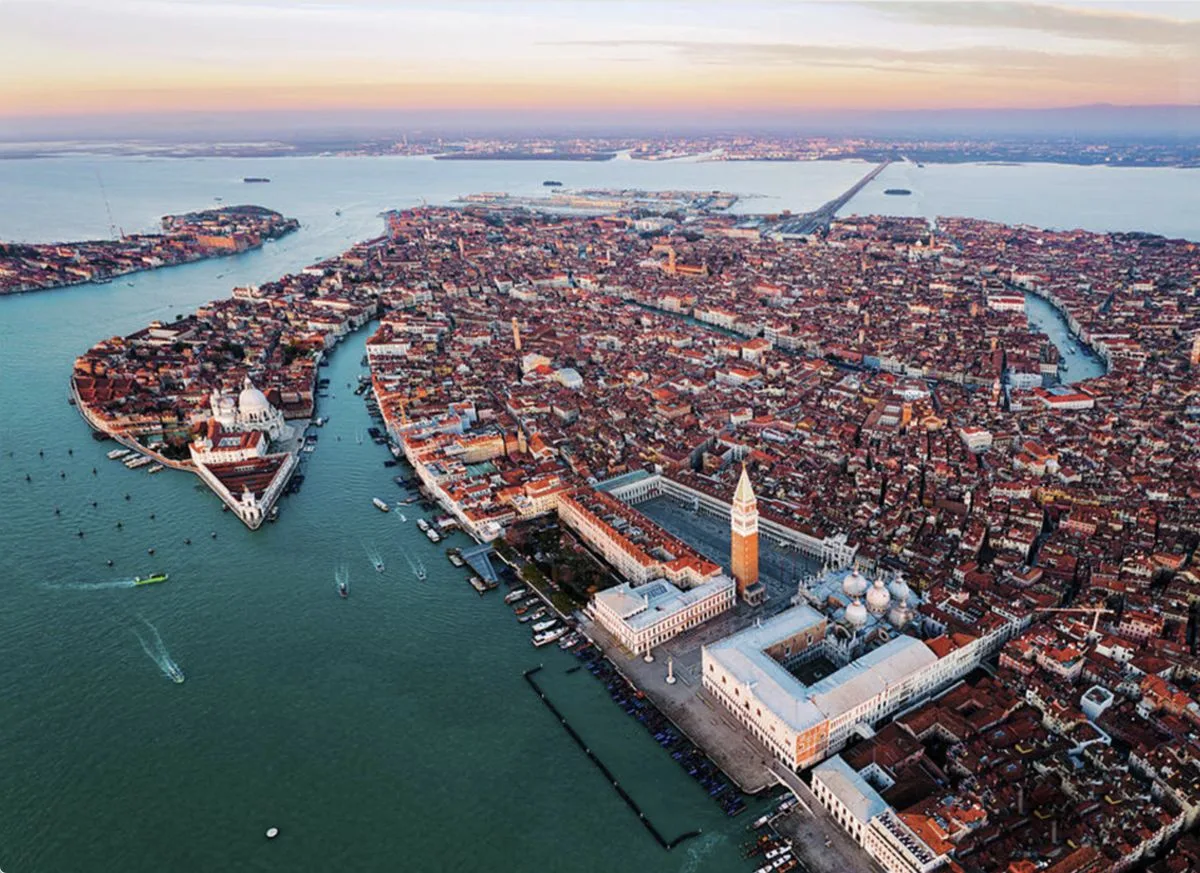
2026 年 10 月重新查核:學制、學費、截止日、入學要求、英語成績與作品集規格,均依香港中文大學建築學院與研究院官網的 2027 年入學資訊更新,每筆附官方來源;送件前請再以官網最新公告為準。封面圖為 CUHK MSUD 官方課程頁「International Workshop」段落所用的城市鳥瞰,圖片來源:香港中文大學建築學院 官網。
CUHK 城市設計碩士 MSUD 重點一覽(2027 年入學,官方資料)
| 項目 | 內容 |
|---|---|
| 所屬 | 社會科學院(Faculty of Social Science)建築學院,自負盈虧授課式碩士|研究院課程頁 |
| 學制 | 全日制,標準修業期 17 個月,畢業最少 36 學分 |
| 學費 | 全期 HK$300,000(待大學核准) |
| 申請截止 | 主輪 2027 年 1 月 15 日;補錄輪 2027 年 3 月 12 日;採滾動審核、額滿即止,官方強烈建議提早申請|MSUD 招生頁 |
| 學歷背景 | 建築、景觀建築、城市規劃或相關領域學士,平均成績一般不低於「B」;有一年以上相關工作經驗者優先 |
| 英語 | TOEFL 79(新制 4.5/6)或 IELTS(學術)6.5,成績兩年內有效;在港或英語授課學位可免|研究院入學要求 |
| 作品集 | PDF、小於 10 MB;含個人陳述、CV 與「只放 4 個學術項目」,專業實務作品最多 2 頁|2027–28 申請指引 |
| 其他材料 | 2 位推薦人、成績單與學位證明、工作證明(如有)、學術誠信聲明;內地學位需學信網學歷與學位驗證報告;紙本正本只在面試後依通知補交 |
| 認證 | 英國皇家城市規劃學會(RTPI)、香港城市設計學會(HKIUD)|MSUD 課程頁 |
為什麼規劃背景適合 CUHK 城市設計?
她本科讀城鄉規劃,平時的作業以調研報告和文本為主,設計訓練相對少。一開始她也不確定自己能不能被香港前三的學校錄取,但在研究學校、寫文書的過程中,她發現 CUHK 對她來說是「最對」的選擇,原因有三個:
- 課程結構貼近規劃生的強項:MSUD 官方強調以研究與設計項目回應城市的經濟、文化與法規過程,並以數據驅動的研究理解日常城市生活。規劃背景學生熟悉的「建築→組團→城市→區域」多尺度訓練,正好能用在跨尺度的策略設計上。
- 落地導向:課程以「connected studio」方式,透過研究與設計情境探討香港的城市更新與發展,方案要能回應真實場地,而不是紙上談兵。
- 帶薪實習:官方在暑期學期安排實習計畫,讓學生進入香港的城市設計公司工作;實習有薪、不計學分。2026 年的合作名單包括 AECOM、ARUP、The Oval Partnership、Land+Civilization Compositions 等。對想留港就業的非本地學生非常友善。
此外課程還有與國際合作院校共同舉辦的城市設計工作營,地點每年不同。
她的申請時間線:投遞 10 天收到面試邀請
她最後只投了港大、中大和理大三所,原本也考慮新加坡國立大學與香港城市大學,但因為兩校截止日晚了一個多月,期間已經拿到 CUHK 錄取,而 CUHK 本來就是第一志願,所以直接放棄了其他投遞。
- 投遞 CUHK 後約 10 天,收到面試邀請。
- 面試後約 4 天,收到錄取通知。
- 港大因為投得很早,當時只放了三個尚未完成的項目,結果沒有錄取——這也說明「早投」只有在作品成熟時才有意義。
CUHK 採滾動審核、額滿即止,越早送出完整申請越有利;但前提是作品集已經完整。這也是我建議大部分學生把主輪截止日前一個月設為自己的內部死線的原因。
作品集:4 個項目,從區域到概念
CUHK 2027–28 年度指引對作品集的內容寫得非常具體:只放 4 個學術項目、每個項目要有標題、要有平面與剖面等建築圖,並呈現設計過程與背後的思考;專業實務作品最多 2 頁;所有作品都要註明作者、合作者與完成作品的事務所,未適當註明可能導致作品集不被採計甚至取消資格。
她剛好做了 4 個項目,依設計尺度由大到小排列:區域規劃→舊區更新改造→片區設計→概念設計。注意:最新指引要求項目「依時間順序、最新的放最前面」,所以如果你照她的「尺度敘事」排版,送件前要先確認是否符合當年規定。
最具個人特色:海平面上升下的韌性城市設計
這個項目保留了她本科規劃的知識,從全球暖化與海平面上升出發,提出韌性海岸、潮汐公園與密度原型,讓新區能隨水位上升逐步調整,也是她從規劃轉向設計的第一步。她的作品集裡除了最後一個概念轉譯項目,都提出了可以實際執行的策略,這和 CUHK 實戰導向的風格很契合。
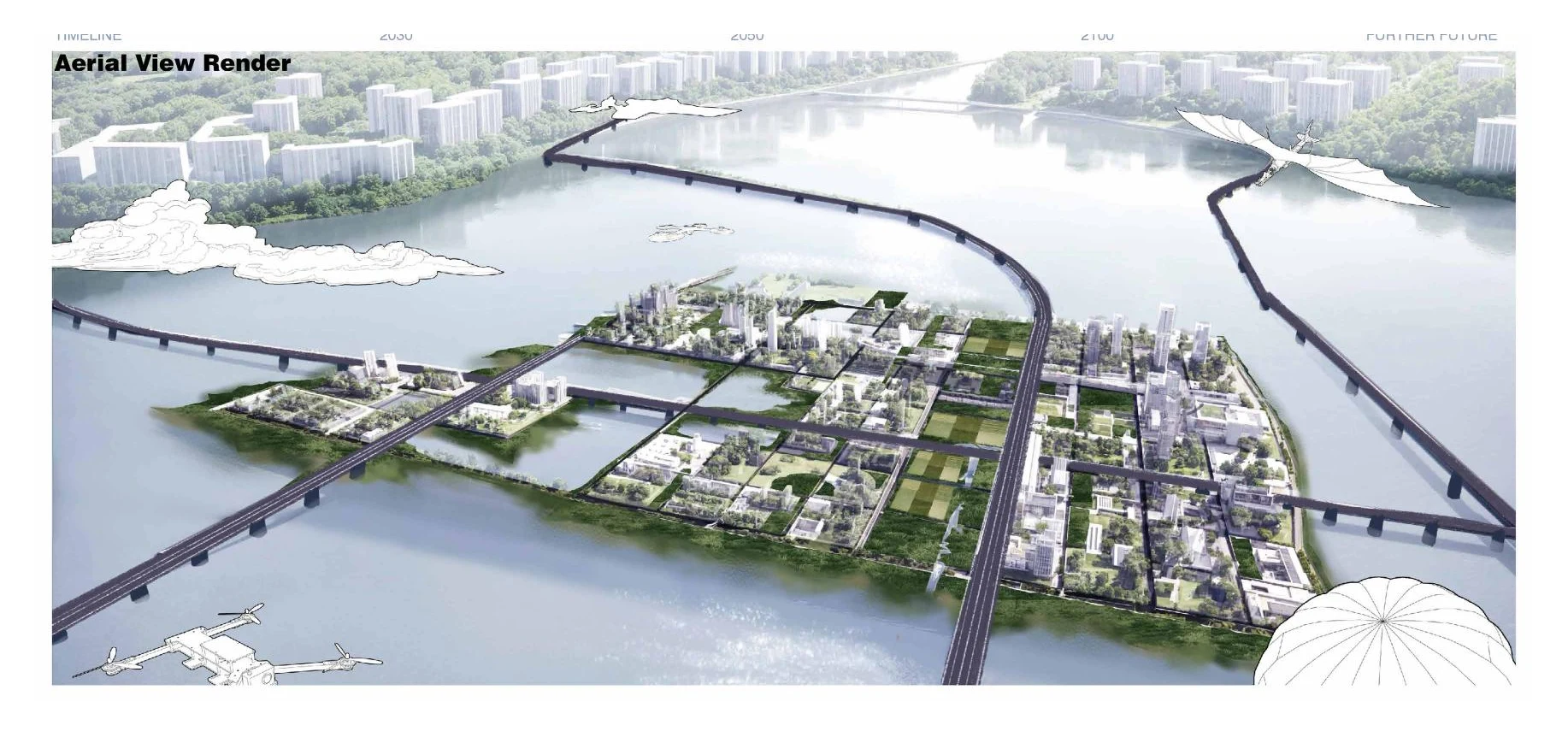
看完整作品:南沙韌性城市設計 →
最喜歡的項目:從女性視角重新設計城市
她最喜歡的項目,起點是大三的社會調研課提出的問題:「女性在城市中真的擁有平等、安全、自由的空間嗎?」當時只交了調研報告,她一直沒放下這個題目,後來在作品集裡把它做成完整的城市設計。
- 議題:東亞高密度城市往往忽視女性在日常生活中遇到的空間不安全、公共設施不友善與性別角色壓迫。
- 選址:香港本地空間高度飽和,她把場地轉向與香港移民高度相關的倫敦,選在泰晤士河南岸、長年未開發的 Convoys Wharf 地塊,討論移民女性的空間自治。
- 從概念到可執行:她以「新手媽媽」等具體使用者為例,發現育嬰室大多附屬在女廁裡,等於預設只有母親負責照顧;於是提出「性別中立」的育嬰空間模組,標準化面積與家具配置,可在城市中廣泛部署。
- 回到總體規劃:結合女性日常行為路徑的調研,完成整體彩色平面、三張場景透視與剖面,呈現未來社區的生活情境。
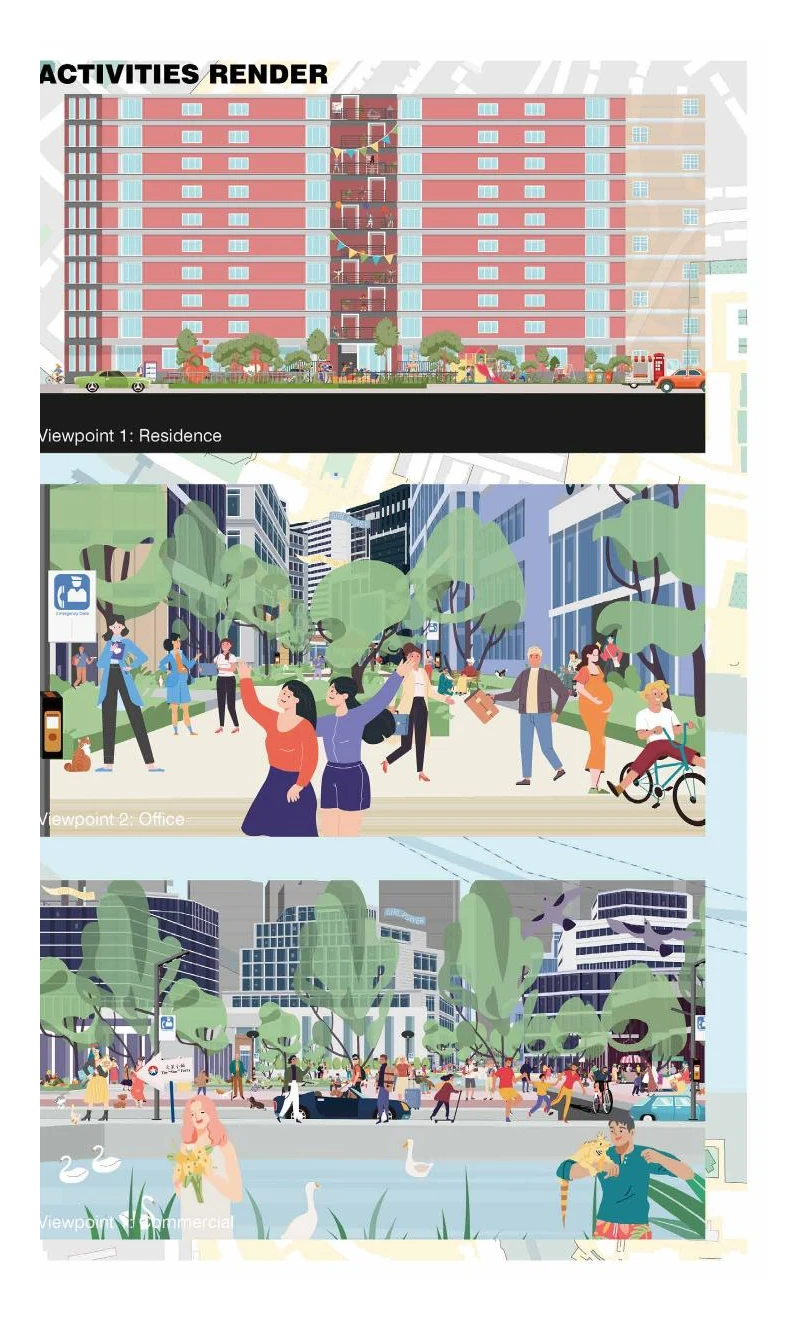
看完整作品:香港 {女性} ∈ 倫敦 →
這正是城市設計碩士作品集最需要的:一個清楚的社會議題 → 具體的使用者 → 可複製的空間單元 → 回到場地的總體策略。想看更多碩士作品集怎麼用研究推動設計,可以讀申請哥大 GSAPP 建築碩士,先讀懂官網和看完這五個作品,你會明白名校想要的到底是什麼。
先理清邏輯,再進入設計
她給後來者最重要的建議:每個項目先畫一張思維導圖,把邏輯捋清楚再開始設計;製圖階段再對照大綱檢查圖面是否合理。否則很容易做到一半迷失方向,而作品集時間有限,重來往往來不及。另外,申請前先列出各校截止日和要求,給自己設幾個強制死線。
文書:最好跟著項目一起寫
CUHK 要求提交說明申請理由的個人陳述,指引也要求把個人陳述與 CV 同時放進作品集檔案。她坦言自己的文書準備得太倉促,第一個截止日前一天才寫好草稿,事後檢討出這幾點:
- 提早開始,不必一開始就有完美框架,最好跟著項目推進同步記錄想法、階段性補充。
- 反覆修改細節,想法更新時記得檢查全文的連貫性。
- 深入了解項目:課程描述、課程安排、特色、教師與研究方向。
- 和自己對話:你認同什麼觀點、想做什麼方向,寫出你和別人不一樣的地方。
- 一個簡單的結構:理念 → 實踐經驗(課內+實習)→ 能力與興趣 → 選校理由 → 未來規劃 → 總結。
她申請 CUHK 時幾乎沒有卡住,因為「人文主義的城市設計」正是她的興趣,而 MSUD 隸屬社會科學院,方向高度契合。
面試:像聊天,自然表達比完美答案重要
從官方指引可以看出 CUHK MSUD 有面試環節:成績單正本、語言成績正本等紙本文件,都是面試後依通知才需要補交。她的面試經驗是「真的像在聊天」:沒有刻意掩飾緊張或興奮,抓住聽懂的關鍵詞展開回答。事後我們分析,她對未來學習的熱情與樂觀,反而讓面試官覺得有意思。
英語:一個月準備 IELTS 6.5
她用了一個比較極端的方法:提前約三週報名、倒逼自己一個月內衝刺。做法是「專項 → 整套模擬 → 再專項」:先分題型刷題熟悉語感,再做整套題評估程度,最後針對弱項(例如聽力的地圖題)集中練習。機考要練作文構思與打字速度;口語則是「勇敢開口、持續輸出」。
要提醒的是,CUHK 研究院的英語門檻是硬性最低要求(IELTS 6.5 或 TOEFL 79),成績兩年內有效;她剛好達標,屬於幸運,建議至少預留一次重考的時間。
拿到錄取後:先去事務所實習
港碩只有 17 個月,她拿到錄取後馬上改好 CV、帶著作品集投遞建築事務所,最後進入一間願意耐心帶人的工作室,補強設計的基本功。她的小提醒:建築工作室通常會面試,面試前先熟悉公司過去至少一個項目,或看看主持建築師的講座與訪談。由於 CUHK 也優先考慮有一年以上相關工作經驗的申請者,提早累積實務經驗對申請本身同樣有幫助。
寫在最後
這位學生不是設計背景最強的申請者,但她把每一個選擇都做得很「準」:選一個和自己背景與興趣高度契合的課程,用 4 個邏輯清楚、能落地的項目說服評審,再用真誠的面試完成最後一步。我從 2017 年至今累積 12,000+ 小時設計教學與設計諮詢,看過很多學生想「什麼都放」;對城市設計碩士來說,契合度與邏輯往往比炫技更重要。如果你也在比較香港與歐洲的碩士,可以參考魯汶大學建築碩士怎麼申請與歐洲建築留學 14 所學校學費與工簽整理。
规划背景、GPA 和雅思都只是「刚好达标」,作品集从零开始,半年内能不能拿到香港中文大学(CUHK)城市设计硕士的录取?这篇整理我指导过的一位城乡规划本科学生的真实申请经验:从选校、作品集、文书、面试到英语考试,她用大约 6 个月拿到了 CUHK Master of Science in Urban Design(MSUD)的录取。
我把她的做法,和 CUHK 建筑学院 2027–28 年度官方申请指引逐条对照,让你知道哪些经验可以拷贝、哪些规定已经更新。
2026 年 10 月重新查核:学制、学费、截止日、入学要求、英语成绩与作品集规格,均依香港中文大学建筑学院与研究院官网的 2027 年入学信息更新,每笔附官方来源;送件前请再以官网最新公告为准。封面图为 CUHK MSUD 官方课程页「International Workshop」段落所用的城市鸟瞰,图片来源:香港中文大学建筑学院 官网。
CUHK 城市设计硕士 MSUD 重点一览(2027 年入学,官方资料)
| 项目 | 内容 |
|---|---|
| 所属 | 社会科学院(Faculty of Social Science)建筑学院,自负盈亏授课式硕士|研究院课程页 |
| 学制 | 全日制,标准修业期 17 个月,毕业最少 36 学分 |
| 学费 | 全期 HK$300,000(待大学核准) |
| 申请截止 | 主轮 2027 年 1 月 15 日;补录轮 2027 年 3 月 12 日;采滚动审核、额满即止,官方强烈建议提早申请|MSUD 招生页 |
| 学历背景 | 建筑、景观建筑、城市规划或相关领域学士,平均成绩一般不低于「B」;有一年以上相关工作经验者优先 |
| 英语 | TOEFL 79(新制 4.5/6)或 IELTS(学术)6.5,成绩两年内有效;在港或英语授课学位可免|研究院入学要求 |
| 作品集 | PDF、小于 10 MB;含个人陈述、CV 与「只放 4 个学术项目」,专业实务作品最多 2 页|2027–28 申请指引 |
| 其他材料 | 2 位推荐人、成绩单与学位证明、工作证明(如有)、学术诚信声明;内地学位需学信网学历与学位验证报告;纸本正本只在面试后依通知补交 |
| 认证 | 英国皇家城市规划学会(RTPI)、香港城市设计学会(HKIUD)|MSUD 课程页 |
为什么规划背景适合 CUHK 城市设计?
她本科读城乡规划,平时的作业以调研报告和文本为主,设计训练相对少。一开始她也不确定自己能不能被香港前三的学校录取,但在研究学校、写文书的过程中,她发现 CUHK 对她来说是「最对」的选择,原因有三个:
- 课程结构贴近规划生的强项:MSUD 官方强调以研究与设计项目回应城市的经济、文化与法规过程,并以数据驱动的研究理解日常城市生活。规划背景学生熟悉的「建筑→组团→城市→区域」多尺度训练,正好能用在跨尺度的策略设计上。
- 落地导向:课程以「connected studio」方式,通过研究与设计情境探讨香港的城市更新与发展,方案要能回应真实场地,而不是纸上谈兵。
- 带薪实习:官方在暑期学期安排实习计划,让学生进入香港的城市设计公司工作;实习有薪、不计学分。2026 年的合作名单包括 AECOM、ARUP、The Oval Partnership、Land+Civilization Compositions 等。对想留港就业的非本地学生非常友善。
此外课程还有与国际合作院校共同举办的城市设计工作营,地点每年不同。
她的申请时间线:投递 10 天收到面试邀请
她最后只投了港大、中大和理大三所,原本也考虑新加坡国立大学与香港城市大学,但因为两校截止日晚了一个多月,期间已经拿到 CUHK 录取,而 CUHK 本来就是第一志愿,所以直接放弃了其他投递。
- 投递 CUHK 后约 10 天,收到面试邀请。
- 面试后约 4 天,收到录取通知。
- 港大因为投得很早,当时只放了三个尚未完成的项目,结果没有录取——这也说明「早投」只有在作品成熟时才有意义。
CUHK 采滚动审核、额满即止,越早送出完整申请越有利;但前提是作品集已经完整。这也是我建议大部分学生把主轮截止日前一个月设为自己的内部死线的原因。
作品集:4 个项目,从区域到概念
CUHK 2027–28 年度指引对作品集的内容写得非常具体:只放 4 个学术项目、每个项目要有标题、要有平面与剖面等建筑图,并呈现设计过程与背后的思考;专业实务作品最多 2 页;所有作品都要注明作者、合作者与完成作品的事务所,未适当注明可能导致作品集不被采计甚至取消资格。
她刚好做了 4 个项目,依设计尺度由大到小排列:区域规划→旧区更新改造→片区设计→概念设计。注意:最新指引要求项目「依时间顺序、最新的放最前面」,所以如果你照她的「尺度叙事」排版,送件前要先确认是否符合当年规定。
最具个人特色:海平面上升下的韧性城市设计
这个项目保留了她本科规划的知识,从全球暖化与海平面上升出发,提出韧性海岸、潮汐公园与密度原型,让新区能随水位上升逐步调整,也是她从规划转向设计的第一步。她的作品集里除了最后一个概念转译项目,都提出了可以实际运行的策略,这和 CUHK 实战导向的风格很契合。
看完整作品:南沙韧性城市设计 →
最喜欢的项目:从女性视角重新设计城市
她最喜欢的项目,起点是大三的社会调研课提出的问题:「女性在城市中真的拥有平等、安全、自由的空间吗?」当时只交了调研报告,她一直没放下这个题目,后来在作品集里把它做成完整的城市设计。
- 议题:东亚高密度城市往往忽视女性在日常生活中遇到的空间不安全、公共设施不友善与性别角色压迫。
- 选址:香港本地空间高度饱和,她把场地转向与香港移民高度相关的伦敦,选在泰晤士河南岸、长年未开发的 Convoys Wharf 地块,讨论移民女性的空间自治。
- 从概念到可运行:她以「新手妈妈」等具体使用者为例,发现育婴室大多附属在女厕里,等于预设只有母亲负责照顾;于是提出「性别中立」的育婴空间模块,标准化面积与家具配置,可在城市中广泛部署。
- 回到总体规划:结合女性日常行为路径的调研,完成整体彩色平面、三张场景透视与剖面,呈现未来社区的生活情境。
看完整作品:香港 {女性} ∈ 伦敦 →
这正是城市设计硕士作品集最需要的:一个清楚的社会议题 → 具体的使用者 → 可拷贝的空间单元 → 回到场地的总体策略。想看更多硕士作品集怎么用研究推动设计,可以读申请哥大 GSAPP 建筑硕士,先读懂官网和看完这五个作品,你会明白名校想要的到底是什么。
先理清逻辑,再进入设计
她给后来者最重要的建议:每个项目先画一张思维导图,把逻辑捋清楚再开始设计;制图阶段再对照大纲检查图面是否合理。否则很容易做到一半迷失方向,而作品集时间有限,重来往往来不及。另外,申请前先列出各校截止日和要求,给自己设几个强制死线。
文书:最好跟着项目一起写
CUHK 要求提交说明申请理由的个人陈述,指引也要求把个人陈述与 CV 同时放进作品集文件。她坦言自己的文书准备得太仓促,第一个截止日前一天才写好草稿,事后检讨出这几点:
- 提早开始,不必一开始就有完美框架,最好跟着项目推进同步记录想法、阶段性补充。
- 反复修改细节,想法更新时记得检查全文的连贯性。
- 深入了解项目:课程描述、课程安排、特色、教师与研究方向。
- 和自己对话:你认同什么观点、想做什么方向,写出你和别人不一样的地方。
- 一个简单的结构:理念 → 实践经验(课内+实习)→ 能力与兴趣 → 选校理由 → 未来规划 → 总结。
她申请 CUHK 时几乎没有卡住,因为「人文主义的城市设计」正是她的兴趣,而 MSUD 隶属社会科学院,方向高度契合。
面试:像聊天,自然表达比完美答案重要
从官方指引可以看出 CUHK MSUD 有面试环节:成绩单正本、语言成绩正本等纸本文档,都是面试后依通知才需要补交。她的面试经验是「真的像在聊天」:没有刻意掩饰紧张或兴奋,抓住听懂的关键词展开回答。事后我们分析,她对未来学习的热情与乐观,反而让面试官觉得有意思。
英语:一个月准备 IELTS 6.5
她用了一个比较极端的方法:提前约三周报名、倒逼自己一个月内冲刺。做法是「专项 → 整套仿真 → 再专项」:先分题型刷题熟悉语感,再做整套题评估程度,最后针对弱项(例如听力的地图题)集中练习。机考要练作文构思与打字速度;口语则是「勇敢开口、持续输出」。
要提醒的是,CUHK 研究院的英语门槛是硬性最低要求(IELTS 6.5 或 TOEFL 79),成绩两年内有效;她刚好达标,属于幸运,建议至少预留一次重考的时间。
拿到录取后:先去事务所实习
港硕只有 17 个月,她拿到录取后马上改好 CV、带著作品集投递建筑事务所,最后进入一间愿意耐心带人的工作室,补强设计的基本功。她的小提醒:建筑工作室通常会面试,面试前先熟悉公司过去至少一个项目,或看看主持建筑师的讲座与访谈。由于 CUHK 也优先考虑有一年以上相关工作经验的申请者,提早累积实务经验对申请本身同样有帮助。
写在最后
这位学生不是设计背景最强的申请者,但她把每一个选择都做得很「准」:选一个和自己背景与兴趣高度契合的课程,用 4 个逻辑清楚、能落地的项目说服评审,再用真诚的面试完成最后一步。我从 2017 年至今累积 12,000+ 小时设计教学与设计咨询,看过很多学生想「什么都放」;对城市设计硕士来说,契合度与逻辑往往比炫技更重要。如果你也在比较香港与欧洲的硕士,可以参考鲁汶大学建筑硕士怎么申请与欧洲建筑留学 14 所学校学费与工签整理。
With a planning background, a GPA and an IELTS score that only “just met the bar”, and a portfolio started from scratch, could she be admitted to the urban design master’s at The Chinese University of Hong Kong (CUHK) within half a year? This post sets out the real application experience of an urban and rural planning undergraduate I have advised — school choice, portfolio, statement, interview and English test — and in about 6 months she received an offer for CUHK’s Master of Science in Urban Design (MSUD).
I have checked her approach, point by point, against the official 2027–28 application guidelines from the School of Architecture at CUHK, so you can see which parts of the experience can still be copied and which rules have since been updated.
Rechecked in October 2026: the mode and length of study, fees, deadlines, entry requirements, English scores and portfolio specifications have all been updated from the 2027 entry information on the websites of the School of Architecture and the Graduate School at The Chinese University of Hong Kong, with an official source for each figure. Before you submit, go by the latest notice on the official site. The cover image is the city aerial used in the “International Workshop” section of the official CUHK MSUD course page. Image source: School of Architecture, The Chinese University of Hong Kong, official website.
CUHK MSc in Urban Design (MSUD) at a glance (2027 entry, official information)
| Category | Content |
|---|---|
| Affiliation | School of Architecture, Faculty of Social Science; a self-financed taught master’s|Graduate School course page |
| Structure | Full-time; standard length of study 17 months; a minimum of 36 credits to graduate |
| Tuition | HK$300,000 for the whole degree (pending university approval) |
| Application deadline | Main round: 15 January 2027; supplementary round: 12 March 2027; rolling review, closed once full; the university strongly recommends applying early|MSUD admissions page |
| Academic background | A bachelor’s degree in architecture, landscape architecture, urban planning or a related field, normally with an average no lower than “B”; applicants with more than one year of relevant work experience are preferred |
| English | TOEFL 79 (new scale 4.5/6) or IELTS (Academic) 6.5, valid within two years; a degree studied in Hong Kong, or an English-taught degree, may be exempt from this requirement|Graduate School admission requirements |
| Portfolio | PDF, under 10 MB; includes a personal statement, a CV and “only 4 academic projects”; professional practice work up to 2 pages|2027–28 application guidelines |
| Other materials | 2 referees, transcripts and degree certificates, proof of employment (if any), and an academic integrity declaration; mainland degrees require CHSI verification reports for both the qualification and the degree; hard-copy originals are submitted only after the interview, when requested |
| Accreditation | Royal Town Planning Institute (RTPI) and Hong Kong Institute of Urban Design (HKIUD)|MSUD course page |
Why is a planning background a good fit for CUHK Urban Design?
She studied urban and rural planning as an undergraduate. Her coursework was mostly research reports and written text, and she had relatively little design training. At first she was unsure she could be admitted to one of Hong Kong’s top three universities. While she was researching schools and writing her statement, she found that CUHK was, for her, the “right” choice, for three reasons:
- The course structure sits close to a planning student’s strengths: MSUD officially stresses responding, through research and design projects, to the economic, cultural and regulatory processes of the city, and using data-driven research to understand everyday urban life. The multi-scale training planning students know well — “building → cluster → city → region” — transfers directly to strategic design across scales.
- Grounded in what can be built: through a “connected studio”, the course uses research and design situations to look at urban renewal and development in Hong Kong. A proposal has to respond to a real site, rather than remain an exercise on paper.
- A paid internship: the school arranges an internship in the summer term so students can work in urban design firms in Hong Kong. The internship is paid and carries no credits. The 2026 partner list includes AECOM, ARUP, The Oval Partnership, Land+Civilization Compositions and others. It is very friendly to non-local students who want to stay and work in Hong Kong.
The course also runs urban design workshops with international partner schools, and the location changes from year to year.
Her application timeline: an interview invitation 10 days after she applied
In the end she applied to only three universities: The University of Hong Kong (HKU), CUHK and The Hong Kong Polytechnic University (PolyU). She had also considered the National University of Singapore and City University of Hong Kong, but those two deadlines fell more than a month later. By then she already had her CUHK offer, and CUHK had always been her first choice, so she did not go on to submit the others.
- About 10 days after she submitted to CUHK, she received an interview invitation.
- About 4 days after the interview, she received the offer.
- She applied to HKU very early, when the portfolio held only three unfinished projects, and she was not admitted — which shows that “applying early” only means something once the work is mature.
CUHK reviews on a rolling basis and closes once places are filled, so sending a complete application earlier helps. The condition is that the portfolio is already complete. That is why I suggest most students set an internal deadline one month before the main-round deadline.
The portfolio: 4 projects, from the region to the concept
The CUHK 2027–28 guidelines are very specific about what a portfolio contains: include only 4 academic projects; each project needs a title and architectural drawings such as plans and sections, and it should show the design process and the thinking behind it. Professional practice work is limited to 2 pages. Every piece must name the author, any collaborators and the office where the work was completed. Credit that is not properly given may mean the portfolio is not considered, or that the applicant is disqualified.
She happened to have exactly 4 projects, arranged from the largest design scale to the smallest: regional planning → renewal of an old district → precinct design → conceptual design. Note: the latest guidelines require projects “in chronological order, with the newest first”, so if you follow her “scale narrative” layout, check before you submit that it still matches that year’s rules.
The most personal: resilient urban design under sea-level rise
This project kept what she had learned from undergraduate planning. Starting from global warming and sea-level rise, it proposes a resilient coastline, a tidal park and density prototypes, so a new district can adjust step by step as the water rises. It was also her first step from planning into design. In her portfolio, every project except the last conceptual-translation project puts forward a strategy that could actually be carried out, which fits CUHK’s practice-oriented style.
See the full project: Resilient Urban Design of Nansha →
Her favourite project: redesigning the city from a woman’s point of view
The project she likes most began with a question from a third-year social research course: “Do women really have equal, safe and free space in the city?” At the time she handed in only a research report. She never let the question go, and later turned it into a complete urban design project in her portfolio.
- The issue: high-density cities in East Asia often overlook the spatial insecurity, unfriendly public facilities and the oppression of gender roles that women meet in daily life.
- The site: space in Hong Kong is highly saturated, so she moved the site to London, a city closely tied to migration from Hong Kong. She chose Convoys Wharf, a plot on the south bank of the Thames that had stood undeveloped for years, to discuss spatial autonomy for migrant women.
- From concept to something that can be built: taking concrete users such as “new mothers” as examples, she found that baby-care rooms are mostly attached to women’s toilets, which assumes that only mothers do the caring. She proposed a “gender-neutral” baby-care module, with a standardised area and furniture layout, that can be deployed widely across the city.
- Back to the masterplan: drawing on research into women’s everyday routes, she produced an overall coloured plan, three scene perspectives and sections, showing daily life in the future neighbourhood.
See the full project: Hongkong {female} ∈ London →
This is exactly what an urban design master’s portfolio needs most: a clear social issue → a specific user → a spatial unit that can be repeated → a site-wide strategy that returns to the place. To see more ways a master’s portfolio uses research to drive design, read Applying for Columbia GSAPP’s master’s in architecture: read the official site first and After these five projects, you will see what top schools actually want.
Get the logic straight, then start designing
The most important advice she gives to people coming after her: for each project, draw a mind map first and get the logic straight before you start designing. At the drawing stage, check the drawings against that outline and see whether they still hold. Otherwise it is easy to lose your way halfway through, and with limited time for a portfolio, starting over is often too late. Also, before you apply, list each school’s deadline and requirements, and set yourself a few hard deadlines.
The statement: best written alongside the projects
CUHK asks for a personal statement explaining why you are applying, and the guidelines also require the personal statement and CV to sit inside the portfolio file. She is frank that her statement was rushed: the draft was finished only the day before the first deadline. Looking back, she drew out these points:
- Start early. You do not need a perfect framework at the outset. It works best to record ideas as the projects move forward, and to fill gaps in stages.
- Revise the details more than once. When an idea changes, check that the whole text still holds together.
- Get to know the degree in depth: the course description, the curriculum, what makes it distinctive, the teachers and their research directions.
- Talk it through with yourself: which views you stand with, which direction you want to take, and what sets you apart from other people.
- A simple structure: ideas → practical experience (coursework + internship) → abilities and interests → why this school → future plans → conclusion.
She barely got stuck on the CUHK application, because “humanist urban design” is exactly where her interest lies, and MSUD sits in the Faculty of Social Science, so the direction matches closely.
The interview: it feels like a conversation, and speaking naturally matters more than a perfect answer
The official guidelines show that CUHK MSUD includes an interview: original transcripts, original language-score reports and other hard copies are submitted only after the interview, once you are asked for them. Her experience was that it “really felt like a chat”. She did not try to hide being nervous or excited. She caught the keywords she had understood and built her answers from there. Afterwards we looked back at it, and her enthusiasm and optimism about the study ahead were what made her interesting to the interviewers.
English: one month to prepare for IELTS 6.5
She used a fairly extreme method: she booked the test about three weeks ahead and pushed herself through a one-month sprint. The sequence was “targeted practice → a full mock → targeted practice again”. She first drilled by question type to get a feel for the language, then sat full papers to see where she stood, and finally concentrated on weak spots (for example, map questions in Listening). For the computer-based test, practise planning an essay and typing speed. For Speaking, it is “be brave enough to speak, and keep producing language”.
One thing to flag: the English threshold at the CUHK Graduate School is a hard minimum (IELTS 6.5 or TOEFL 79), and scores are valid for two years. She only just reached it, which was luck. Leave time for at least one retake.
After the offer: intern at a practice first
This Hong Kong master’s lasts only 17 months. As soon as she had the offer she revised her CV and, portfolio in hand, applied to architecture offices. She ended up at a studio willing to teach patiently, and she used the time to rebuild her design fundamentals. Her small reminder: architecture studios usually interview, so before the interview get to know at least one past project of the firm, or watch a lecture or an interview with the principal architect. Because CUHK also gives priority to applicants with more than one year of relevant work experience, building up practical experience early helps the application itself.
In closing
This student was not the applicant with the strongest design background, but every choice she made was “precise”: she chose a course that matched her background and interests closely, convinced the reviewers with 4 projects that were logically clear and could be carried out, and finished the last step with a sincere interview. From 2017 to now I have accumulated 12,000+ hours of design teaching and design consulting. I have seen many students who want to “put everything in”. For an urban design master’s, fit and logic often matter more than a display of technique. If you are also comparing master’s degrees in Hong Kong and Europe, see How to apply for the KU Leuven master’s in architecture and Studying architecture in Europe: tuition and work visas at 14 schools.
English summary
A case study of an urban-planning graduate who won a place on the Chinese University of Hong Kong's MSc in Urban Design (MSUD) after about six months of preparation, cross-checked against CUHK School of Architecture and Graduate School pages in October 2026. MSUD is a full-time, 17-month, 36-unit self-financed programme in the Faculty of Social Science with a tuition fee of HK$300,000 (subject to approval), accredited by RTPI and HKIUD and offering paid summer internships with Hong Kong urban design firms. For 2027 entry the main-round deadline is 15 January 2027 and the clearing round 12 March 2027, with rolling admission. Applicants need a degree in architecture, landscape architecture, urban planning or a related field with an average grade normally not lower than B, IELTS 6.5 or TOEFL 79, two referees, and a PDF portfolio under 10 MB containing a personal statement, CV and four academic projects. The post covers school choice, a four-project portfolio from regional strategy to concept design, a gender-inclusive urban design project, statement writing, a conversational interview and fast IELTS preparation.
常見問題常见问题FAQ
CUHK 城市設計碩士(MSUD)讀幾年?學費多少?CUHK 城市设计硕士(MSUD)读几年?学费多少?How long is CUHK’s MSc in Urban Design (MSUD), and what does it cost?
全日制,標準修業期 17 個月,最少 36 學分;2027–28 年度全期學費為 HK$300,000(待大學核准),屬自負盈虧課程。
全日制,标准修业期 17 个月,最少 36 学分;2027–28 年度全期学费为 HK$300,000(待大学核准),属自负盈亏课程。
It is full-time, with a standard length of 17 months and a minimum of 36 credits. For 2027–28, tuition for the whole degree is HK$300,000 (pending university approval). It is a self-financed course.
CUHK MSUD 2027 年入學的申請截止日是什麼時候?CUHK MSUD 2027 年入学的申请截止日是什么时候?When is the application deadline for CUHK MSUD entry in 2027?
主輪 2027 年 1 月 15 日,補錄輪 2027 年 3 月 12 日;採滾動審核、額滿即止,官方強烈建議提早申請。
主轮 2027 年 1 月 15 日,补录轮 2027 年 3 月 12 日;采滚动审核、额满即止,官方强烈建议提早申请。
The main round closes on 15 January 2027 and the supplementary round on 12 March 2027. Applications are reviewed on a rolling basis and close once places are filled. The university strongly recommends applying early.
CUHK MSUD 作品集有什麼要求?CUHK MSUD 作品集有什么要求?What are the portfolio requirements for CUHK MSUD?
PDF 小於 10 MB,封面寫上全名、申請編號、日期與申請課程;內容包括個人陳述、CV 與 4 個學術項目(各有標題、依時間順序最新在前、含平面剖面等圖與設計過程),專業實務作品最多 2 頁,所有作品須註明作者與合作者。
PDF 小于 10 MB,封面写上全名、申请编号、日期与申请课程;内容包括个人陈述、CV 与 4 个学术项目(各有标题、依时间顺序最新在前、含平面剖面等图与设计过程),专业实务作品最多 2 页,所有作品须注明作者与合作者。
A PDF under 10 MB. The cover should show your full name, application number, the date and the course applied for. The contents are a personal statement, a CV and 4 academic projects, each with a title, in chronological order with the newest first, including plans, sections and other drawings plus the design process. Professional practice work is limited to 2 pages. Every work must name the author and the collaborators.
申請 CUHK 城市設計碩士需要什麼英語成績和背景?申请 CUHK 城市设计硕士需要什么英语成绩和背景?What English scores and academic background do you need to apply for CUHK’s MSc in Urban Design?
需建築、景觀建築、城市規劃或相關學士,平均成績一般不低於 B,有一年以上相關工作經驗者優先;英語為 TOEFL 79(新制 4.5)或 IELTS 學術 6.5,成績兩年內有效。
需建筑、景观建筑、城市规划或相关学士,平均成绩一般不低于 B,有一年以上相关工作经验者优先;英语为 TOEFL 79(新制 4.5)或 IELTS 学术 6.5,成绩两年内有效。
You need a bachelor’s degree in architecture, landscape architecture, urban planning or a related field, normally with an average no lower than B. Applicants with more than one year of relevant work experience are preferred. English is TOEFL 79 (4.5 on the new scale) or IELTS Academic 6.5, and the score must be valid within two years.
城市規劃本科適合申請 CUHK 城市設計嗎?城市规划本科适合申请 CUHK 城市设计吗?Is an undergraduate degree in urban planning a good fit for CUHK Urban Design?
適合。MSUD 重視研究與數據驅動的城市分析、跨尺度策略與落地性,正好是規劃背景的強項;需要補強的是空間設計與圖面表達,作品集要能從社會議題推到具體、可執行的空間方案。
适合。MSUD 重视研究与数据驱动的城市分析、跨尺度策略与落地性,正好是规划背景的强项;需要补强的是空间设计与图面表达,作品集要能从社会议题推到具体、可运行的空间方案。
Yes. MSUD values research and data-driven urban analysis, cross-scale strategy and proposals that can be carried out, which are the strengths of a planning background. What needs building up is spatial design and how the drawings are presented. The portfolio has to move from a social issue to a concrete spatial proposal that can actually be implemented.
訂閱新文章订阅新文章Subscribe
新文章會寄到這個信箱。新文章会寄到这个邮箱。New posts will be emailed to this address.
已訂閱。已订阅。Subscribed.暫時無法訂閱,請稍後再試。暂时无法订阅,请稍后再试。Could not subscribe. Please try again.相關文章相关文章Related posts
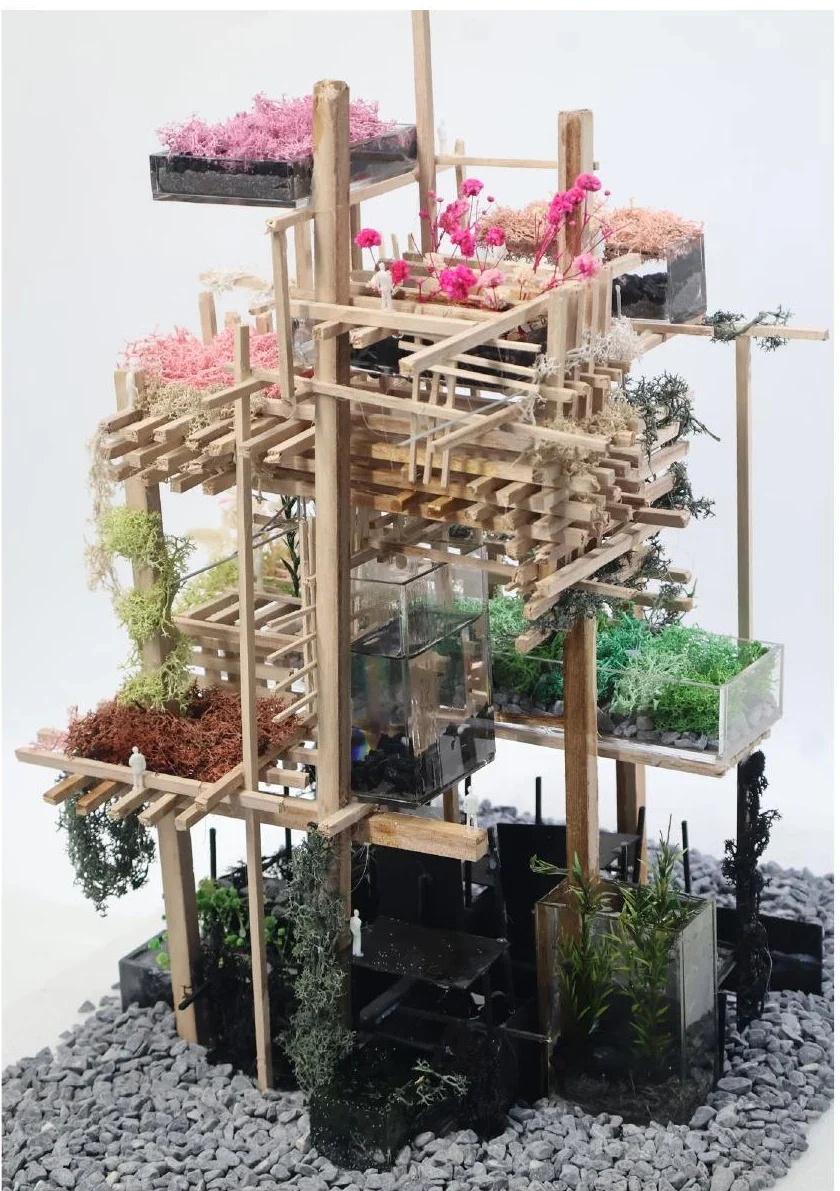 ED 被延到 RD 仍錄取康乃爾建築本科:活動少,靠八個實體項目的作品集翻盤(2026 年 10 月官方查核)ED 被延到 RD 仍录取康乃尔建筑本科:活动少,靠八个实体项目的作品集翻盘(2026 年 10 月官方查核)Deferred from ED, admitted RD to Cornell B.Arch: an eight-project physical-model portfolio that made up for few activities (checked October 2026)康乃爾 ED 被延到 RD、課外活動偏少,他靠八個實體項目的作品集,最後錄取康乃爾 B.Arch,以及南加大、伊利諾香檳、東北大學與伊利諾理工。整理他等待放榜的心態、選校邏輯與垂直綠化塔「翠綠立面」的做法,並對照康乃爾 AAP 官網:ED 11 月 1 日、RD 1 月 2 日截止,作品集 15–20 張、每項目最多 2 張,加 3 分鐘影片面試。康乃尔 ED 被延到 RD、课外活动偏少,他靠八个实体项目的作品集,最后录取康乃尔 B.Arch,以及南加大、伊利诺香槟、东北大学与伊利诺理工。整理他等待放榜的心态、选校逻辑与垂直绿化塔「翠绿立面」的做法,并对照康乃尔 AAP 官网:ED 11 月 1 日、RD 1 月 2 日截止,作品集 15–20 张、每项目最多 2 张,加 3 分钟视频面试。Deferred from Cornell ED to RD, and with few extracurricular activities, he relied on a portfolio of eight physical projects and was admitted to the Cornell B.Arch, as well as USC, UIUC, Northeastern, and Illinois Tech (IIT). This post sets out how he waited for decisions, how he chose schools, and how he made the vertical greening tower “Verdant Facade,” and checks that against the Cornell AAP website: an ED deadline of November 1, an RD deadline of January 2, a portfolio of 15–20 images with at most 2 per project, and a 3-minute video interview.
 從 ED 被拒到普林斯頓建築錄取:早申策略、文書收尾與等待放榜的心態復盤从 ED 被拒到普林斯顿建筑录取:早申策略、文书收尾与等待放榜的心态复盘From an Early Decision rejection to Princeton architecture: early-round strategy, essays and mindset一位學生早申 ED 哥倫比亞被拒,常規輪拿到普林斯頓建築方向 A.B. 錄取。整理 ED 與普林斯頓 SCEA 的規則取捨、2026–27 普林斯頓常規輪時程與 Arts Supplement、被拒後文書怎麼收尾、作品集三個項目,以及等待放榜的心態,2026 年 10 月依官方資料查核。一位学生早申 ED 哥伦比亚被拒,常规轮拿到普林斯顿建筑方向 A.B. 录取。整理 ED 与普林斯顿 SCEA 的规则取舍、2026–27 普林斯顿常规轮时程与 Arts Supplement、被拒后文书怎么收尾、作品集三个项目,以及等待放榜的心态,2026 年 10 月依官方资料查核。A student was rejected from Columbia Early Decision and admitted in the regular round to Princeton’s A.B. in architecture. The post covers the choice between ED and Princeton SCEA, the 2026–27 Princeton regular-round timeline and Arts Supplement, how to finish the essays after a rejection, three portfolio projects, and the mindset of waiting for decisions, checked against official sources in October 2026.
 ED 錄取萊斯建築 B.Arch:用一堆舊衣服回應快時尚,一本主線一致的本科作品集怎麼做(2026 年 10 月官方查核)ED 录取莱斯建筑 B.Arch:用一堆旧衣服回应快时尚,一本主线一致的本科作品集怎么做(2026 年 10 月官方查核)Rice Architecture B.Arch by Early Decision: a sustainability portfolio built from secondhand clothes (checked October 2026)成績不是最突出,作品集一度「散」和「亂」,她最後以 ED 錄取第一志願萊斯大學建築 B.Arch。整理她以可持續性與「空間如何影響情緒」為主線的作品集、用二手衣物回應快時尚的大型裝置,並對照萊斯官網:ED I 11 月 1 日截止、12 月中旬前放榜,作品集 10 頁、15 MB,兩題 250 字建築文書。成绩不是最突出,作品集一度「散」和「乱」,她最后以 ED 录取第一志愿莱斯大学建筑 B.Arch。整理她以可持续性与「空间如何影响情绪」为主线的作品集、用二手衣物回应快时尚的大型装置,并对照莱斯官网:ED I 11 月 1 日截止、12 月中旬前放榜,作品集 10 页、15 MB,两题 250 字建筑文书。Her grades were not the strongest, and the portfolio was at one point “scattered” and “messy,” yet she was admitted by ED to her first choice, the architecture B.Arch at Rice University. This post sets out a portfolio built on sustainability and “how space affects emotion,” including a large installation of secondhand clothes answering fast fashion, against Rice’s website: ED I closes on November 1 with decisions by mid-December, the portfolio is 10 pages and 15 MB, and there are two architecture essays of 250 words each.