ED 被延到 RD 仍錄取康乃爾建築本科:活動少,靠八個實體項目的作品集翻盤(2026 年 10 月官方查核)ED 被延到 RD 仍录取康乃尔建筑本科:活动少,靠八个实体项目的作品集翻盘(2026 年 10 月官方查核)Deferred from ED, admitted RD to Cornell B.Arch: an eight-project physical-model portfolio that made up for few activities (checked October 2026)
用微信掃描這張 QR code 即可分享。用微信扫描这张 QR code 即可分享。Scan this QR code with WeChat to share.
掃描或下載這張 QR code。扫描或下载这张 QR code。Scan or download this QR code.
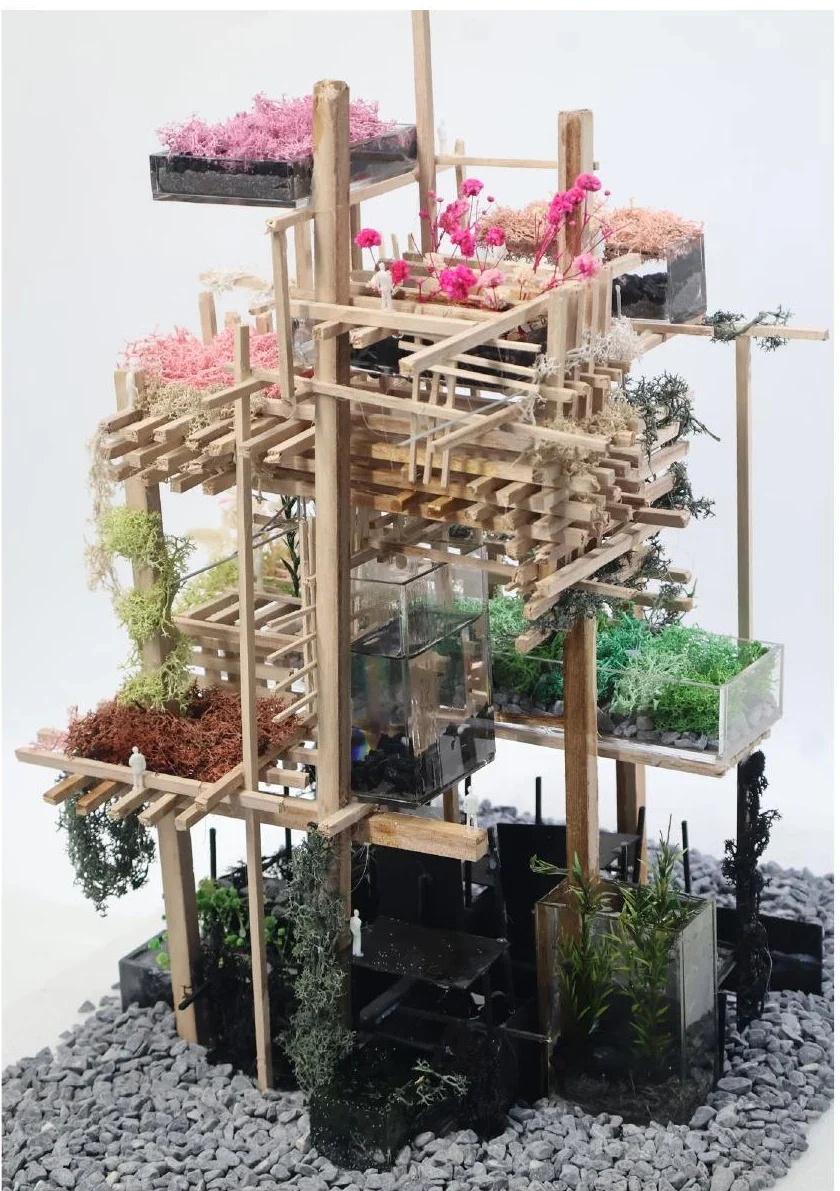
一位美高 AP 體系的學生,從高二春天開始準備作品集、到申請前的暑假完成,最後拿到康乃爾大學建築學士(Bachelor of Architecture,B.Arch)錄取,同一季也錄取南加州大學(USC)、伊利諾大學厄巴納-香檳分校(UIUC)、東北大學與伊利諾理工學院(IIT)。特別的是,他在康乃爾的 Early Decision(ED)先被延到 Regular Decision(RD),課外活動也偏少——最後靠的是一本由八個實體項目構成的作品集。
這篇整理他從 ED 被延後到 RD 錄取的心態、選校邏輯與作品集做法,並對照康乃爾 AAP 建築學院官網目前公布的 B.Arch 作品集規定。
2026 年 10 月重新查核:作品集截止日、張數、影片面試與上傳規定,均依康乃爾 AAP 建築本科招生頁更新;學生的經歷屬個人經驗,送件前請再以官網最新公告為準。
康乃爾 B.Arch 作品集規定一覽(官方資料)
| 項目 | 內容 |
|---|---|
| 學制 | 五年制建築學士(B.Arch.),屬專業學位課程 |
| 必交材料 | 除康乃爾大學一般申請要求外,B.Arch 申請者必須提交作品集與影片面試;任何一項作品集要求未達成,申請不予審查 |
| 作品集截止日 | Early Decision 新生:11 月 1 日;Regular Decision 新生:1 月 2 日;逾期不收。Fall 2027 不接受外校轉學申請 |
| 上傳方式 | 只接受經 Cornell AAP SlideRoom 上傳,不接受其他方式 |
| 張數 | 15–20 張,每個項目最多 2 張 |
| 內容建議 | 手繪(草圖與完整作品)與多元媒材:繪畫、尺規圖、設計作品、雕塑、影片、攝影、木工及其他工藝 |
| 影片面試 | 連續拍攝、總長不超過 3 分鐘、不可剪輯;回答三題:如何表達創造力?描述一件創作項目的設計過程與影響?為什麼想讀建築? |
| 圖說與標註 | 圖片清楚、除非是作品一部分否則不放文字;說明建議 50 字(英文)以內,交代意圖、過程與成果;註明尺寸、媒材,以及在課堂、作品集工作坊或獨立完成 |
| 原創與團隊 | 不可把作品集外包給第三方,包含 AI 生成圖像;團隊作品須標註合作者並說明自己的角色 |
以上出自康乃爾 AAP 建築本科招生頁(Undergraduate Admissions: Architecture)。官網也列出學院希望看到的特質,例如「Rigorous Makers」——主動發展並精進技術與創作能力的人,以及「Broad Thinkers」——興趣橫跨科學與人文的人;這兩點正好對應這位學生的作品集與背景。
ED 被延到 RD:與其慌張,不如順其自然地把後路準備好
他用 ED 申請康乃爾,結果被延到 RD 重新審。他坦言不可能毫無反應,但選擇不歇斯底里地慌張:等待期間有焦慮,可是在拿到保底學校的錄取之後,他其實已經做好去那裡讀的心理準備。放榜前一天,USC 先錄取了他;康乃爾放榜那天,他刻意等到晚上才打開結果——最後是錄取。
從這段經驗可以整理出三個實際做法:
- 被延後不等於被拒:ED 被延到 RD 的申請會在常規輪重新審查,這段時間應該把 RD 學校的作品集與文書照常完成,而不是停在原地等。
- 先把保底學校確定下來:手上有一份可以接受的錄取,等待夢校結果時心態會穩很多。
- 作品集是延後期間最可控的變數:康乃爾 RD 作品集截止日是 1 月 2 日,各校的作品集張數與格式不同,需要分別調整。
選校:沒有「夢校」,但要選綜合實力強的環境
他說自己其實沒有夢校的概念:無論學校遠近好壞,沒有去讀之前,永遠不知道在讀時、畢業後會發生什麼;當然,去更好的學校更好,所以在老師建議下,把目標定在美國頂尖的建築學院——康乃爾。吸引他的是康乃爾的綜合實力:工程、科學、農業等學科單獨拿出來都很強,他覺得在這樣的環境裡學什麼都會有好的氛圍與動力。
他也給了一個很務實的建議:如果有排名稍低、但自己真正喜歡、而且有相關課外活動支撐的專業方向,可以大膽申請,不必把所有籌碼壓在同一個方向上——萬一 ED 沒錄,至少在別的學校還有機會讀自己喜歡的專業。
八個實體項目:最喜歡的是垂直綠化塔「翠綠立面」
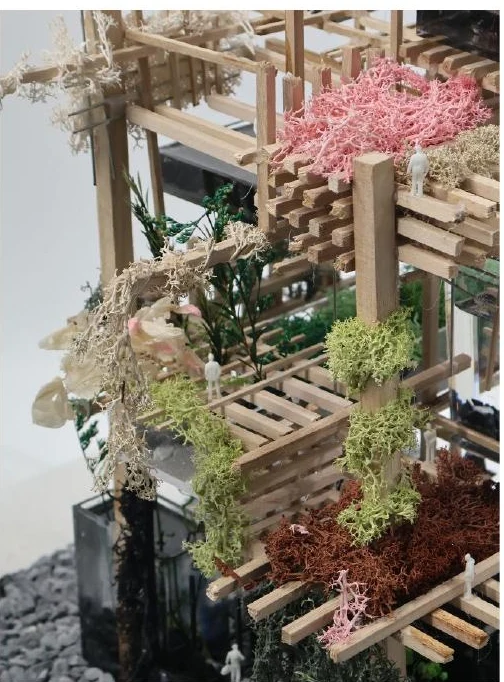
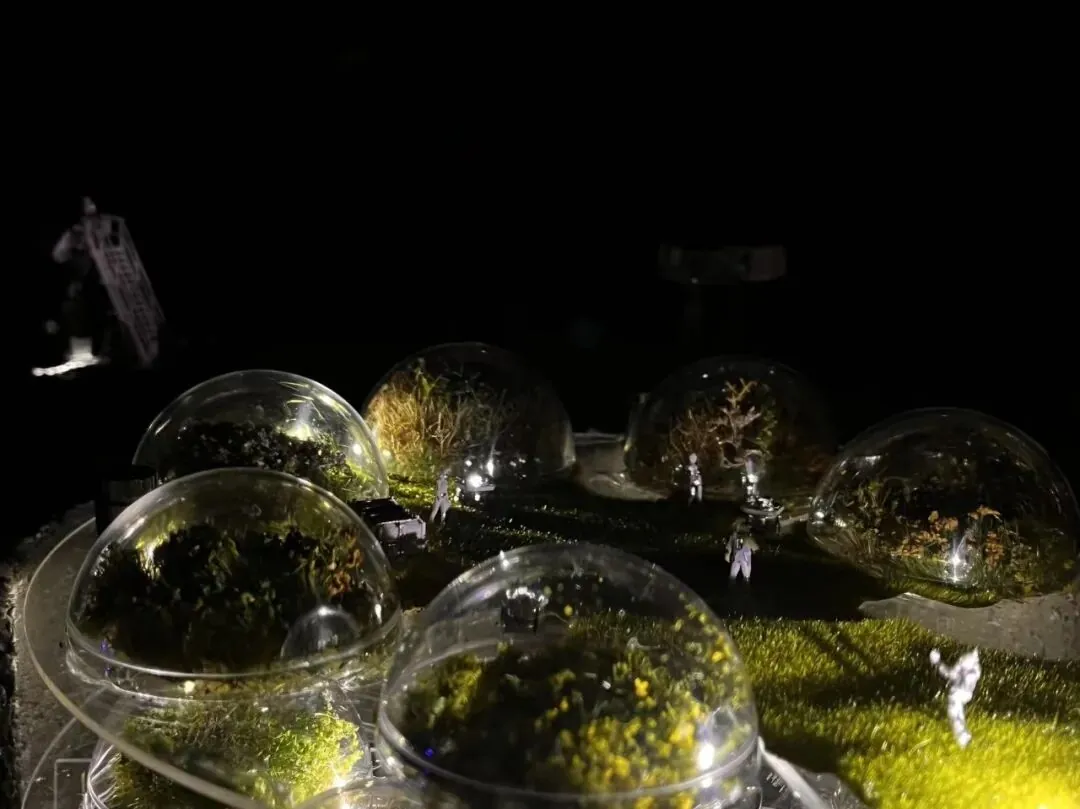
整本作品集共完成八個實體項目,類型與方向各不相同,每個項目都有自己的出發點和表達方式。他最喜歡的是垂直綠化項目「翠綠立面」(Verdant Facade),視覺語言借用了荷蘭藝術家蒙德里安的直線與矩形風格:
- 選風格的理由很直接:垂直線條與這種風格很酷、沒有太多複雜聯想,就是直覺上的契合。
- 先做案例研究:調研了西安、馬來西亞、廣州等城市的垂直綠化案例,看大量參考圖之後才開始動手。
- 用材料自由組合:以不同粗細、長短的木條組成線條與網格等矩形結構,再點綴不同色系的植物。
- 卡住時先動手:他一度糾結形態應該像一棵樹,還是更像一棟樓;最後的結論是不讓自己被某個想法困住,先動手做了再說,反而找到更自然的方向。
看完整作品:翠綠立面 →
這個做法和康乃爾官網的要求很一致:官網希望看到多元媒材與「Rigorous Makers」,也要求每張圖附上意圖、過程與成果的簡短說明。像「翠綠立面」這樣的實體項目,正好能在兩張以內同時交代完成品與製作過程。
同一本作品集的其他項目:崖邊海灘屋與「燈塔守護人的家」
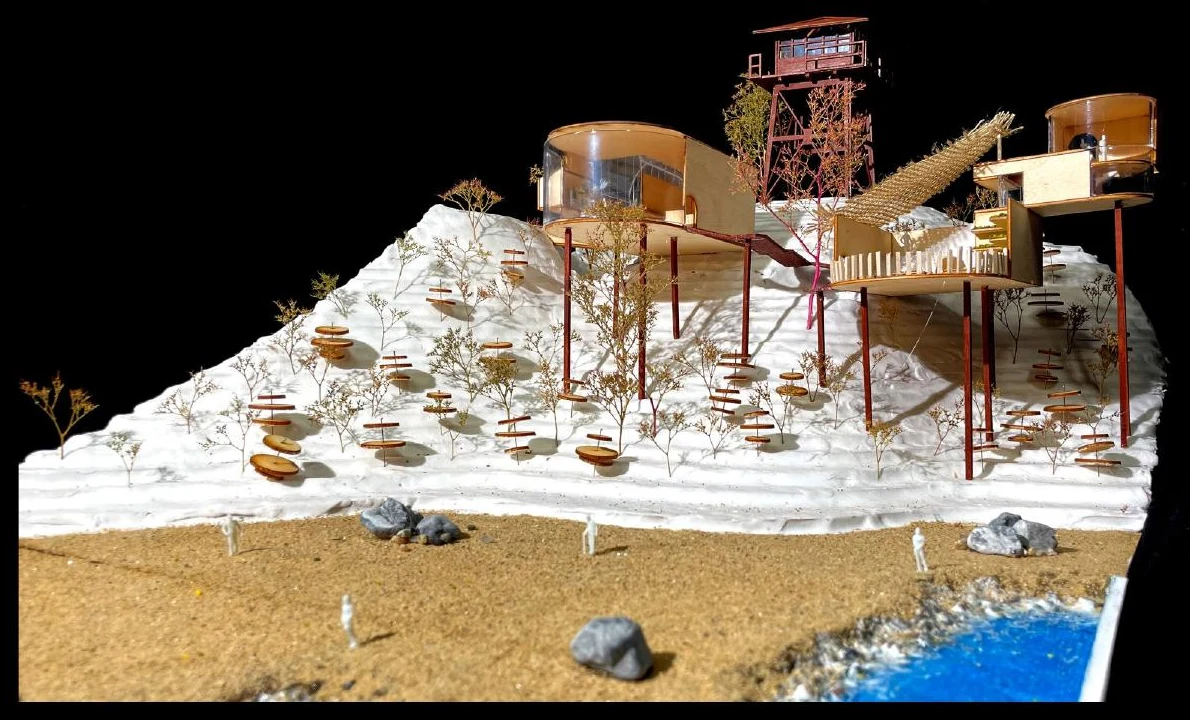
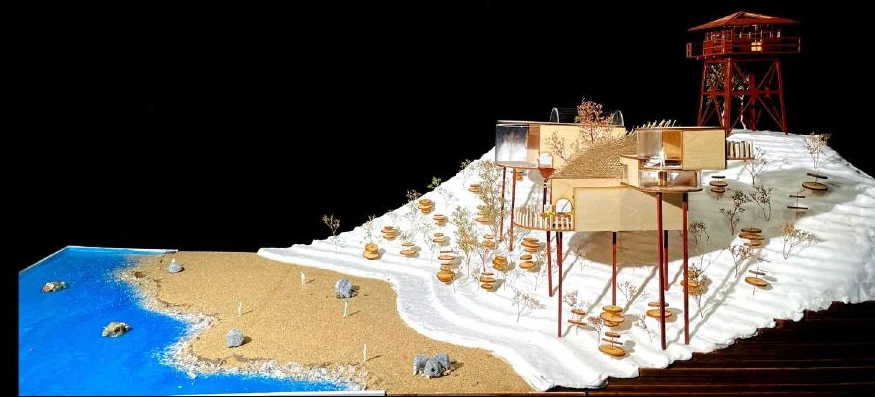
另一個實體項目「崖邊海灘屋」從旅途中看過的建築記憶出發,想像一棟位於海灘上方山坡的住宅,問的是:一個家如何同時讓人感到受庇護、又向景色敞開?地形用層疊板材、沙與彩繪海面堆出來,圓形房間由狹長走道與共用樓梯串連。
看完整作品:崖邊海灘屋 →
看完整作品:崖邊海灘屋 →
還有一個項目以小說 The Light Keeper 為起點。很多人第一反應會以為這是替燈塔守護人這個職業設計的住宅,其實不是——他設計的是小說裡一位有特殊經歷的具體人物的家。整個項目的重點是讓這個「家」的故事完整、帶有特定氛圍;他在情感轉譯上處理得非常細膩,這也和他本身的性格有關。
活動經歷少,怎麼補?把精力放在作品集深度
他申請時有一個明顯弱勢:幾乎沒有什麼活動經歷。正因為清楚這一點,他把更多精力放在作品集的深度打磨上,也願意為新事物下功夫。他也坦白,暑假有一段時間很枯燥、幾乎沒有動力、靈感也快枯竭,但想到「這個暑假的付出程度和最終結果成正比」,還是逼自己把事情做完。
做作品集之前,他對建築的印象多半停留在城市裡的高樓大廈;做完之後才真正意識到,建築牽涉很多其他領域的知識,核心是如何把這些知識應用在不同功能、不同環境的建築裡。
從計算機轉向建築:每一步都沒有白走
回頭看,他一開始其實比較傾向深入學習計算機。學了一段時間後,他經歷過一段迷惘:程式訓練初期多半停留在概念、邏輯和系統層面,而建築與空間設計給了他另一種把抽象概念具體化的方式。後來他把過去的計算機基礎,和空間設計裡更具物理性、更落地的表達結合起來,也參加了大學夏校,持續用作品展現自己的思考。
以我 12,000+ 小時設計教學與設計諮詢的經驗來看,對十六、七歲的高中生而言,太早用一個專業名稱定義自己並不是最重要的。真正重要的,是在持續探索中找到自己想表達的價值;作品集也不只是幾件作品的集合,而是一個幫助學生在迷惘中慢慢看見自己、把內在感受轉化成外在表達的過程。這位學生心思細膩、感受力強,能捕捉細微的情緒、空間關係和生活經驗,再把它們轉化成圖像、模型和空間語言——這正是康乃爾錄取背後最有說服力的部分。
給申請季的建議
- 保持一個不會讓自己後悔的心態:全力以赴之後,無論結果好壞都不會有遺憾。
- 弱項要用強項補:活動少,就把作品集做深;實體模型、製作過程、案例研究都能證明投入程度。
- 照官網規格重新剪裁作品集:康乃爾要求 15–20 張、每個項目最多 2 張、附 3 分鐘以內不剪輯的影片面試,且禁止外包與 AI 生成圖像;八個項目放進 20 張以內,就必須每個項目只挑最有代表性的畫面。
- 不要把所有籌碼壓在同一方向:有真正喜歡、又有活動支撐的方向,可以一起申請。
一位美高 AP 体系的学生,从高二春天开始准备作品集、到申请前的暑假完成,最后拿到康乃尔大学建筑学士(Bachelor of Architecture,B.Arch)录取,同一季也录取南加州大学(USC)、伊利诺大学厄巴纳-香槟分校(UIUC)、东北大学与伊利诺理工学院(IIT)。特别的是,他在康乃尔的 Early Decision(ED)先被延到 Regular Decision(RD),课外活动也偏少——最后靠的是一本由八个实体项目构成的作品集。
这篇整理他从 ED 被延后到 RD 录取的心态、选校逻辑与作品集做法,并对照康乃尔 AAP 建筑学院官网目前公布的 B.Arch 作品集规定。
2026 年 10 月重新查核:作品集截止日、张数、视频面试与上传规定,均依康乃尔 AAP 建筑本科招生页更新;学生的经历属个人经验,送件前请再以官网最新公告为准。
康乃尔 B.Arch 作品集规定一览(官方资料)
| 项目 | 内容 |
|---|---|
| 学制 | 五年制建筑学士(B.Arch.),属专业学位课程 |
| 必交材料 | 除康乃尔大学一般申请要求外,B.Arch 申请者必须提交作品集与视频面试;任何一项作品集要求未达成,申请不予审查 |
| 作品集截止日 | Early Decision 新生:11 月 1 日;Regular Decision 新生:1 月 2 日;逾期不收。Fall 2027 不接受外校转学申请 |
| 上传方式 | 只接受经 Cornell AAP SlideRoom 上传,不接受其他方式 |
| 张数 | 15–20 张,每个项目最多 2 张 |
| 内容建议 | 手绘(草图与完整作品)与多元媒材:绘画、尺规图、设计作品、雕塑、视频、摄影、木工及其他工艺 |
| 视频面试 | 连续拍摄、总长不超过 3 分钟、不可剪辑;回答三题:如何表达创造力?描述一件创作项目的设计过程与影响?为什么想读建筑? |
| 图说与标注 | 图片清楚、除非是作品一部分否则不放文本;说明建议 50 字(英文)以内,交代意图、过程与成果;注明尺寸、媒材,以及在课堂、作品集工作坊或独立完成 |
| 原创与团队 | 不可把作品集外包给第三方,包含 AI 生成图像;团队作品须标注合作者并说明自己的角色 |
以上出自康乃尔 AAP 建筑本科招生页(Undergraduate Admissions: Architecture)。官网也列出学院希望看到的特质,例如「Rigorous Makers」——主动发展并精进技术与创作能力的人,以及「Broad Thinkers」——兴趣横跨科学与人文的人;这两点正好对应这位学生的作品集与背景。
ED 被延到 RD:与其慌张,不如顺其自然地把后路准备好
他用 ED 申请康乃尔,结果被延到 RD 重新审。他坦言不可能毫无反应,但选择不歇斯底里地慌张:等待期间有焦虑,可是在拿到保底学校的录取之后,他其实已经做好去那里读的心理准备。放榜前一天,USC 先录取了他;康乃尔放榜那天,他刻意等到晚上才打开结果——最后是录取。
从这段经验可以整理出三个实际做法:
- 被延后不等于被拒:ED 被延到 RD 的申请会在常规轮重新审查,这段时间应该把 RD 学校的作品集与文书照常完成,而不是停在原地等。
- 先把保底学校确定下来:手上有一份可以接受的录取,等待梦校结果时心态会稳很多。
- 作品集是延后期间最可控的变量:康乃尔 RD 作品集截止日是 1 月 2 日,各校的作品集张数与格式不同,需要分别调整。
选校:没有「梦校」,但要选综合实力强的环境
他说自己其实没有梦校的概念:无论学校远近好坏,没有去读之前,永远不知道在读时、毕业后会发生什么;当然,去更好的学校更好,所以在老师建议下,把目标定在美国顶尖的建筑学院——康乃尔。吸引他的是康乃尔的综合实力:工程、科学、农业等学科单独拿出来都很强,他觉得在这样的环境里学什么都会有好的氛围与动力。
他也给了一个很务实的建议:如果有排名稍低、但自己真正喜欢、而且有相关课外活动支撑的专业方向,可以大胆申请,不必把所有筹码压在同一个方向上——万一 ED 没录,至少在别的学校还有机会读自己喜欢的专业。
八个实体项目:最喜欢的是垂直绿化塔「翠绿立面」
整本作品集共完成八个实体项目,类型与方向各不相同,每个项目都有自己的出发点和表达方式。他最喜欢的是垂直绿化项目「翠绿立面」(Verdant Facade),视觉语言借用了荷兰艺术家蒙德里安的直线与矩形风格:
- 选风格的理由很直接:垂直线条与这种风格很酷、没有太多复杂联想,就是直觉上的契合。
- 先做案例研究:调研了西安、马来西亚、广州等城市的垂直绿化案例,看大量参考图之后才开始动手。
- 用材料自由组合:以不同粗细、长短的木条组成线条与网格等矩形结构,再点缀不同色系的植物。
- 卡住时先动手:他一度纠结形态应该像一棵树,还是更像一栋楼;最后的结论是不让自己被某个想法困住,先动手做了再说,反而找到更自然的方向。
看完整作品:翠绿立面 →
这个做法和康乃尔官网的要求很一致:官网希望看到多元媒材与「Rigorous Makers」,也要求每张图附上意图、过程与成果的简短说明。像「翠绿立面」这样的实体项目,正好能在两张以内同时交代完成品与制作过程。
同一本作品集的其他项目:崖边海滩屋与「灯塔守护人的家」
另一个实体项目「崖边海滩屋」从旅途中看过的建筑记忆出发,想像一栋位于海滩上方山坡的住宅,问的是:一个家如何同时让人感到受庇护、又向景色敞开?地形用层叠板材、沙与彩绘海面堆出来,圆形房间由狭长走道与共用楼梯串连。
看完整作品:崖边海滩屋 →
看完整作品:崖边海滩屋 →
还有一个项目以小说 The Light Keeper 为起点。很多人第一反应会以为这是替灯塔守护人这个职业设计的住宅,其实不是——他设计的是小说里一位有特殊经历的具体人物的家。整个项目的重点是让这个「家」的故事完整、带有特定氛围;他在情感转译上处理得非常细腻,这也和他本身的性格有关。
活动经历少,怎么补?把精力放在作品集深度
他申请时有一个明显弱势:几乎没有什么活动经历。正因为清楚这一点,他把更多精力放在作品集的深度打磨上,也愿意为新事物下功夫。他也坦白,暑假有一段时间很枯燥、几乎没有动力、灵感也快枯竭,但想到「这个暑假的付出程度和最终结果成正比」,还是逼自己把事情做完。
做作品集之前,他对建筑的印象多半停留在城市里的高楼大厦;做完之后才真正意识到,建筑牵涉很多其他领域的知识,核心是如何把这些知识应用在不同功能、不同环境的建筑里。
从计算机转向建筑:每一步都没有白走
回头看,他一开始其实比较倾向深入学习计算机。学了一段时间后,他经历过一段迷惘:程式训练初期多半停留在概念、逻辑和系统层面,而建筑与空间设计给了他另一种把抽象概念具体化的方式。后来他把过去的计算机基础,和空间设计里更具物理性、更落地的表达结合起来,也参加了大学夏校,持续用作品展现自己的思考。
以我 12,000+ 小时设计教学与设计咨询的经验来看,对十六、七岁的高中生而言,太早用一个专业名称定义自己并不是最重要的。真正重要的,是在持续探索中找到自己想表达的价值;作品集也不只是几件作品的集合,而是一个帮助学生在迷惘中慢慢看见自己、把内在感受转化成外在表达的过程。这位学生心思细腻、感受力强,能捕捉细微的情绪、空间关系和生活经验,再把它们转化成图像、模型和空间语言——这正是康乃尔录取背后最有说服力的部分。
给申请季的建议
- 保持一个不会让自己后悔的心态:全力以赴之后,无论结果好坏都不会有遗憾。
- 弱项要用强项补:活动少,就把作品集做深;实体模型、制作过程、案例研究都能证明投入程度。
- 照官网规格重新剪裁作品集:康乃尔要求 15–20 张、每个项目最多 2 张、附 3 分钟以内不剪辑的视频面试,且禁止外包与 AI 生成图像;八个项目放进 20 张以内,就必须每个项目只挑最有代表性的画面。
- 不要把所有筹码压在同一方向:有真正喜欢、又有活动支撑的方向,可以一起申请。
A student in a U.S. high school AP curriculum began preparing his portfolio in the spring of 11th grade and finished it the summer before he applied. He was admitted to the Cornell University Bachelor of Architecture (B.Arch), and in the same cycle to the University of Southern California (USC), the University of Illinois Urbana-Champaign (UIUC), Northeastern University, and Illinois Tech (IIT). What is particular here is that his Cornell Early Decision (ED) was first deferred to Regular Decision (RD), and his extracurricular activities were also few. What carried the application in the end was a portfolio built from eight physical projects.
This post sets out his mindset from the ED deferral to the RD admission, how he chose schools, and how he made the portfolio, and it checks that against the B.Arch portfolio requirements currently published on the Cornell AAP architecture website.
Rechecked in October 2026: the portfolio deadlines, the number of images, the video interview, and the upload rules are updated from the Cornell AAP undergraduate architecture admissions page. The student’s experience is personal. Before you submit, follow the latest announcement on the official website.
Cornell B.Arch portfolio requirements at a glance (official information)
| Category | Content |
|---|---|
| Degree structure | A five-year Bachelor of Architecture (B.Arch.), a professional degree |
| Required materials | Beyond Cornell University’s general application requirements, B.Arch applicants must submit a portfolio and a video interview. If any portfolio requirement is left unmet, the application is not reviewed |
| Portfolio deadlines | Early Decision first-year applicants: November 1; Regular Decision first-year applicants: January 2. Late submissions are not accepted. Fall 2027 does not accept transfer applications from other institutions |
| Upload method | Accepted only by upload through Cornell AAP SlideRoom. No other method is accepted |
| Number of images | 15–20 images, at most 2 per project |
| Suggested content | Hand drawing (sketches and finished works) and a range of media: painting, drafted drawings, design work, sculpture, video, photography, woodworking, and other crafts |
| Video interview | Filmed in one continuous take, no more than 3 minutes in total, and left unedited. Answer three questions: How do you express creativity? Describe the design process and the impact of one creative project? Why do you want to study architecture? |
| Captions and labels | Images should be clear, and text stays off the image unless it is part of the work. A note of 50 words (in English) or fewer is suggested, covering intention, process, and outcome. State the dimensions, the medium, and whether the work was completed in class, in a portfolio workshop, or independently |
| Original work and teams | Outsourcing the portfolio to a third party is prohibited, and that includes AI-generated images. Team work must name the collaborators and explain one’s own role |
The above comes from the Cornell AAP undergraduate architecture admissions page (Undergraduate Admissions: Architecture). The website also lists qualities the college hopes to see, for example “Rigorous Makers”—people who actively develop and refine technical and creative ability—and “Broad Thinkers”—people whose interests span the sciences and the humanities. Those two points line up with this student’s portfolio and background.
Deferred from ED to RD: let the backup come together, and leave the panic aside
He applied to Cornell through ED and was deferred to RD for a second review. He admitted that feeling nothing was impossible, and he chose to keep clear of a hysterical panic. The wait brought anxiety, and after a safety-school offer arrived he was in fact already prepared to go and study there. The day before decisions, USC admitted him first. On the day Cornell released its decisions, he deliberately waited until evening to open the result. It was an offer.
Three practical steps come out of that experience:
- A deferral is not a rejection: an application deferred from ED to RD is reviewed again in the regular round. During that time, finish the portfolios and essays for the RD schools as usual, rather than stopping in place to wait.
- Secure a safety school first: with one offer you can accept already in hand, waiting on a dream-school result feels much steadier.
- The portfolio is the most controllable variable during a deferral: Cornell’s RD portfolio deadline is January 2. Image counts and formats differ by school, so each one needs its own adjustment.
Choosing schools: there is no “dream school,” and the aim is an environment strong across the board
He said he did not really hold the idea of a dream school. Far or near, stronger or less so, until you go and study there, you never know what will happen while you are enrolled or after you graduate. A stronger school is the better place to be, so on a teacher’s advice he set his aim on a leading architecture college in the United States—Cornell. What attracted him was Cornell’s overall strength: engineering, the sciences, agriculture, and other fields are each strong on their own. He felt that studying anything in that environment would come with a good atmosphere and real drive.
He also offered a very practical suggestion. Where a direction is ranked a little lower, genuinely liked, and backed by related extracurricular activities, it is worth applying with confidence. There is room to apply in more than one direction. If ED ends without an offer, you still have a chance, at another school, to study a subject you like.
Eight physical projects: the favorite is the vertical greening tower “Verdant Facade”
The portfolio completed eight physical projects in all. The types and directions differ, and each project has its own starting point and its own way of speaking. The one he likes most is the vertical greening project “Verdant Facade.” Its visual language borrows the straight lines and rectangles of the Dutch artist Mondrian:
- The reason for the style was straightforward: vertical lines and this style look cool, and they carry few complicated associations. The fit was intuitive.
- Case studies came first: he researched vertical greening cases in Xi'an, Malaysia, Guangzhou, and other cities, and he started making only after looking through a large number of reference images.
- Materials were combined freely: wooden sticks of different thicknesses and lengths form lines, grids, and other rectangular structures, and plants from different color ranges are set in as accents.
- When he was stuck, he made something first: for a while he turned over whether the form should be more like a tree or more like a building. He decided to keep a single idea from trapping him, started making, and found a more natural direction that way.
See the full project: Verdant Facade →
This way of working lines up with what Cornell’s website asks for. The site wants to see a range of media and “Rigorous Makers,” and it asks each image to carry a short note on intention, process, and outcome. A physical project such as “Verdant Facade” can, within two images, show both the finished piece and how it was made.
Other projects in the same portfolio: Cliffside Beach House and “the lighthouse keeper’s home”
Another physical project, “Cliffside Beach House,” starts from buildings he remembered seeing on a trip. It imagines a house on a hillside above a beach, and it asks: how can a home make a person feel sheltered and, at the same time, open to the view? The terrain is built up from layered sheet material, sand, and a painted sea. The round rooms are linked by long, narrow passages and a shared stair.
See the full project: Cliffside Beach House →
See the full project: Cliffside Beach House →
Another project begins with the novel The Light Keeper. Many people’s first reaction is to take this as a house designed for the occupation of lighthouse keeper. What he designed is a home for one specific character in the novel, a person with a particular experience. The point of the whole project is to make the story of this “home” complete and to give it a specific atmosphere. He handled the translation of feeling with great fineness, and that is also tied to his own temperament.
Few activities: how do you make up for that? Put the effort into the depth of the portfolio
He had one clear weakness at the time of application: almost no activities on his record. Because he knew that, he put more of his effort into polishing the portfolio in depth, and he was willing to work hard at things that were new to him. He was also frank that part of the summer was dull, that he had almost no drive, and that his ideas were nearly used up. The thought that “the effort this summer takes and the final result stand in proportion” still pushed him to finish.
Before the portfolio, his picture of architecture mostly stopped at the towers of a city. After he finished, he saw that architecture draws on knowledge from many other fields, and that the core is how to apply that knowledge to buildings of different functions and in different settings.
From computing toward architecture: every step counted
Looking back, he had at first leaned toward going further into computing. After studying it for a while, he went through a period of being lost. Early training in programming mostly stays at the level of concepts, logic, and systems, while architecture and spatial design gave him another way of making abstract concepts concrete. Later he joined that foundation in computing to the more physical, more down-to-earth expression of spatial design. He also took part in a university summer school, and he kept using projects to show how he thinks.
From my 12,000+ hours of design teaching and design consulting, for high-school students of 16 or 17, defining yourself too early by the name of one major is not what matters most. What matters is finding, through continued exploration, the value you want to express. A portfolio is more than a collection of several works. It is a process that helps a student, while lost, slowly see themselves and turn an inner feeling into an outward expression. This student notices fine detail and feels things strongly. He can catch slight emotions, spatial relationships, and lived experience, then turn them into images, models, and a spatial language. That is the most persuasive part behind the Cornell offer.
Suggestions for application season
- Keep a state of mind you will be glad you kept: after you have given it everything, a strong result and a hard result alike leave no regret behind.
- Let a strength carry a weak point: where activities are few, make the portfolio deep. Physical models, the process of making, and case studies can all show the degree of commitment.
- Cut the portfolio again to the specifications on the website: Cornell asks for 15–20 images, at most 2 per project, plus an unedited video interview of no more than 3 minutes, and it prohibits outsourcing and AI-generated images. Fitting eight projects into 20 images or fewer means each project shows only its most representative views.
- Let the applications cover more than one direction: a direction you truly like, and that activities support, can go in alongside the others.
English summary
A case study of an American-curriculum (AP) high school student who was deferred from Early Decision to Regular Decision at Cornell and then admitted to the five-year Bachelor of Architecture at the College of Architecture, Art, and Planning (AAP), with further offers from USC, UIUC, Northeastern and IIT, despite having few extracurricular activities. Facts were checked against the Cornell AAP undergraduate architecture admissions page in October 2026: B.Arch applicants must submit a portfolio and a video interview through Cornell AAP SlideRoom by November 1 (Early Decision) or January 2 (Regular Decision); Fall 2027 is closed to external transfers; the portfolio has 15-20 slides with no more than two per project, emphasising freehand drawing and a range of media; the unedited video is at most three minutes and answers three prompts; outsourcing and AI-generated images are not allowed and group work must credit collaborators. The post covers the student's mindset while deferred, his school-selection logic, and an eight-project physical-model portfolio including a Mondrian-inspired vertical-greening stick tower (Verdant Facade), a cliffside beach house site model and a home for a character from the novel The Light Keeper.
常見問題常见问题FAQ
康乃爾建築本科(B.Arch)作品集什麼時候截止?康乃尔建筑本科(B.Arch)作品集什么时候截止?When is the portfolio deadline for Cornell’s undergraduate architecture degree (B.Arch)?
依康乃爾 AAP 官網,Early Decision 新生作品集截止日為 11 月 1 日,Regular Decision 新生為 1 月 2 日,只接受經 Cornell AAP SlideRoom 上傳,逾期不收;Fall 2027 不接受外校轉學申請。
依康乃尔 AAP 官网,Early Decision 新生作品集截止日为 11 月 1 日,Regular Decision 新生为 1 月 2 日,只接受经 Cornell AAP SlideRoom 上传,逾期不收;Fall 2027 不接受外校转学申请。
According to the Cornell AAP website, the Early Decision first-year portfolio deadline is November 1, and the Regular Decision first-year deadline is January 2. Submissions are accepted only through Cornell AAP SlideRoom, and late work is not accepted. Fall 2027 does not accept transfer applications from other institutions.
康乃爾 B.Arch 作品集要放幾張?有什麼規定?康乃尔 B.Arch 作品集要放几张?有什么规定?How many images does a Cornell B.Arch portfolio include, and what are the rules?
15–20 張,每個項目最多 2 張;官網建議展示手繪(草圖與完整作品)與多元媒材,圖片除非是作品一部分否則不放文字,說明約 50 字(英文)以內,並註明尺寸、媒材與完成情境。不可外包或使用 AI 生成圖像,團隊作品須標註合作者與個人角色。
15–20 张,每个项目最多 2 张;官网建议展示手绘(草图与完整作品)与多元媒材,图片除非是作品一部分否则不放文本,说明约 50 字(英文)以内,并注明尺寸、媒材与完成情境。不可外包或使用 AI 生成图像,团队作品须标注合作者与个人角色。
15–20 images, with at most 2 images per project. The website suggests showing hand drawing (sketches and finished works) and a range of media. Text stays off an image unless it is part of the work. The note should be within about 50 words (in English), and should state the dimensions, the medium, and the context in which the work was completed. The portfolio may not be outsourced, and AI-generated images may not be used. Team work must credit the collaborators and the applicant’s own role.
康乃爾 B.Arch 的影片面試要回答什麼?康乃尔 B.Arch 的视频面试要回答什么?What does the Cornell B.Arch video interview ask?
須上傳一段連續拍攝、不剪輯、總長不超過 3 分鐘的影片,回答三題:如何表達創造力?描述一件藝術、設計、建築或社會行動項目的設計過程與影響?為什麼想讀建築?
须上传一段连续拍摄、不剪辑、总长不超过 3 分钟的视频,回答三题:如何表达创造力?描述一件艺术、设计、建筑或社会行动项目的设计过程与影响?为什么想读建筑?
You must upload one video filmed continuously, left unedited, and no longer than 3 minutes in total, answering three questions: How do you express creativity? Describe the design process and the impact of one art, design, architecture, or social-action project? Why do you want to study architecture?
康乃爾 ED 被延到 RD 還有機會嗎?康乃尔 ED 被延到 RD 还有机会吗?If Cornell defers an ED application to RD, is there still a chance?
有。本文案例就是 ED 被延到 RD 後在常規輪錄取。被延後期間建議照常完成其他學校的申請、先確定一份可接受的錄取,並把作品集照各校規格調整好,而不是停下來等待。
有。本文案例就是 ED 被延到 RD 后在常规轮录取。被延后期间建议照常完成其他学校的申请、先确定一份可接受的录取,并把作品集照各校规格调整好,而不是停下来等待。
Yes. The case in this post was admitted in the regular round after being deferred from ED to RD. While deferred, finish applications to the other schools as usual, secure one acceptable offer first, and adjust the portfolio to each school’s specifications, rather than stopping to wait.
課外活動很少,申請建築本科怎麼補強?课外活动很少,申请建筑本科怎么补强?With very few extracurricular activities, how can an undergraduate architecture application be strengthened?
把精力放在作品集深度。這位學生活動經歷少,便以八個實體項目呈現研究、動手製作與情感轉譯的能力;康乃爾官網也明確希望看到多元媒材與主動精進技術的「Rigorous Makers」。
把精力放在作品集深度。这位学生活动经历少,便以八个实体项目呈现研究、动手制作与情感转译的能力;康乃尔官网也明确希望看到多元媒材与主动精进技术的「Rigorous Makers」。
Put the effort into the depth of the portfolio. This student had few activities, so he used eight physical projects to show research, hands-on making, and the ability to translate feeling. Cornell’s website also explicitly hopes to see a range of media and “Rigorous Makers” who actively refine their technique.
訂閱新文章订阅新文章Subscribe
新文章會寄到這個信箱。新文章会寄到这个邮箱。New posts will be emailed to this address.
已訂閱。已订阅。Subscribed.暫時無法訂閱,請稍後再試。暂时无法订阅,请稍后再试。Could not subscribe. Please try again.相關文章相关文章Related posts
 從 ED 被拒到普林斯頓建築錄取:早申策略、文書收尾與等待放榜的心態復盤从 ED 被拒到普林斯顿建筑录取:早申策略、文书收尾与等待放榜的心态复盘From an Early Decision rejection to Princeton architecture: early-round strategy, essays and mindset一位學生早申 ED 哥倫比亞被拒,常規輪拿到普林斯頓建築方向 A.B. 錄取。整理 ED 與普林斯頓 SCEA 的規則取捨、2026–27 普林斯頓常規輪時程與 Arts Supplement、被拒後文書怎麼收尾、作品集三個項目,以及等待放榜的心態,2026 年 10 月依官方資料查核。一位学生早申 ED 哥伦比亚被拒,常规轮拿到普林斯顿建筑方向 A.B. 录取。整理 ED 与普林斯顿 SCEA 的规则取舍、2026–27 普林斯顿常规轮时程与 Arts Supplement、被拒后文书怎么收尾、作品集三个项目,以及等待放榜的心态,2026 年 10 月依官方资料查核。A student was rejected from Columbia Early Decision and admitted in the regular round to Princeton’s A.B. in architecture. The post covers the choice between ED and Princeton SCEA, the 2026–27 Princeton regular-round timeline and Arts Supplement, how to finish the essays after a rejection, three portfolio projects, and the mindset of waiting for decisions, checked against official sources in October 2026.
 ED 錄取萊斯建築 B.Arch:用一堆舊衣服回應快時尚,一本主線一致的本科作品集怎麼做(2026 年 10 月官方查核)ED 录取莱斯建筑 B.Arch:用一堆旧衣服回应快时尚,一本主线一致的本科作品集怎么做(2026 年 10 月官方查核)Rice Architecture B.Arch by Early Decision: a sustainability portfolio built from secondhand clothes (checked October 2026)成績不是最突出,作品集一度「散」和「亂」,她最後以 ED 錄取第一志願萊斯大學建築 B.Arch。整理她以可持續性與「空間如何影響情緒」為主線的作品集、用二手衣物回應快時尚的大型裝置,並對照萊斯官網:ED I 11 月 1 日截止、12 月中旬前放榜,作品集 10 頁、15 MB,兩題 250 字建築文書。成绩不是最突出,作品集一度「散」和「乱」,她最后以 ED 录取第一志愿莱斯大学建筑 B.Arch。整理她以可持续性与「空间如何影响情绪」为主线的作品集、用二手衣物回应快时尚的大型装置,并对照莱斯官网:ED I 11 月 1 日截止、12 月中旬前放榜,作品集 10 页、15 MB,两题 250 字建筑文书。Her grades were not the strongest, and the portfolio was at one point “scattered” and “messy,” yet she was admitted by ED to her first choice, the architecture B.Arch at Rice University. This post sets out a portfolio built on sustainability and “how space affects emotion,” including a large installation of secondhand clothes answering fast fashion, against Rice’s website: ED I closes on November 1 with decisions by mid-December, the portfolio is 10 pages and 15 MB, and there are two architecture essays of 250 words each.
 規劃背景 6 個月拿下港中文城市設計碩士:CUHK MSUD 選校、作品集與面試經驗(2026 年 10 月官方查核)规划背景 6 个月拿下港中文城市设计硕士:CUHK MSUD 选校、作品集与面试经验(2026 年 10 月官方查核)From urban planning to CUHK MSc Urban Design in six months: school choice, portfolio and interview (checked October 2026)城鄉規劃本科、GPA 與雅思剛好達標,作品集從零開始,用約 6 個月拿到香港中文大學城市設計碩士(CUHK MSUD)錄取。整理她的選校理由、4 個項目的作品集策略、文書與面試經驗,並對照 CUHK 2027–28 官方申請指引:17 個月學制、HK$300,000 學費、1 月 15 日主輪截止、IELTS 6.5 與 10 MB 作品集規格。城乡规划本科、GPA 与雅思刚好达标,作品集从零开始,用约 6 个月拿到香港中文大学城市设计硕士(CUHK MSUD)录取。整理她的选校理由、4 个项目的作品集策略、文书与面试经验,并对照 CUHK 2027–28 官方申请指引:17 个月学制、HK$300,000 学费、1 月 15 日主轮截止、IELTS 6.5 与 10 MB 作品集规格。With an undergraduate degree in urban and rural planning, a GPA and an IELTS score that only just met the bar, and a portfolio built from scratch, she was admitted to the MSc in Urban Design (MSUD) at The Chinese University of Hong Kong in about 6 months. This post sets out why she chose the school, her strategy for a portfolio of 4 projects, and her experience with the statement and the interview, checked against CUHK’s official 2027–28 application guidance: a 17-month structure, tuition of HK$300,000, a main-round deadline of 15 January, IELTS 6.5 and a 10 MB portfolio limit.